9 of the Best Books from My Reading List

You’re thinking. I’m not sure what book is worthwhile. After all it’s an investment of your precious time.
At least 4 hours if not much more.
If you’re going to invest 4 to 8 hours of your precious, over committed time to reading a book, you want to make sure it’s worth your investment.
Guess what? I’ve got you covered.
I’ve already invested my time in several books over the last year and I’m going to point you in the right direction.
Easy peasy.9 Books

Most Impactful book. The Four Agreements by don Miguel Ruiz. This book is short and sweet and eye opening. The agreements are: Be impeccable with your word, Don’t take anything personally, Don’t make assumptions and Always do your best. From childhood we take on all sorts of agreements which skew our view of the world and of our thoughts. To drop all your prior agreements (re: your story) is incredibly challenging. If you listen to the audio book it’s read by Peter Coyote and he does an excellent job. If you want to change your thoughts, this is a must read.

Most Inspiring Book. Man’s Search for Meaning by Viktor Frankl. This is the incredible story of Viktor Frankl as a Holocaust survivor. It’s gripping but incredibly enlightening. Here is a trained psychiatrist recounting his days as he watched many people perish as well as those who overcame the unrelenting torture that was Auschwitz. “Everything can be taken from a man but one thing: the last of the human freedoms—to choose one’s attitude in any given set of circumstances, to choose one’s own way.” Need inspiration, this is your book.

Most Useful Book. The Relationship Cure by John Gottman. The basics of connecting and/or not connecting with the people in your life. I am vigilant now about the way I connect with people. Am I turning away, turning against or turning towards connection. We’ve all done it. Deliberately ignored someone, been defiant or reciprocated an outgoing gesture. It’s all here. And if you listen to it on audible, Dr. Gottman is the narrator. His voice is so calm and so accessible. You absolutely feel like you can start using the information right now. Really.

Interesting but Not as Useful. Spy the Lie by Philip Houston, Michael Floyd and Susan Carnicero. This book was written by ex CIA operatives. Fascinating stories and tips for picking up on liars. The only problem is that I’m not a detective or a Russian spy. I guess I might be able to figure out if my son stole a cookie from a cookie jar by reading his body language but I guess I don’t think I have that many liars in my life, which is a good thing. This is a must read for anyone in the detective field or maybe Human Resources.

Most Accessible Book. Positive Intelligence by Shirzad Chamine. Chamine gives you things you can start doing right this minute to get out of listening to the saboteurs that are talking in your head. He also has a ton of free assessments and audio meditations on his website: positiveintelligence.com. His main suggestions is to do PQ reps or I would call them mindful techniques to get really present. You can’t be worrying or suffering from anxiety if you are in the moment. Another bonus is that he is the narrator of the audio book.

Most Encompassing Book. 10% Happier by Dan Harris. Dan is a reporter for ABC news. He takes you on an auto biographical journey on his way to being happier and under less anxiety. He chases down every genre of self-help gurus. So if want the Reader’s Digest on Deepack Chopra, Dalia Lama, Eckhart Tolle and countless others, this is your book. It’s fun, at times light hearted and other times cynical but always real.

Least Likely to be Utilized. Unstuff Your Life by Andrew Mellen. This guy has excellent ideas to completely reorganize your life. I would love to hire him to organize mine. But his ideas seem way too OCD. His mantra is everything has a home and everything is in its place. He also obviously does not have a dog or children or a wayward husband. I’d love to take a week off and reorganize, label and back up all my photos but I think I’ll just rely on Facebook.

Cracks Me Up. You are a Badass by Jen Sincero. Jen narrates this self-help book. She is incredibly funny and doesn’t pull any punches. I don’t think I implemented anything from this book but I was incredibly inspired when I finished it. “I can pretty much guarantee that every time you tearfully ask yourself the question, “WTF is my problem?!” the answer lies in some lame, limiting, and false subconscious belief that you’ve been dragging around without even realizing” It’s a fun read and even better listen on audible.

And Out of Left Field. Genghis Khan and the Making of the Modern World by Jonathan Davis. This book is some 20 hours long so I only suggest this if you like reading about historic figures and if you have a lot of time. I don’t actually have a lot of time but I listen to books when I travel so I got through this in a few weeks. Interesting story and it’s amazing how large the Mongol empire became. Barbaric to be sure, but an amazing story.

A few other honorable mentions are Small Move, Big Change, Better than Before, How to Fail at Almost Anything and Still Win Big, and The Obstacle is the Way. I have also been listening to the Great Courses which is a lecture by a professor who is interesting but they are all about 12 hours long so it is a commitment. But if you want to learn how to be a Non-Fiction Writer or Settle Disputes, there are a bunch of titles to enjoy.
So get out there and pick up that book and invest your time. I didn’t include the many books I thought were duds. Happy reading.


amzn_assoc_ad_type = “contextual”;
amzn_assoc_tracking_id = “workplnaviga-20”;
amzn_assoc_marketplace = “amazon”;
amzn_assoc_region = “US”;
amzn_assoc_placement = “6QK6CPJYRXEPYSLF”;
amzn_assoc_linkid = “6QK6CPJYRXEPYSLF”;

amzn_assoc_emphasize_categories = “1000, 301668“;
amzn_assoc_fallback_products = “”;
amzn_assoc_width = “728“;
amzn_assoc_height = “90“;

How to Instantly Connect. The Basics of Emotional Bidding.

When I think of bidding, I think of poker. So I didn’t immediately connect when I heard Marita Fridjhon, CRR Global, introduce the idea of a “repair bid” in terms of making a movement to try and repair a relationship. So if you are in conflict with a co-worker, you redirect the conversation by making a positive connection by saying something like, “I can see you put a lot of effort into this report” or “I so glad you’ve taken this project on.” It’s like stopping and offering a gift of grapes; sometimes known as a peace offering. The silent message is, “I know we disagree but I still value and respect you.” But there are more than just repair bids.Repair Bids

The idea of emotional bidding was developed by John Gottman and is outlined in his book, The Relationship Cure. “Introducing the fundamental unit of emotional connection he calls the “emotional bid,” Dr. Gottman shows that all good relationships are built through a process of making and receiving successful bids. These bids range from such subtle gestures as a quick question, a look, or a comment, to the most probing and intimate ways we communicate.” So the act of bidding is something we all need to understand and develop in order to connect with others. It’s the nuanced give and take between two people that lets the other know that you care while it strengthens your relationship.

So here are the ways we bid and instantly connect with others:

1. Question. As Gottman espouses, a question can be simple. “Did you see the World Cup game last night?” or “Can I get you some coffee?” or “What time are you leaving?” A question is easy and almost demands connection. This brings up a memory from traveling across the country with my family in a 22 foot trailer when I was eight years old. My father probably met a thousand folks on that trip, largely because he would ask questions whether standing on line at a gas station, restaurant, national monument, ice cream stand or rest area. “Where are you from?” “How long have you been on the road?” “What do you do?” Invariably my dad would be delayed and we would all roll our eyes in unison and say, “He’s probably talking to someone.” But he would always come back with some interesting story about the guy from Minnesota who is a trout fisherman with twelve kids. The point is he knew how to connect. Ask questions.

2. Gesture. Perhaps the easiest gesture is a wave. But any positive gesture is a way to connect. I remember when we first moved to Goldsboro which is a small town in Eastern North Carolina some 14 years ago. My husband and I would be driving to our rental house and a guy sitting on his riding mower would wave at us. We would look at each other perplexed like how does he know us? Turns out that’s what you do in a small southern town. You wave at people if you know them or not. I have to say I have felt more connected since I moved here and now I wave whether walking or driving. Connect through a gesture.

3. Look. So much can be communicated in just one look. A wink. A grin. As Gottman cites in his book, when someone is gauging your communication 7% is based on the actual spoken word, 38% is on tone and pace of voice and 55% is based on facial expressions and body language. One look speaks volumes over what you are actually saying. It’s engaging. And it’s so simple. Communicate and connect by simply looking.

4. Touch. In my opinion, this is the fastest way to connect to someone although in the business setting this can be risky. It’s not like this has to be an embrace. A dear friend of mine, and the editor of this blog, used to be a cocktail waitress at the San Francisco airport (MANY years ago). I can remember her advice as we were waiting on patrons in the Sunset Bar: “Touch the customer on the back of the shoulder.” My tips went up. Literally connecting with the customer had a huge impact. Such a small bid with terrific results. Try it in an argument if you can pull it off without it being obvious.

5. Express. Express your feelings. I know I have recommended this when I facilitate the DDI training “Essentials of Leadership” which recommends, “Share thoughts, feelings and rationale.” My Baby Boomer managers cringe at sharing their feelings. Like we need to sing Kumbaya or something. Feelings are not necessarily those of love (although in bidding with a love interest, it certainly could be). Feelings can be apprehension, fatigue, uncertainty, anger or excitement. “I’m nervous about giving you this project” or “I’m tired and I’m not thinking clearly.” For me it shows authenticity. Express yourself. Contrary to what you might think, it shows confidence and trust.

Connection can be fleeting if the other party does not reciprocate. Perhaps they are on their smart phone and ignore your attempts at a gesture. Gottman refers to this as a bid buster called being mindless. So make sure you are receiving as well as giving bids. Pay attention and acknowledge the connect. How do you bid?

5 Surprising Reasons You Need To Delete “Sorry” From Your Vocabulary

I’ve been focused for the last week or so on how often I say sorry. It turns out I’m not as bad as I expected and I realized I’ve done a good job of taking it out of my vocabulary. Originally, I became aware of my apologetic behavior after reading My Life in France by Alex Prud’homme and Julia Child.  If a dish goes horribly wrong, like a ”vile” eggs Florentine she once made for a friend, Julia instructed, ”Never apologize.” Sometimes I forget to season the food, one time I forgot to put the chicken base into a soup and it was basically water with some vegetables floating in it. I bit my tongue. To apologize as Julia espouses only makes it worse. ”The cook must simply grin and bear it,” Julia said firmly. And act as if you intended it that way.5 surprising reasons you need to delete This apologetic behavior came up in another book by Caroline Arnold called Small Move, Big Change. Arnold’s book is about micro resolutions but one of the resolutions she took on was to stop apologizing. She found that every time she apologized to her husband it put him on the defensive. I never thought about that. I always looked at an apology as taking responsibility but really you end up making the other person (the receiver of the apology) feel diminished. That seems counter intuitive but think about it. If I apologize for forgetting to pick up the dry cleaning, my husband will feel like he was putting me out to begin with. Like he was demanding the dry cleaning and I must fall on the sword to take responsibility. It’s just dry cleaning. As Arnold recommends, just give the information and let it go. “I forgot to pick up the dry cleaning.” Done. So here are the surprising reasons you need to delete “sorry” from your vocabulary: 1. Inauthentic. It makes you come across as inauthentic. Especially when you are apologizing for the weather or for your in-laws being late. Are you really responsible for the weather? Are you clairvoyant? Because if you aren’t then why are you apologizing. “I’m so sorry it’s so hot and humid.” Think about that statement in the middle of July in Eastern North Carolina. Ridiculous and inauthentic. 2. Manipulative. I think every mother is guilty of trying to manipulate their children by apologizing. “I’m sorry I didn’t get a chance to clean your room while I slaved away on a three course meal after a full day of juggling away at work while suffering from a wretched cold.” Right. Perhaps you are just trying to make your child feel guilty. Apologizing is manipulative. 3. Filler. It’s a filler word that we think is polite like please or thank you. But it’s really not polite. I was putting some things away the other day and brought a tool to my husband and asked where he wanted me to store it. He told me that he would take care of it and my reflexive answer was “sorry.” I caught the word in my mouth and said “No, I’m not sorry.” He looked relieved. Why in the world would I apologize? There is nothing wrong with getting things back to where they need to be stored and there is no reason to apologize. 4. Excuse. Julia considered it unseemly for a cook to twist herself into knots of excuses and explanations. Such admissions ”only make a bad situation worse,” she said, by drawing attention to one’s shortcomings (or self-perceived shortcomings) and prompting your guest to think: Yes, you’re right, this really is an awful meal. In a sense, it brings everyone down. It focuses on the negative instead of the positive; try instead to comment perhaps on the crisp Sauvignon Blanc or the fragrant flowers or the lovely view. Quit making excuses. 5. Disingenuous. How often are you apologizing for something you really aren’t sorry for? Like your opinion. “I’m sorry but I disagree” or “I’m sorry but you don’t have all the facts.” If you disagree or your boss does not have all the facts why in the world would you apologize for it? And what does your boss think of you if you apologize for the facts she didn’t have? It’s empty and insincere. Sometimes we just need to pay attention to the language we are using. There is power in being succinct and just relaying information instead of dressing it up (or dressing it down) with “sorry.” Focus on the information you want to relay without any apologizing qualifiers. Or perhaps just be OK with the silence. Do you apologize too often?

30 Itsy Bitsy Habits You Can Kick-start Today

It turns out it’s a lot easier to start an itsy bitsy habit instead of a gargantuan habit. So instead of embarking on a marathon, start with a tiny step like keeping your running shoes by the bed. The point is that it’s a lot easier to train your brain to go into auto pilot in the morning to walk the dog than it is to go out on a 10 mile training run for a marathon. The first time you try a new habit you barely leave a mark in your brain like footprints across freshly mowed grass. By the time you’ve been practicing a habit like brushing your teeth, you have a full on coast to coast railroad track laid down in your brain and there is no stopping it.30 itzy bitzy habits you can kick start today

I’ve actually been walking two miles every morning that I am home. I roll around in bed and think, “ugh, I don’t want to go out in the heat and humidity. It’s my birthday, take the day off, just go have some coffee and watch TV.” But somehow my brain is hard wired now, get up, brush and floss my teeth, put on my shorts and t-shirt, put on my sneakers and head out the door. I am on auto pilot. Nothing, even my sloth brain can convince me to stop. Small habits turn you into an unstoppable robot that is on autopilot. This is my morning routine and there is no stopping it. Ever.

So the secret as espoused by Small Move, Big Change by Caroline Arnold, is micro resolutions. Make one tiny change that you can easily handle and over 30 to 60 days, it will become a habit. The secret is to only take on one or two at a time (no MORE!). Once it is a habit, it’s like driving to work, you won’t even think about it. It will be unbreakable.

So here are some itsy bitsy habits you can start right now:

1. Drink a glass of water before every meal.
2. Put your sneakers by your bed.
3. Floss your teeth every morning.
4. Write in a journal every evening.
5. Meditate for 5 minutes once a day.
6. Walk first thing every morning.
7. Make a fruit smoothie for breakfast every weekday
8. Put your clothes out the night before work/school.
9. Park your car in the farthest parking spot.
10. Make a weekly phone date with your brother, sister, mother, grandfather etc.
11. Put your car keys on a plate in your kitchen.
12. Put your clothes away immediately upon changing.
13. Clear the table once you have finished a meal.
14. Put your shoes in the same spot every time.
15. Take three slow deep breaths before eating.
16. Stop saying “sorry”.
17. Smile when you enter a room.
18. Make your bed.
19. Make a grocery list.
20. Plan your weekly meals on Sunday.
21. Schedule time to work on projects once a week.
22. Plug your cell phone in to charge when you get home.
23. No technology after 7 PM.
24. Go to bed a half hour earlier than usual.
25. Set your alarm clock 10 minutes earlier.
26. Water your plants every Saturday.
27. Read for 15 minutes before bed.
28. Wish your friends “Happy Birthday” on Facebook.
29. Use Luminosity every morning for 5 minutes.
30. Pay your bills every other Wednesday night.

If you can accomplish one or two of these itsy bitsy habits for a month or two, you will be on auto pilot. You won’t have to think about it anymore. You know how difficult it is to break a bad habit, so once it is engrained in your brain, you will never have to remember to floss again. Trust me, I have done everything on this list (not all at once) but over the last 5 years. Now I don’t even think about it. Where do you want to start?

Being in the Moment. What my Dog Taught me About Presence.

Love this one!

Cathy Noice's avatarWorkplace Navigator

If you listen to the book, The Obstacle Is the Way, on Audible there is an interview between the author, Ryan Holiday and Tim Ferriss, author of 4-hour Workweek at the end of the recording. It is a fascinating interview and at one point Tim asks Ryan what he is grateful for. Ryan responds, his dog because he helps keep him present. I immediately connected. My dog, Baci, is the most joyful, present being I know and I absolutely learn from her every day. What My Dog Taught Me About Presence.

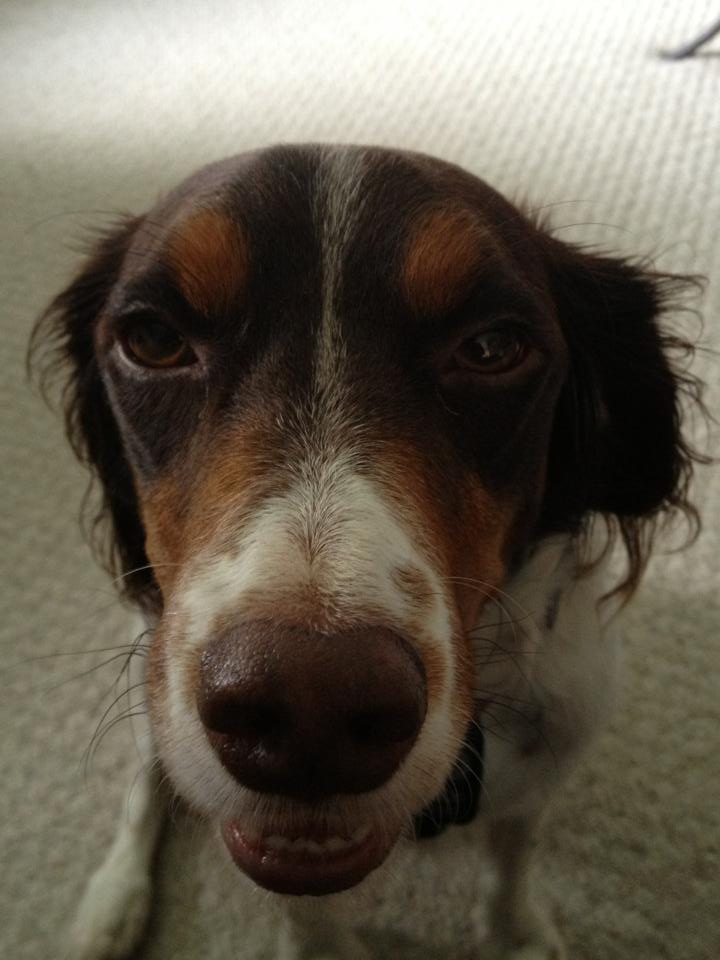
Baci is a 6 year old Brittany who we have owned since she was 2 months old. Outside of being a pain to get house broken (I think it took almost 2 years), she is the best dog I have ever owned. I think she’s had an influence on our entire family, as she shares her joy and love unabashedly. So if one dog…

View original post 733 more words

Exploring our edges. My drive on Mount Tamalpais.

I have traveled to Northern California over the last year to take ORSC training by CRR Global. Since I was, for twenty years, a resident of Northern California this training has given me the opportunity to travel to many old haunts, sightseeing and visiting with friends and family. So when I arrived at 2 PM on a Thursday with the entire afternoon to kill, I had to think, where do I really want to go. My final destination was my hotel in San Rafael. But what to do with 4 plus hours on my own with absolutely no commitments. After searching the current exhibitions at all the local museums with nothing of interest, I decided I wanted to conquer Mount Tamalpais.exploring edges

I knew from experience that I should be able to drive up just shy of the summit and that the drive to the top, on a sunny day, would be spectacular. Well, since it was a sunny day, mid-week (i.e. less tourists) I set my GPS for Mount Tam and headed north over the Golden Gate Bridge. So this might seem like it’s not a big deal but I have suffered from acrophobia for most of my life. As I happily drove up to the summit I suddenly realized why I hadn’t been up to the summit in over 2 decades. It’s a long way down to the Pacific and there are no guard rails. I definitely was crossing an edge. The ironic thing is that I was attending a CRR Global session the following night titled “Exploring our Edges” and here I was literally exploring my acrophobic edge.

So this is what I learned about exploring my edge:

1. Name it. Probably the biggest advantage of coaching is that, through powerful questions, you name the obstacle, desired outcome or future state you are seeking. Whether it’s dumping your day job, deciding to propose, changing your business focus or quitting smoking, name the change. It’s not until a coach asks me, “How do you want it to be?” that I realize I want to run a marathon or write a book or start a new business. When you are crystal clear on where the destination is and name it, it’s much easier to explore. It would be like looking at maps of Haiti when you really want to go to Tahiti. Be sure to name it.

2. Experience it. In the CRR Global session, we each had a partner to explore our individual edge. There was blue painter’s tape on the floor shaped as an isosceles angle. The pinnacle of the angle was the “edge” and the left side was labeled “now” and right side labeled “future”. Standing with a coach next to you to experience where you are on the edge (right next to the pinnacle or way down at the base or already on the future side). This helps to reveal your emotional attachment or lack of attachment, your resistance or uncovers your ambition, your fear and your passion. It’s quite different to physically take a stand instead of just talking in the hypothetical. It makes it real. Be sure to experience where you are versus your edge.

3. Test it. When we were exploring our edge in class, we were encouraged to test getting over the edge any way we wanted. Some folks took baby steps up to the pinnacle, one person got down on the floor and sniffed the edge, some jumped to the other side. And then jumped back. I tell you that when I got to the top of Mount Tam and realized I needed to drive back down from where I came, I panicked a bit. Then I realized it was my edge and I could deal with it anyway I wanted. I drove the hairpin turns with a thousand foot drop off at ten miles an hour and imagined I was in the middle of a corn field in Kansas (as flat as could be). As the altitude dropped, my speed increased, and if a car came up behind me, I pulled over so they could pass. I was testing my edge at my own pace.

4. Design it. As you test and experience the change you want, you suddenly become aware of what you need to do to get there or not get there. I’ve seen clients decide that they need be patient and wait for their next stock option vestment, or to sign up for the next coach training or call their financial advisor or get their website up or get safely to the bottom of the mountain. When you finally have some clarity, it becomes apparent what you need to do. Design your next step.

5. Check it. It always helps to have accountability. Whether you put your action step on your own calendar or promise to email your friend after you sign up for that new class or when your website is live. When I drove to the top of Mount Tam, I let my husband know where I was going. If you don’t set up something to be cross checked, it gets lost in the ether; like many good intentions, never to be heard from again. Make sure you have a way to check progress whether internally or externally.

When I began writing this, I had to research if I had vertigo or acrophobia. It is acrophobia (a fear of heights) and apparently women suffer from it twice as much as men. As infants and toddlers we have a natural fear of cliffs. This brought me back to an incident from my childhood. Apparently as a two year old, I tried to crawl out of a second story window and my father saved me just in time. So if I didn’t have the fear of cliffs before, I most certainly did afterwards. I will continue to explore my edge. What edge do you need to explore?

How to unchain from your children. Lessons from coaching.

Being a parent is a difficult job. There is this sense that your child’s happiness is completely dependent on you. Dare I say chained to you. So if Jimmy gets an F on his book report, you must pick up the pieces and find a way for Jimmy to succeed. I can remember one of the first girls, OK maybe the first five girls to “date” my son, ended the relationship by text. The relationship may have lasted just some 36 hours but I was devastated that they had the audacity to break up with my son via a text. Really? How heartless. That’s my hugga bear you just broke up with. I can look back now and see it was futile to get wrapped in the ups and downs of adolescent heartbreak. The secret is to be unchained from the outcome and present in the moment.Unchained from your children

I coach several folks who are parents as well. I see the struggle of trying to reconcile their own happiness with the happiness of their children. It’s natural for parents to want to see their children succeed. But chasing that happiness for them can be detrimental. All you really have is your own experience. And your children have theirs. When they were in a car seat or crib, you had a lot of control over their happiness. You could change their diaper, grab a bottle or entertain them with a rattle. Once they head off to school you become less and less able to dictate their happiness and they become more and more in charge of their own fate.

So here are the lessons I’ve learned:

Normalize. There is comfort in knowing that whatever you are going through, that practically everyone else has been there. Normalizing is a technique as a coach to find out if in the client’s heart they realize that what they are going through is normal. So whether it’s telling a client “isn’t it normal to want your son’s wedding to be perfect” or tell my daughter “isn’t it normal to want a committed relationship?” This is coaching 101. Everyone thinks their thoughts are unique to them. But we all suffer from our thoughts. Having a client realize on their own that what they are thinking is normal can lower the anxiety level. Be sure to normalize your own and others thoughts.

Separate. I had a client recently who has been working hard to separate herself from the drama that is planning a wedding for her son. If you haven’t been through the experience, the wedding is all about the bride. Being the mother of the groom can be very difficult. When it comes to a decision, the bride and her mother get to win. No matter what. My client has made great strides in letting the wedding be about them and not her. She has been able to look at it from a different angle and through a different lens. She is just an observer and the result has been much less strife. She’s been open to whatever decision comes along. As she said after the wedding, “Because I did not become part of the “drama”, the wedding experience was absolutely amazing! I enjoyed every single part of it. Practically, stress free. Learning to take yourself out of the equation when possible makes life much easier. “Separate yourself from the drama.

• Don’t buffer. I have another client who feels she has to be the buffer between her children and her husband. So if her daughter doesn’t sign up for the class in time, my client feels like she needs to buffer her husband from the information. I have lived this myself. I felt as though I had to make sure any negative information with my kids was properly couched to my spouse; and that the best light was shone on the issue at hand. It’s exhausting. I had to realize that my husband was a big boy and could handle the disappointment. I am not responsible for his happiness or his interpretation either. Allow others to speak for themselves; don’t buffer.

Don’t attach. The outcome is not attached to you. If my client’s son’s wedding is fantastic or if the bride leaves her son at the altar (ala The Graduate), it is not a reflection on the mother of the groom. As she said to me in our last session before the wedding, “I just want to be present and enjoy the moment”. She’s not attached to the outcome. She is just there to experience it and support this new beginning.

Let go. In the last few years I have really worked on letting go. I’ve seen my son and daughter decide on colleges, careers and love interests. I’ve seen my kids make decisions that I wouldn’t have. Piercings, hair styles and music preferences. I have let go of my judge and sent the judge on a mission of silence. As my client with the groom said, “And in regards to letting go, it is difficult, but when you do let go, the burden is lighter-you still worry, and of course pray for their safety, but the rest is out of your control. And, yes, it is much easier said than done.” What they do, is what they do. I hope nothing is life threatening but when your child is over 18 there really isn’t much you can do to change the course of their life. Let go.

I’m not saying it’s easy but I know that their happiness is their responsibility and my happiness is mine. Let them get there on their own path and don’t feel like you have to run ahead with a machete clearing the way. What have learned from being a parent?

6 Reasons Why You Need Music in Your Life

My Rotary Club toured a local elementary Charter School a few weeks ago and there was a wall near the music room that had the question, “Why do you need music?” There were about 100 or so responses that had each child’s name, grade and individual response. It was really interesting but one particular response jumped out to me. Gavin in Grade 3 said, “It makes your mind explode”. Quite profound for an 8 year old. Explode is a powerful word and it resonates for me. It’s kind of like the old tag line for Coke: “Things go better with Coke”. Things go better with music; life goes better with music.

6 Reasons Why You Need Music in Your Life
For me different songs take me to a particular moment in time in my life. Songs in the Key of Life by Stevie Wonder transports me to the front porch 210 College Avenue in Ithaca, NY. My friend Mark and I sitting on a sofa on that porch watching folks walk by during the spring of my sophomore year. Who let the dogs out reminds me of my son at age 5 dancing to the music in the middle of Windsor Water Works transfixed by the beat. Mac the Knife with Bobby Darin is definitely my Junior year of college and my co-workers from Noyes Lodge making shark bites with our hands. I hear that song and I am there. As I was hitting the last .1 mile of my half marathon and Katy Perry’s Firework came on my iPod to carry me through. Transported totally.

Well there are a lot of scientific reasons why music is so good for you and here they are:
1. Brain Function. Music activates cross function between the left and right brain. According to the Journal of the Royal Society of Medicine, “Rhythm and pitch discrimination are processed mainly in the left hemisphere whereas timbre and melody are found chiefly in the right…. listening to music would prime the activation of those areas of the brain which are concerned with spatial reasoning.” So if you want your left and right brains to connect, listen to some Mozart.

2. Better Grades. Another quote from that music room wall was “It helps you learn – try saying your ABC’s without singing the song”. I have to admit, when I used to have to actually file in a file cabinet (so old school), I used to sing the abc’s especially around l,m,n,o,p. But the American Music Conference has cited research that shows studying and creating music may help improve your capacity to learn other subjects and get better grades overall. Nothing wrong with that. Even to learn another language.

3. Universal. In an article by askmen.com, “Ask any American backpacker what subject comes up when they are at a conversation standstill with an Argentinean that doesn’t speak English – invariably Led Zepplin, Metallica, Eric Clapton, the Rolling Stones and Pearl Jam will be discussed.” I remember my tour of Colombia in my middle twenties. Everyone asked about Madonna and Michael Jackson. Everyone. It is the universal language.

4. Exercise. I never would have survived training for a marathon without my iPhone and my trusty ear buds. When you are running 15 miles for some 3 plus hours, the greatest motivation is the beat beat beat. According to Active.com, “Research suggests that music really can boost athletic performance. Liverpool John Moores University in England looked at the effects of music of different tempos on stationary cycling performance. The subjects’ average power output over the full 25 minutes was found to be 3.5 percent greater when the music tempo was increased. Their power dropped by 9.8 percent when the music was slowed down.” Music powers exercise.

5. Pain relief. According to the Journal of Advanced Nursing, music can reduce chronic pain by up to 21%. “The results from a clinical trial revealed that people who listened to music for an hour each day for a week had improved physical and psychological symptoms compared to those who were deprived of music.” Listening to music might just be the best medicine.

6. Emotional benefits. As I am writing this, I have iTunes playing my “Create” music list which has nothing but instrumental songs on it. Anything from classical to Zoe Keating to Ottmar Liebert. Well any time I hear Ottmar Leibert and his spanish classical guitar it transports me back to being 8 months pregnant with my daughter in Albuquerque, NM. I used to turn on Ottmar when I was cleaning the house or reading. I was pretty sure that Natalie would come out with a Classical Guitar in hand after all those hours of listening to Ottmar. It was relaxing and calming. I remember in the actual delivery room, we had tapes of Ottmar playing. I’m not saying it was easy but it was soothing.

This has really opened up a can of worms of memories for me. One more I have to mention is my dad playing Simon and Garfunkel and Joan Baez LP’s when I was a kid on the HUGE hifi in the living room of our house in Wilmington DE. “Parsley, Sage, Rosemary and Thyme”. Music becomes ‘that bridge’ between so many different things in life. It’s really amazing when you think of it. Music has even been found to help prison inmates relax and be less aggressive. It can be life changing for all of us. What song is a big memory for you?

6 or 7 More Apps no Traveler Should be Without

I wrote a post a few months ago about apps for travel and received several more suggestions from some loyal readers! So I decided to road test a few and I have several to pass onto you. I don’t want to recommend what I haven’t tried out myself. Some of the apps I was already using and it took a nudge from a reader that it was an appropriate travel app. Actually, I kind of hit my forehead and said, duh, of course you have to have the Uber app.6 or 7 More Apps No Traveler should be without

Since my last post on travel, my husband has been using Waze and has been using it every day on his drive to and from work. They have updated the app to send ETAs to others on the app. I have to say it is fantastic to receive the ETA on my phone and know that he’ll be home in 22 minutes, shows the route he is on and will update the ETA when he stops as a gas station or is delayed in some other way. If I had a child in high school behind the wheel of a car, I would mandate the use of this app. No texting or calling while behind the wheel is necessary!

So here are my additional 6 (or 7) Must Have apps:

1. Uber. This is like a personal chauffeur service that is amazing and usually inexpensive. When you open the app it will get you a quote on how much it will cost to ride from your current location (say a hotel) to another location (perhaps a restaurant). If you decide the rate is acceptable, it gives you an ETA for the car to arrive, a description of the car and photo of the driver and follows the car as it comes to your location. The other amazing thing is that it automatically charges a credit card on file, so you don’t have to mess with swiping your credit card when you arrive at your destination. I love Uber but there has been some recent press and controversy over competition with taxis. I was recently in San Antonio and it was banned. So verify it’s available in the city you are traveling too.

2. GasBuddy. Have you ever been in the middle of eastern Georgia on Interstate 20 looking for a gas station? This is the app to have. It shows both by price and distance where the closest or cheapest gas station is. You can also update prices if you pass a gas station that has the incorrect price in the app and sort by type of gas you need such as diesel or premium. So if I’m low on gas I can check if I should wait and fill up in the next town and save 20 cents or stop at the next station. As a woman traveling alone in a car, this is a must have app.

3. Fly Delta. I’m not sure how long this app has been available but a passenger on a recent flight told me about it. Delta previously just had an app that showed flight status, arrival and departure gates. This new app is amazing. Now you can check in, have your boarding pass and find out your flight status. The minute you land it notifies you of your arrival gate and departure gate when making a connection. It also tracks your bag (you can rest easy that it’s on the same plane as you!) and lets you know the local weather. Phenomenal. That’s a lot of flight info packed into an app!

4. WebMD Allergy. I am allergic to dust, grass, and trees. I was suffering badly before a recent trip and found out this was going to be a really bad allergy season on the East coast because of the exceptionally cold winter. I searched for an allergy app and this one is terrific. It notifies me first thing in the morning if tree pollen is high and gives tips on what to do. You can search the city you are traveling to and find out whether there are any allergy issues there. I was relieved when I went to San Antonio because they had less allergens.

5. HHonors. This is Hiltons app which includes a whole host of hotels from Hampton Inns to Waldorf Astoria. This app has recently been improved because you can now check in using the app. You can even select which floor and room you want to have. In addition, at some hotels you can make requests for upgrades or items for your arrival. This app is invaluable if you ever get delayed beyond your control. I have booked a room after midnight on the DC beltway and used my honors points to pay for it.

6. Red Herring and 7 Little Words. These are just fun apps to play while on an airplane or at the airport. They start with 50 free games but you will have to pay for additional games eventually (because these games are addictive). Red Herring is about grouping 16 words into 3 groups while leaving aside 4 “Red Herring” words. It’s nice because you can set the difficulty. So if you are brain dead you can select “easy” and feel very superior by our grouping prowess. 7  Little Words is a cross between word find and crossword puzzles. The best part of this game is the smiley face when you put together all 7 little words.

Ok. So there you have it. 6 (actually 7) more apps to try out on your next trip across the country or across town. What apps do you travel with?

Dismantling the Judge in Your Head.

I’ve been reading Shirzad Chamine‘s Positive Intelligence. This has shone a huge light on what I’ve previously written about as the inner critic. As Shirzad posits, everyone has a group of saboteurs and the one everyone has is in common is The Judge. Basically, we are all running around with a Judge in our head who is constantly pointing out where we are falling short. So my pants are too tight because I am lazy and fat. I didn’t get that spectacular job because I’m not good enough. Suzy just walked by my office without saying hello because of something I did. Hmmm. I wonder what I did. She thinks I’m inadequate, she thinks I’m too bossy, she thinks I’m ugly. If this sounds like the ticker tape in your head then you have a Judge as well.dismantling the judge in your head

I find it remarkable that Shirzad stepped out on a limb and pointed out to a group of grad students that he felt inadequate and that they all concurred. How vulnerable. Well, I have to say I’ve been listening to my Judge for far too long. It’s useless and debilitating. It can and has brought me to a standstill. This particular saboteur is constantly holding me back and all the while, I am actually free to choose if I want to listen to it or not. I find that not only am I judging myself, but I am judging circumstances and others as well. So it’s raining in beautiful San Antonio because it’s just my luck. The water dispenser is out in the fitness room because this hotel sucks. The train going by at 3 AM is so happening to be annoying. That woman who cut in front of me in line at the lunch buffet because she is arrogant. All of these judgments. All day. Everyday. It’s exhausting. Time to dismantle the Judge.

So I’ve been working on this and this what I have found so far:

1. Name it. Shirzad recommends giving it a name. So whether it’s Executioner, The Critic, Tormenter, or as I have recently tried Sister Mary Catharine (and she has a ruler in her hand). Giving it a name gives some separation. So much of my inner dialogue is about beating myself up. Identifying “who” is saying all this takes it out of the shadows. Shirzad recommends that if you can’t think of a name you can clearly identify with, just call it The Judge. If you are like me, you spend weeks trying on different names and then give up. So use The Judge unless something else resonates. Just make sure you name it.

2. Voice. Give your Judge their voice. As instructed by Shirzad, I have been reframing my judgments by giving The Judge a voice. So instead of thinking “I think I look fat in this dress”, think “the Judge thinks I look fat in this dress”. Or “I didn’t get that job because I’m not good enough”, think “the Judge thinks I didn’t get that job because I’m not good enough”. Now the Judge is out in the open and, most importantly, you realize it’s not you. Give your Judge a voice.

3. Creator. Instead of being the victim, be the Creator. David Emerald‘s book, The Power of TED, presents the idea that the victim is living in a negative space that is constantly reacting. From my vantage point, that means the victim is constantly listening and buying into the Judge. Emerald writes. “for Victims, the focus is always on what they don’t want: the problems that seem constantly to multiply in their lives. They don’t want the person, condition, or circumstance they consider to be their Persecutor, and they don’t want the fear that leads to flight, flee, or freeze reactions either. Creators, on the other hand, place their focus on what they do want. Doing this, Creators still face and solve problems in the course of creating the outcomes they want, but their focus remains fixed on their ultimate vision.” Be a Creator.

4. PQ Reps. The biggest take away from Positive Intelligence is trying to do PQ reps 100 times a day. I rolled my eyes when I thought of doing anything 100 times a day. BUT a PQ rep is really just 10 seconds or 3 breathes of being present. This has been fascinating to try for the last week. When I walked my dog this morning I was constantly doing PQ Reps. So I smelled some honeysuckle, I spent three breathes smelling the honeysuckle. Then I listened to birds for 3 breathes, then felt the breeze on my face, then listened to my dog panting, then watched a cardinal, then stopped and smelled some roses (yes, seriously). The point of this is to bring you back to your prefrontal cortex where you do your best thinking. When you are listening to the Judge you are in your limbic system and, outside of fleeing from danger like a Saber-toothed Tiger, it’s really not that healthy for you. Try getting in some PQ Reps.

5. Empathy. One of the superpowers that Positive Intelligence brings is empathy. I think I’m pretty empathetic but Chamine promotes being empathetic towards yourself. Have some self-compassion. He suggests finding a photo of yourself when you were a child and full of possibilities, passion and wonder. I found a picture of myself and set it up as wallpaper on my phone. I see that picture of myself every time I swipe the phone (which is turns out is a lot). I see this brave little girl in the middle of Rocky Gorge, one of my favorite places from my childhood in New Hampshire. There is her bright shiny face looking at the camera braving the chilly torrent of a rocky river. That girl? She’s amazing. I want to protect her from the Judge. Find empathy for yourself.

6. Curiosity. Chamine recommends another super power of curiosity. It’s funny because Emerald suggests the same thing. I have written before that curiosity is the antidote for fear. It’s also the antidote for your Judge. The Judge wants you to be choked by your fear; to standstill and resist. Curiosity opens the curtains. It shows all the possibilities. It’s liberating. Reframing any conflict or issue or assumption into curiosity makes it possible. You’re just an anthropologist studying the “Culture of You”. Hmmm. I wonder what would happen if I just called that new client. Hmmm. I wonder what would happen if I went to that meeting alone. Hmmm. I wonder what would happen if I just apologized. Find your curiosity.

I have to suggest you go to Chamine’s website PositiveIntelligence.com and try out some of his assessments. Find out your PQ score (mine was 71) and see if you can move the needle (you want to be above 75). He also has some guided audio sessions to help you connect to your prefrontal cortex (did I mention they are free?). So in the meantime, I continue to dismantle my Judge. How do you shut down your judgmental voices in your head?