How to Champion Validation in Your Organization.

You know it the minute you walk into the doors of an organization. You feel the camaraderie. People are connected. They respect and trust each other. The energy. The pulse. This place is pumping out enthusiasm and positivity. The receptionist makes eye contact, smiles and is sitting tall in her chair. People. Your associates. Your direct report. They are all looking for validation. It might stem from being picked last for the dodge ball team but it’s there. A deep need for validation. validation

I just watched an interesting YouTube directed by Kurt Kuenne called “Validation”. My co-instructor at Duke University, Sandy Lewis, shared it with our class and it is a real eye-opener. It’s a fable about a parking attendant who gives REAL validation – dispensing free genuine compliments and parking. Watching this character transform the lives of the dreary folks just walking up to get their ticket validated is interesting. He stands there and gives out genuine compliments like “that dress you are wearing matches your eyes” or “you are amazing”. Once he has the customer smiling and transformed, he validates their parking ticket. This ends up have a ripple effect and pretty soon there is an enormous line of folks looking for validation and transformation. So think about that. What if you could change your organization just through validation?

Let’s see how it’s done.

It always starts with you. This is what I admire most about my co-instructor Sandy. She is always positive. She is always showing appreciation. There are no bad apples. The glass is always half full. What kind of aura are you sharing with the world? Are you Eeyore or Winnie the Pooh? Sandy is definitely Winnie the Pooh. Spreading sunshine and connection wherever she goes. Look at yourself in the mirror. What kind of energy are you sending out? It’s impossible to validate anyone else if you can’t validate yourself. As written by Dr. Linda Sapadin in her article, The Importance of Validation, “First and foremost, you need to give it to yourself. When you recognize your good traits, you are not being narcissistic. When you praise yourself for your accomplishments (provided you don’t go overboard), you are not being self-centered.” Self-validation is the starting point.
Be present with your co-workers. Technology kills being present. Looking at your phone while sitting in a meeting or getting off a few emails while listening to your assistant complain is not going to work. This happened the other day. And when I realized I couldn’t hear what he was saying, I stopped. I said “give me a minute to finish this email. I want to be able to listen to you.” You cannot be in two places at the same time. Pick one and show up. Be present.
Constantly be scanning for opportunities to compliment folks. As Kenneth H. Blanchard, The One Minute Manager, espouses “Help people reach their full potential, catch them doing something right.” Don’t you gravitate towards folks who compliment you? The acknowledgement is infectious. If you infect one person with a genuine compliment, it spreads. A social “pay it forward”. In the YouTube spot, people lined up for the validation. You will need to seek it out. In the ladies room, “that’s a pretty blouse.” At the employee meeting, “I love your laugh”. Via email, “thanks for making this happen so quickly.” Spread the love.
Try and be as specific as possible. If you are specific it’s more genuine. Example: “Good job” or “you were so timely and accurate with this report, I was able to sway the board”. Which feels better to you? I know it’s faster and easier to just say “good job”. Heck, some folks might be surprised if at you least said that instead of deafening silence. Why do you like someone’s tie? Or what is so great about the spreadsheet? Being specific helps it connect.
If practical, be as public as possible. Vince Lombardi famously said “Praise in public, criticize in private”. Sandy did this. She asked me to swap classes with her so that she could go on a trip with her husband to Barcelona. It wasn’t a big deal to me. She told the whole class how generous I was for agreeing to the swap. It was unexpected but her public appreciation and validation was terrific. And guess who I am likely to do a favor for in the future? Right. When someone does something right be sure to publicize it.

This is not a quick fix. It is a slow process to have an impact on an organization. Similar to the story of the boy throwing starfish one at a time into the ocean to save them – The old man replied, “But there must be tens of thousands of starfish on this beach. I’m afraid you won’t really be able to make much of a difference.”
The boy bent down, picked up yet another starfish and threw it as far as he could into the ocean. Then he turned, smiled and said, “It made a difference to that one!” So go out there and make a difference in just one person’s life. In a month or so it will be your entire department, and then your division; eventually, your entire organization.

Originally published on Change Your Thoughts on October 10, 2015.

Autonomy. The Ultimate Gift to Everyone in Your Life.

Have you been a helicopter boss? Helicopter parent? Helicopter friend? I have. Constantly restricting the flow of information so only you make the decisions. You make sure all procedures are followed to the letter….or else. You set unrealistic goals so that your direct report will certainly fail. You keep a tight grip on someone else’s autonomy so you can feel in control.

Have you been on the receiving end of this deal? This takes me back to my first husband who had a motorcycle. We went to Golden Gate Park in San Francisco so he could show me how to drive the bike. Well. When I got on the bike and started to push the throttle, he held onto the back of the bike and it practically tipped over. No injuries but he just couldn’t let go. End of bike lesson. I have never driven a motorcycle since.

autonomySo how do you give the gift of autonomy?

Here are some ideas.

Let them fail. Yep. You read that right. You need to be able to let the people in your life either at work or at home, fail. I know I just made some parents out there wince. What? Let Johnnie flunk out? Let Suzy lose her job for being tardy all the time? As Thomas Edison famously said, “I have not failed. I have just found 10,000 ways that won’t work”. From failure comes immense learning and innovation. Autonomy is about letting them fail.

Quit expecting perfection. This is why managers don’t delegate. They want everything to be perfect. I have news for you. You never get to perfect. The perfect job, the perfect size, the perfect presentation. It is not attainable and paralyzes those around you. Acceptance of imperfection is where it’s at. People work harder if they know that you will be fair in your assessment and not point out every missed period or exclamation point :-)he he…

Ongoing and going and going positive feedback. If you did not get ongoing feedback from your mother, you would never have walked. So even if you fell down, she didn’t sit on the couch reading a newspaper. She gave you constant and ongoing feedback. So think about that the next time you delegate an important task. Dr. Marcial Losada created and studied this ratio of positive to negative messages within relationships and organizations. What he found was that organizations that have 2.9 or more positive messages over negative messages thrive. Those that fall below fail. In a marriage, it’s got to be 5.0 or better (thanks for emptying the garbage, Honey). Give positive feedback.

Don’t focus on problems. Focus on best outcomes. Ask your friend about what his best outcome would be. Focus on The What that he’s interested in. So Joe, “What would you like to see happen with this project?” “What can you control in this situation?” “What would make you feel like you accomplished something?” As David Rock espouses, focus on solutions (and stay clear of the problems). Keep it outcome based.

Don’t always have the answer. I am completely and utterly guilty of this. I am the Answerer in Chief. Life is one giant Jeopardy game and I’ll take Potpourri for $1000. Autonomy is all about your co-workers figuring things out on their own. If you always are giving the answers, they will never learn to “do” or “think”for themselves; they will merely mimic you. Autonomy is all about folks doing their own thinking. Let them make the connections. Teachers don’t give exams and sit there and give all the answers….right?

Mindset, talent and skills are not fixed. Embrace the growth mindset. As Carol Dweck defines it,

“In a growth mindset, people believe that their most basic abilities can be developed through dedication and hard work—brains and talent are just the starting point. This view creates a love of learning and a resilience that is essential for great accomplishment.”

Autonomy involves having the growth mindset. Don’t look at what they can’t do, look at the possibility of what they can do.

So there you have it. How to encourage those in your life to have more autonomy. One of the three parts of motivation in his book Drive as written by Daniel Pink – autonomy, mastery and purpose. Pink says “Control leads to compliance; autonomy leads to engagement.” Imagine what we all could achieve with more autonomy. So give it away starting today.

Originally published on Change Your Thoughts on September 26, 2015

Time to Cowboy Up and Turn off That Phone. Lessons in Uni-tasking.

It sucks you in. It captures your attention. Those sly notifications. It’s like a hit of some illicit drug. You just have to pick up that phone and see if someone is reaching out to you with that million dollar deal. That windfall. An old flame trying to rekindle. The rich uncle who left you his Tesla. The reality is that it is nothing but deception. Most of those emails and other sundry notifications are just temptation into nothing but junk. Spam. Some old college friend you half remember liked the photo of a sunrise. And you stopped what you were doing and came to a screeching halt? Do you want to know what that is costing you? The illusion of multitasking is wearing you out.

The answer lies in having the courage (yes courage) to shut that damn phone off. Yes. I said off. To do your best work you need to uni-task. One thing at a time. But I hear you balking. “I can’t give up my phone. There might be an emergency.” Truth is there is no emergency. The phone is just making you believe it is so.

disconnectHere is are the reasons you need to cowboy up and turn off that phone:

1. The cost of context switching is huge.

Check out Gerry Weinberg’s chart of productivity loss. Basically if you focus on one project like writing this blog post; there is 100% productivity and no time lost switching contexts. But if you try to write a blog post while emailing your boss and writing a new marketing project; in other words, working on 3 projects at once you will have 20% productivity and 40% lost to context switching. That’s a huge loss! You’ve been there. You are right in the middle of the flow of creativity and the phone rings. It’s nothing important but it will take you time to get back to where you were. Time lost in trying to get back THERE is huge. And often that ‘next thought’ is lost forever.

2. Multitasking gets you there later.

Roger Brown wrote this article for InfoQ. Brown writes, “We know that simple interruptions like a phone call can cost as much as 15 minutes of recovery time. The more complex the task, the more time it takes to make the shift.” It’s like constantly hitting the pause button. Actually it’s more like hitting the reverse button. One step forward multitasking is taking you two giant steps back. You’ll never win “Mother May I” with that sort of tactic.

3. It’s harmful for you brain.

Brown writes, “There is evidence that multitasking actually degrades short term memory, not just for the topics being multitasked but possibly by impacting areas of the brain.” Your prefrontal cortex requires a lot of energy. It’s where you do your best work. If you are constantly stressing it out by dragging your thoughts into fight or flight (which is what distractions are doing to you) you will not be able to do your best work. Mistakes will happen. And the constant stress is bad for your brain.

4. You are just scattered.

As Jim Benson wrote for Personal Kanban, “The study found that self-identified multi-taskers ended up people who were merely justifying a scattered lifestyle. Perhaps they felt productive because during a day they touched so many different tasks – but when actually tested against people who focused on one thing at a time, the multi-taskers lost and lost big.” I think of Thanksgiving Day. I am multitasking trying to get a meal together that I make once a year. I am not used to making a turkey, stuffing, mashed potatoes and gravy, salad, veggies and pumpkin pies all in one fell swoop. It’s a one off event. And if you looked at my kitchen, it would most likely be described as a disaster (i.e. very scattered). And that’s not how my kitchen usually looks.

5. It’s really expensive.

As Steve Lohr wrote for the New York Times, “The productivity lost by overtaxed multitaskers cannot be measured precisely, but it is probably a lot. Jonathan B. Spira, chief analyst at Basex, a business-research firm, estimates the cost of interruptions to the American economy at nearly $650 billion a year.” The billion with a B. Companies are spending money on all the unproductive, recovery time to get back on task.

So what do you do? Create time blocks to do your best work and turn off your phone. Complete one project. Complete one phase or one chunk. Then move on. Turn on music without lyrics (i.e. classical). Get present and focus. Think of all the good you will be doing for yourself and others. And think of the free time you’ll have after to just enjoy life.

Originally published on Change Your Thoughts on September 11, 2015.

My Love-Hate Relationship with Northern California.

It’s been thirteen years. I dumped Northern California because I didn’t trust it any more. There was no way my house was worth the inflated mortgage I was paying. It was the age of rolling blackouts. The company I was working for had been for sale since my first day of employment. I had no idea what middle school my daughter would attend but I knew it would be at least a 45 minute commute. I was a Human Resource executive and California was manufacturing labor laws faster than I could keep up. Doing business in California involved jumping through more and more and more hoops. There was going to be a mass exodus and I wanted to be in the first U-Haul out. So I went ahead and dumped Nor Cal and moved to North Carolina and didn’t look back until this last year.

I’ve had several trips back to California in the last year for training with CRR Global. I’ve had the chance to rediscover all the things I loved so much about Nor Cal and all those things I don’t. It’s like meeting up with an old lover and loving that cute smirk but hating that he leaves the toilet seat up. It’s a love/hate thing. There is the good and the bad. The yin and the yang.
my love hate relationship with Nor Cal

Here they are:

1. Redwood trees. These are the most beautiful, enormous, magnificent awe inspiring groves of trees anywhere in the world. Breath. Taking. There is nothing like looking up at a 250 year old tree that has been around longer than the United States. We actually stepped into a tree (Yes. Stepped INSIDE) that was alive and had a hole that ran through the entire length of the tree and you could see the sky at the other end. They are resilient through fire, earthquake and flood.

What I hate? There is no easy way to get there. Every trip to a redwood grove involves a death defying trip down a winding twisting road. My big brother was behind the wheel so at least I wasn’t attempting the maneuver of the white knuckle drive but as we went to Big Basin State Park I did mutter a few prayers.

2. Pedestrians are king. When you are strolling along the waterfront in Sausalito or Tiburon and you suddenly see an ice cream shop that strikes your fancy, you may safely walk directly across the street without looking for oncoming vehicles because they will stop regardless of whether or not you are jaywalking. And bring your pets too. Because the cars and buses will come to a screeching halt so that you may check out that T-shirt in the boutique that just went on sale.

What I hate? Being on the driving end of this deal. My son and I drove through several towns and it was AMAZING how many folks and their dogs and their bicycles walked blindly into the street without a care as to whether there might be a vehicle within 30 feet. Pedestrians are king and vehicles are just a nuisance.

3. Let the fog come rolling in. There is a natural air conditioning system and it’s called the Pacific Ocean. When I actually lived in San Francisco some 35 years ago, there was no need for air conditioning or bathing suits and shorts for that matter. On the flip side, it was never that cold in the city in the winter as well. So basically, you could have the same wardrobe all year long. And it is ALWAYS 50 degrees at night.

What I hate? As W.C. Fields famously said “The coldest winter I ever spent was a summer in San Francisco”. So you will never need shorts. You will never go swimming at Ocean Beach. Not only is the water temperature too cold but so is the air temperature. And while I’m on a rant. When I would drive from Novato to SFO, I drove through 5 micro climates. From hot (windows up and air conditioner on) to tepid (windows down, air off) to freezing (windows up and heat on) in a matter of 45 minutes. Because it’s 50 degrees when the sun sets; you will be barbecuing in a parka.

4. Diversity is embraced. Every walk of life is embraced in Nor Cal. Language, ethnicity and sexual orientation are all wide open. It’s a live and let live life. Vegetarians, vegans and recycle purists can safely compost without any judgement. The market basket of endless possibilities of organic, farm raised vegetables and fruits is amazing. There is a flavor for every taste. It’s exciting to be able to dabble in all of the culinary choices.

What I hate? This openness and the weather attract a huge homeless population. As I drove my son through Golden Gate park I was shocked to see that at the end of the park some 50 or so homeless at the intersection of Haight Street. And of course the recent kerfuffle over foie gras seems a bit closed minded. But once a foodie, always a foodie.

5. Hotbed of intelligence, progress & opportunity. The amount of creativity in California is rather astounding. Google, Facebook, Apple, Hewlett Packard…they are all here. A stone’s throw from each other. I took a class in the middle of Google’s campus last year and the Google bikes were omnipresent. There is a vibrancy about it. There is progress and innovation on a palpable level. Heck, the Google car drives through my brother’s neighborhood on a daily basis. How cool is that?

What I hate? For all its innovation and forward progress the traffic and parking are almost on the magnitude of LA (not quite but real close). There are insane commutes of over an hour and 30 minutes EACH way. And the public transit is disjointed. I remember being without a car when I lived in Pacifica and had to commute to Santa Clara. It was impossible. My husband ended up taking me to work at 5 AM on the back of his motorcycle to get to work. An hour on the back of a motor cycle in 50 degree temperatures and fog was miserable.

6. Cutting edge food. You can safely assume that I am a devout foodie. And there are endless options from high end French, to food meccas like Chez Panisse and hole in the wall coffee places like Blue Bottle Coffee. The Farmer’s Market at the ferry building where you can actually find foie gras in one of those stalls. Amazing. I’ve lived in New York City and have visited many other cities but the San Francisco Bay Area is the mother lode of food options.

What I hate? It’s frigging expensive. We all went to a restaurant in Healdsburg and some of the appetizers were over $20. That is outrageous. It’s also impossible to get a reservation without 6 months’ notice at some of the more renowned restaurants. So as a visitor, unless you have planned it a year in advance, you won’t be eating at the better places. Of course that saves money on the trip but who wants to travel THE food mecca only to grab breakfast at the hotel buffet.

I do seem to leave my heart in San Francisco every time I revisit. There is something so predictable about not having rain for 6 months of the year and the fog pouring over the hills. It’s just that it all gets jerked around by the steady stream of money out my wallet and the catch 22 of having to drive a car but not being able to park. So how about you? Do you love it or hate it?

How to Reignite Your Employees.

Your assistant is constantly calling in sick. Your technician seems to always be on smoke breaks. You sit in your cube gnashing your teeth frustrated because your project is going nowhere. The folks at your team meetings are passive. Disengaged. Ambivalent. There is no action. Just excuses.
It’s frustrating…isn’t it?

How to Reignite Your Employees

I have to say I stumbled on an absolutely engaging program from Franklin Covey called 5 Choices to Extraordinary Productivity. I facilitated this workshop a little over a month ago and we had the 5 week follow up this week. I thought the materials for the class were good but I didn’t realize how good. The rag tag team of 14 participants went from being in the 64th percentile in productivity and sky rocketed up to the 94th percentile 4 weeks after the class. That’s almost a 50 percent improvement in productivity. 50%!
Whoa. That’s incredible. Imagine what you can do with 50% more productivity. Heck, I would have been happy with 10%. That’s a lot more widgets on the sales floor. That’s a lot more customer satisfaction. And, most importantly, that’s a lot more happy engaged employees doing a good job.

So this is my take on how to reignite your employees:

1. Discern the difference between what is important versus merely urgent. Several participants said that this was a game changer. They suddenly realized that some of their actions, like quickly responding to emails ended up making them a sort of scapegoat. So the slacker coworker would call on them for help because they would respond so promptly. By being able to discern that responding quickly was taking them away from their important Quadrant 2 work and instead, spending valuable time on someone else’s frivolous Quadrant 3 distractions. When you start dedicating time to the work that is most important, everyone benefits (even the slacker if you show them how to fish). There is more meaning and satisfaction as well.

2. Don’t settle for ordinary. It may be the path of least resistance but settling for ordinary isn’t inspiring. Who wants to wake up and say, “Hey, let’s have a status quo day. Let’s not have an impact.” The benefit of this class is that the participants worked on what’s important. What is the role I want to be? Do I want to be a “spouse” or do I want to be “Kevin’s best friend”? Which do you find more inspiring? One participant decided to ditch his recliner to sit next to his pregnant wife on the sofa in the evenings. That is life changing. That is extraordinary.

3. Decide on your big rocks and give up on sorting gravel. This training has some great videos from experts like psychiatrist Dr. Hallowell, who says that when you are consistently being bombarded with constant notifications and information, you are basically firing off your fight or flight response constantly. Toxic stress is the new normal. What the participants found was that when they identified their “big rocks” or important goals and roles, it was much easier to skip the gravel. When you schedule your life with those things that are most important first, the rest seems to slide away. Several participants had scheduled working out. The impact? They said that they used to dread coming to work because of all the stress. Now that they were working out every morning, they looked forward to work. A complete flip. The engaged workforce.

4. Be the ruler of your technology. This is all about ruling your inbox. One participant said they had set up 60 rules to handle email whether it be spam, automatically forwarding messages (yes, you can do that in Outlook) and highlighting messages from important folks like your boss. Dropping emails into tasks or calendar appointments make sure that the important stuff doesn’t get lost. This was by far the area where most folks found the most saving and efficiency.

5. Fuel your fire so you don’t burn out. Several participants selected one of their important roles to be themselves. Wow. When was the last time a corporate training told you to take care of yourself first? At least a third of the class had started working with a personal trainer since taking the class. Several worked to improve their sleep. I know you might be skeptical. Why should an employer espouse self-care? Because the end result is more productive, happier employees.

I have to qualify that this group of participants were free to choose to take this class. Mandates on changes in behavior are not as effective as those who choose of their own free will. Productivity is a very personal decision. Make sure you give your employees the opportunity to choose to be reignited.

How to be a Kick Butt Team Coach. Lessons on Scrum.

You’ve just been promoted. Or you have just been put in charge of a project team to make a better widget. You are nervous. You are sweating. You don’t know the first thing about widgets. What if they figure out you are a fraud? You might be found out. Like the emperor with no clothes. Embarrassed and Mortified.scrum-1024x682

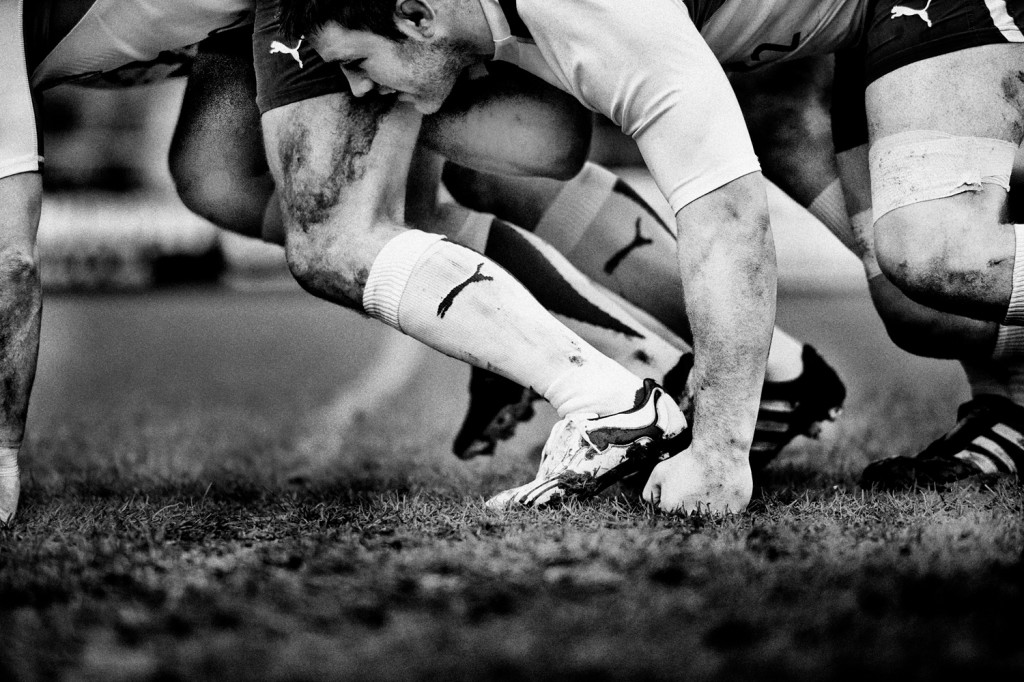
Guess what? All you need to do is follow the Agile Manifesto and you too can be a kick butt team coach, otherwise known as a ScrumMaster® (Scrum refers to the rugby maneuver where everyone on the team is focused on getting the ball).  I recently was trained by Michael Kelley Harris with a group of very intelligent skilled developers and marketing experts in Palo Alto, California. We spent two days taking a deep dive into Agile. So what is Agile? As seen on Agile in a Nutshell, “Agile is a time boxed, iterative approach to software delivery that builds software incrementally from the start of the project, instead of trying to deliver it all at once near the end.” The advantage is that the product development process is much more reactive, more agile. Scrum is a framework within Agile. The ScrumMaster is the facilitator of the group. The coach. And this is what I’ve learned:

Don’t be attached to the outcome. The ScrumMaster® is moving the team forward; nudging and clarifying but they are not attached to a particular endpoint. I have been lucky enough to try Scrum out with a Policy Issuance Development team at an insurance company. I have to say I was pretty nervous because I can barely figure out my iPhone and need my kid to fix my browser for me. I have never coded or tested software in my life. But it turns out that ignorance is bliss. I’m not attached to using a particular architecture. I’m not attached to testing a particular customer. All I want is forward motion and the end result is up to the team.

Expect delays and don’t let it derail the team. At one point in the ScrumMaster class, we all had to guess how long it would take to prepare, eat and clean up after a particular piece of fruit. On our team we would guess how long it would take to eat a banana, handful of grapes, watermelon and an apple. We would all give our estimates and then compromise to say a banana is faster to eat than a watermelon. Then the instructor gave each team either a banana or an apple. We all figured a banana could be eaten in a minute and an apple in about 3 minutes. Wow, were we wrong. All of us have eaten both fruits but let me tell you, an apple took more like 10 minutes to eat. So even though we were all familiar with the fruit and have all eaten them before, the teams that ate the apple took a lot longer. Ten times as long. So you might think that rolling out a new product to three more states might take one day…it could end up being more like a week and a half. Expect delays and don’t let the team get frustrated.

Finished product rather than massive documentation. Forward motion is more important that detailed documentation. How many times have you been caught up in the details and can’t see through the trees. The scrum team I facilitate finds a lot of “nice to haves” but it’s not critical to shipping the product. Figure out what you “have to have” and move forward on it.

• It’s all about customer collaboration. Shipping a product is all about figuring out what the customer wants. The team has one master and that is the customer (ok, and compliance as well) but the product has to satisfy the end user. It’s an ongoing collaboration. If you aren’t listening to your end user then you will be building a Ferrari instead of a VW bus. It might be more fun to build the Ferrari but who is going to use it?

Responding to change over following a plan. This is one of the key tenets from the Agile Manifesto. Technology will change. The customer will change. Resources will change. Accept it. Don’t get tied to a deadline and not adapt. Don’t abandon ship either. Swerve, course correct and move on. Keep a positive attitude and keep nudging the team on through adversity and setbacks. Be open to change.

Don’t let one team member control the team. Frequently the loudest person wins the argument. As the team coach, make sure everyone is heard from. If someone interrupts, make sure the team member who was speaking is still heard from. If someone’s body language is saying they don’t agree with the course we are on, make sure you call it out. “I see you shaking your head Joe. What’s up?” Make sure everyone has a voice.

So there you go. How to be a ScrumMaster® in less than a 1,000 words. The next time you are tapped to lead a team or project you can stand there with confidence. I have to say it’s been really rewarding work. The magic that happens when folks move a project forward is so gratifying. Get out there and kick some butt!

Being there. 6 ways to pay attention.

Ugh. It happened AGAIN! You have no idea what everyone is laughing at because you are busy checking your smart phone for notifications.
You can’t go back. All you can do is smile and nod.
You missed yet another moment. You could have connected. You could have been included in that moment of fellowship. You could belong.
But no. Your phone is the center of your world. One little ding or lit up mailbox and you zone out of the real world.
This has got to stop. You’ve got to find your focus and start connecting with those around you. Now.

This topic came up for me as I read the book, Small Move, Big Change by Caroline Arnold. The book itself is about micro resolutions but one of the subjects in her book was a recently divorced father who had his kids every other weekend. They went away to a country house every other weekend and instead of spending time together, they ended up spending the weekend with their technology instead of with each other. Have you experienced this? I have. So the father started the resolution that they could only spend an hour a day on technology and then, all the phones and tablets went into a basket. The three kids baulked at first (who wouldn’t) but after two weekends, they started looking forward to the time they spent together “being there” together. Board games, hikes, charades, conversations….sounds like heaven.
pay attention
So here is how to get your attention back:

Focus your attention on every little action like you are in love. Arnold quotes acting guru Stella Adler. She writes that in an acting class Adler said, “How can you tell when someone is in love? How can you tell? You can tell because they pay attention. They pay attention to their lover’s every action, gesture and expression. So if you are playing someone in love, give the love object your complete attention in a scene. Even if you aren’t looking at your object directly.” As I write this, I am watching my dog. Is she by my foot or in another room? Is she wagging her tail or is she on the hunt. Take note of every action.

Take a technology sabbatical. I’m not sure when my children will be home next but I’m really thinking about taking a cue from the father in Arnold’s book and taking a technology sabbatical. I know I personally leave my phone in the kitchen to charge at night. At least my sleep is getting my full and undivided attention. But creating space to be devoid of any distractions from the world outside can obviously be very powerful. Perhaps it’s a “no phones during meals” rule or “no technology after 7 PM” rule. Create space to be technology free.

Create something worthwhile and positive. Rick Hanson says in his book Buddha’s Brain: The Practical Neuroscience of Happiness, Love and Wisdom, “Attention shapes the brain.” Your brain cells are growing based on what you focus on. So what are you creating in your brain? Are you creating negativity by focusing on the latest news story or dwelling on the job opportunity you didn’t get? Or on the latest decision by your boss that you don’t agree with? Hmmm. I’d rather create something more positive in all that grey matter. Be careful about what you are creating.

Attention is not critical. Judgment is. Attention is neutral. In Alison Shapiro’s Psychology Today article Paying Attention, “Attention is not critical. Judgment is. Attention is neutral. We begin to pay attention to something and then we start to judge it, evaluate it, categorize it and, yes, generally ‘criticize’ it. But judging, while certainly useful, is not attention. Judging involves an underlying assumption that our purpose is ultimately to categorize and take action.” This neutrality is complete acceptance. Funny, I’m really good at this when coaching a client but not as good when this comes to my children’s individual decisions. Quit judging and stay neutral.

Welcome Everything; Push Away Nothing. Shapiro quotes her teacher, Frank Ostaseski, “Welcome Everything; Push Away Nothing.” This lines up with the “Yes…and” philosophy of CRR Global. This is total unadulterated acceptance. Arms open wide to take in everything with no qualifications. No trying to tinker and change something. No resistance. No squinting and squirming. It’s similar to Byron Katie’s “Love what is.” Notice, accept, withhold judgment and welcome what is.

Be completely and utterly present. The whole problem with technology and the constant bombardment of information is that it takes us out of the moment. Out of the present. Listen for the farthest sound. Feel your big toe come in contact with the floor. Feel the rush of hot, humid air against your cheek. Listen for the sigh from your sleeping dog. Watch the squirrel leap from the branch to the roof. Now. Right now. Be there.

So now when you’re at that meeting. You are going to be jubilant.
Connected.
Aware.
Present.
You’re not tied to that phone and it’s deceiving notifications.
You’re leading the story and the laughs are around your nuanced spin.
You’ve got the world by the tail. Feels pretty good doesn’t it?

Originally published on Change Your Thoughts on September 11, 2015

14 Must-Have Translations from a Damn Yankee in Eastern Carolina.

I’ve lived in Eastern North Carolina for more than 13 years. In case you don’t; the difference between a Yankee and a Damn Yankee is a Damn Yankee never leaves. So I think after 13 years, it’s a safe bet I’m a Damn Yankee.

I no longer feel like a foreigner; just merely tolerated. The difference between being tolerated and being a foreigner is understanding the language. So if you are a newly transplanted non-southerner, I’m giving away the keys to the kingdom on understanding the southern vernacular east of I-95 in North Carolina. I don’t pretend to know how they say things in Louisiana or Alabama, I just know how they say things here. So if you want to get by and, maybe…blend in, I’m giving you the secrets after 13 years of intense study (OK, not intense, more like hit over the head with it).damn yankee

Here you go:

1. Mash the button. Translation: “Press the elevator button.” But here we “mash” the button. We mash potatoes as well. Technically, to mash means to crush something into a uniform paste but that is not what you do with the elevator button. So if someone asks you to “mash the button” don’t bring a hammer.

2. Looking you. Translation: “John is looking for you.” It can also be used as in “You looking me?” which means “Are you looking for me?” I have to admit I actually have used this and when I do, I feel like someone is going to call me out and say, “Hey, you’re a damn Yankee, you can’t say that.”

3. Fixing to. Translation: “I’m intending to…” I can remember when a friend of mine who grew up on Long Island moved to Nashville and we were talking on the phone (before I transplanted to the South). He said, “I’m fixing to mow the lawn.” I said “Fixing?!? What has happened to you Dave?” Another Yankee lost.

4. Carry to the store. Translation: “I’m driving Suzie to store.” The first time I heard a co-worker say, “I had to carry Johnnie to the doctor,” I thought they physically had to pick up and carry their child to the doctor. Piggy back style. Say what?

5. Cut the lights. Translation: “Turn off the lights.” So don’t go run and get scissors to cut the light bulbs. I’m so used to this that I forgot that it didn’t make sense.

6. Ma’am. Translation: “Miss, I didn’t understand what you said, can you please repeat the question?” This confounded me for months! I was not but a little put off by being called “Ma’am” instead of the age reducing “Miss” which I was quite fond of in Northern California. I would say something like, “Do you have any arugula?” to the produce clerk and they would blankly look at me and say “Ma’am?” I’d think “Ma’am, what?” This happened to me countless times on the phone after I would ask a question. I agree that it is a judicious use of words but I was lost. If you are a man, just replace “Sir” for “Ma’am” and it works the same way.

7. Miss Cathy. Translation: “You could probably be a grandmother so, therefore, must be respected.” I don’t know anyone over 65 that is not referred to as “Mr. John” or “Miss Ann.” It’s a sign of respect. I think it’s ironic that you finally get called “Miss” when you are older. I remember my son at age 8 calling our neighbor “Fred” instead of “Mr. Fred.” Mr. Fred set him straight.

8. High dollar. Translation: “Expensive.” This gets used like “We all can’t live in your high dollar neighborhood.” It’s sometimes called “Tall dollar.” It’s a backhanded compliment on where you live.

9. Mee Maw. Translation: “Grandmother”. I’m not sure what it’s derived from but it rhymes with “Hee Haw”.

10. Hey big man. Let me hold a dollar. Translation: “Let me have a dollar.” This comes from a radio show called “John boy and Billy.” This threw me off repeatedly. I’m thinking, “Why do you just want to hold the dollar?”

11. Awl. Translation: “Oil.” I can imagine this would be a greater problem for me if I worked in an auto shop or fast food restaurant. It will absolutely snag you as a Yankee if you ask for “oil and vinegar” on your salad.

12. Pocketbook Translation: “purse.” While most Southern terms seem to be judicious with syllables if not word (see item #6 and #7) , this is the opposite. My purse does not reside in my pocket nor is it a book.

13. Might could. Translation: “Maybe we could.” This is politely leaving your options open. So if someone says, “Let’s go into shark infested waters,” you can respond with “might could.” It leaves your options open which is a good idea with the current state of shark attacks in North Carolina.

14. Bless his heart. Translation: “someone is about to roll a bus over the person whose heart they are blessing.” Like, “He thinks everyone likes him, bless his heart,” or “She’s tried to lose weight for years, bless her heart.” I will admit if someone is hospitalized or just lost their grandmother “bless his heart” will be used but 95% of the time, they are rolling the bus over whoever they are blessing.

So there you have it. You now can survive a trip to Emerald Isle, North Carolina for your summer vacation. I can assure you that if you are vacationing in Emerald Isle, you are surrounded by folks from Eastern Carolina. Y’all fixin’ to carry your mee-maw and her pocket book down east? Might could.

How to Keep Your Inbox from Dragging You Down.

You know the feeling.
You’ve been on vacation.
Maybe a four day weekend.
The reckoning is coming.
You open your inbox to some 200 plus emails.
Some unopened.
Time to sloth through for 2 plus hours to reorg the whole mess.
Ugh.
Nothing but a time drain.
Lucky for you, I just taught an awesome class developed by Franklin Covey called the 5 Choices of Extraordinary Productivity and I have the master moves to save your inbox.

Get Control of your Inbox

Here they are:

1. Have folders that make sense. It’s really simple to add folders but frequently they don’t make sense or your folders need to be updated. This happened to me recently. I had a folder in my personal inbox named “Duke” while my daughter was attending the university and I kept track of various school and financial aid information. She graduated two years ago. I am working for Duke as an instructor starting in September. Now the “Duke” folder is housing different information. As Andrew Mellen espouses in his book, Unstuff Your LIfe, you need to have categories that work for you. I used to have folders for each blog I subscribe to. Now I have a main folder called “Blogs” and subfolders with each author’s name. I also update my folders periodically so that now the “Duke” folder is not a subfolder under “Kids” but is now a subfolder under “Current Clients”. Make sure you organize it in a way that makes sense for you and update it as appropriate.

2. Set up rules so you don’t have to open unnecessary emails. Frankin Covey calls this “Win without Fighting”, so essentially you never even see an email and, therefore, never have to fight it. Low hanging fruit here is to have junk mail automatically go to the junk mail or delete folder. I’ve read in several places that it’s not wise to unsubscribe to emails because they frequently create more emails by confirming your email address (obviously these are disreputable spammers). So if you have them go automatically to the delete folder you don’t need to bother to unsubscribe. Shopping receipts can go to the “Purchases” folder automatically if you set up rules from your most frequented online shopping sites like Amazon, Staples, Southwest and the like. What I really like about doing this is that my cell phone inbox doesn’t blow up with emails I want a record of but don’t necessarily want to look at on my phone. It cuts back on the alerts.

3. Turn it into what it is. During the class, as we all sat at our laptops connected to our Outlook inbox, we could turn all those incoming emails into what they actually were. So when I get an invite for a meeting or conference, I can drag the email down to the “Calendar” and create an appointment to decide whether to attend on the last day of early registration. I can drag an email requesting data on turnover to the “Task” list and set up a due date on the first day of the next month. I can drag a new contact email to my “People” icon and set up the contact information. When you do this, you can practically empty your inbox to a handful of emails. Before I started using this method, I invariably had email that sat in my inbox until it was taken care of. So if I couldn’t decide on a conference some six months out, that email would sit there gathering dust and cluttering my head until I could actually sign up for it. Start dragging your incoming email and creating what it really is.

4. Link to Locate. This is the last “Master Move” in the 5 Choices class. Basically, in any calendar entry, you can “insert” an email, a contact, a task or a note. So if you have a meeting with a new client on Friday at 10 AM, you can have the client’s contact information, the proposal you sent them and the notes from the phone call you had with them. They are all sitting there in your calendar entry. In addition, if you copy your associate on the appointment request, they will have access to all the information as well. It’s a nice neat little package. No need to set up an email folder and hope you have all the information in there. Or printing off tons of paper for the meeting. It’s all there in Outlook waiting patiently for the appointed time.

I have to say that even the technology folks in the class didn’t realize all the capabilities of Outlook. Once you start fully utilizing it, it’s remarkable how efficient you can be. Out of 13 participants, every single person had their “mind blown” by how easy it was to organize their technology. My husband brought his laptop home and, after a brief lesson on the 4 items above, he went from over 10,000 emails (all of which were flagged) to ZERO in about two hours.  So there you have it. A nice neat efficient inbox. Whew.

7 Ways to Kick Decision Fatigue to the Curb

You’re standing at your local grocery store and all you want is a box of Ritz crackers.
Problem is that there are 17 varieties of Ritz in front of you on the shelf.
Dang it! All you want is a box of Ritz crackers.
You don’t want football shaped.
You don’t want whole wheat.
You don’t want low fat.
You don’t want hint of salt.
You don’t want bacon flavored (OK maybe you do but not right now).
You don’t want Fresh Packs.
And you don’t want Ritz Bits.
You want to throw your hands up in disgust or pick up the first box that your hand reaches for. Heck, you can work bacon into a dessert recipe, right?
So after reading through countless labels and searching 6 shelves of red boxes,you find the box of Original Ritz on the bottom shelf.
How much brain matter did you exhaust on that little foray into Ritz hell?
Time to eliminate all those decision perhaps?

Kick Decision Fatigue to the Curb

Here are the 7 ways to kick your decision fatigue to the curb:

1. Wake up earlier. You make better decisions in the morning AND you fair better if you get the earliest appointment whether it’s a court hearing (Judges are more lenient in the morning) or a job interview (earlier candidates are selected more often). Everyone has a clearer head in the morning and, apparently, are more charitable.

2. Exercise early in the day. I know it doesn’t seem like it when you are just getting on the treadmill at 5 AM but you will be more energized throughout the day if you exercise early. Research shows that exercise increases mental acuity for up to 10 hours. Why hand over that acuity to the late night news or your pillow?

3. Pick out your clothes the night before. Why make decisions first thing in the morning or, worse yet, while you are trying to sleep? Hmmm. Should I wear the new sweater or the old blouse? If I wear red will it be too overpowering or perfectly enticing? These are not things you want to be thinking about while you toss and turn. Decide the night before and rest easy.

4. Curb your choices. Have the same breakfast every day of the week. Have only one pair of running shoes and one style of socks. Have the same well-oiled routine every morning to get out the door. The more times you have to stop and decide, the more you get depleted. Eliminate as many choices as possible.

5. Simplify your choices. Take that shopping list of yours and go to some place that has like 4,000 different products versus 50,000 different products. Where is that? Trader Joes. They simplify your choices. I can guarantee you they don’t have 17 varieties of Ritz crackers. In-N-Out Burger has burgers and fries. DVR some select TV shows and quit your channel surfing. That’s it. Less decisions means better cognition. Simplify.

6. Know when enough is enough. You know when you are depleted. Long day at work? Just spent 3 hours in a car? The meeting ran long and you still need to buy dinner are the store? These are bad times to make decisions. You have to acknowledge it to do anything about it. My daughter is famous for saying “Mommy you’re getting hangry (re: hungry and angry) aren’t you?”. Perhaps we should go out for dinner. Maybe a frozen pizza will work. Eggs for dinner might be perfect. You need to know so you can head that bad decision off at the pass.

7. Start with one thing. Don’t take this whole list and start working out at 4:30 AM, purchase 7 pairs of black pants and buy a Ninja to make fruit smoothies every morning. Pick one. Maybe two but NO MORE. As Caroline Arnold writes in her book “Small Move, Big Change”, making one or two small changes is much easier to take on and be successful. But start.

I have made a grocery list every Saturday for years. I know what we are having for dinner and plan it all out Saturday morning. So only the weather will impact what we have for dinner, so if there is lightning, I won’t be standing outside by the grill.

Keep that decision fatigue out of the picture so that you can optimize the more important decisions in your life and let the other ones slide into auto pilot.