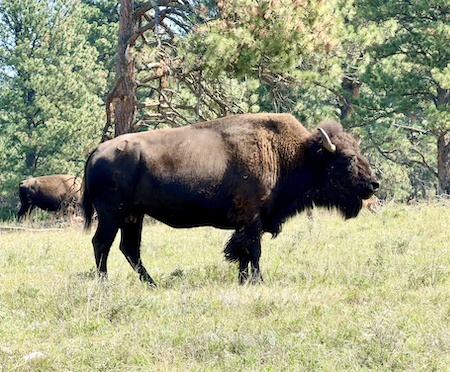
I visited Yellowstone in October of 2026 while I swapped cars from the east and west coasts. This was my second visit although over 30 years later. I’ve been on a mission to visit all of the 63 U.S. National Parks. When people ask me my favorites, I always say that there are two national parks I would go back to, Yellowstone and Bryce Canyon. There are plenty of others that warrant a second visit but Yellowstone is absolutely amazing. The sheer diversity of experiences is terrific from geysers to wildlife to waterfalls to lakes to a massive canyon as well as countless trails. It’s not to be missed.
I arrived after driving up from Grand Teton National Park just 30 minutes to the south. The drive from Grand Teton to Yellowstone is spectacular. I stayed in Grant Village and I have to say that if you can score a reservation in the park, that is the way to go. If I learned anything on this trip to Yellowstone, it was that a drive wherever you are headed begins in the park. So, it’s best to start the day in the park, it’s a real time saver. The weather in the park on the three days I was there, was beautiful with blue skies and high temperatures in the low 60’s.
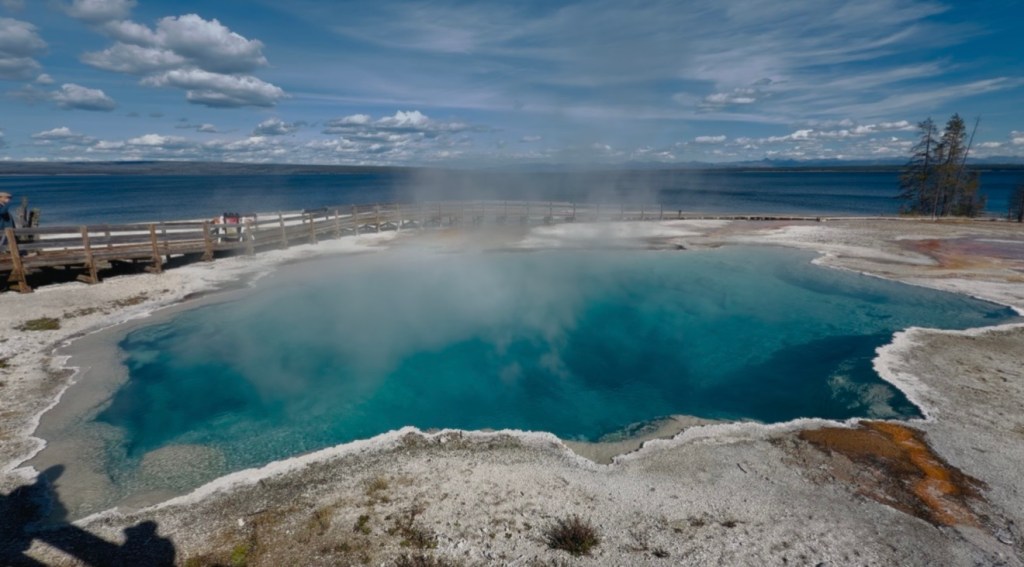
I arrived a few hours early to check into my hotel room and the receptionist suggested heading over to West Thumb Geyser Basin. I was taken aback because I saw steam rising from the parking lot median before even getting on the trail. There is a large boardwalk that meanders through over 84 geysers. The colors of the geysers are a multitude of colors although the blue ones are the most dramatic for me. These geysers are along Yellowstone Lake which makes for an impressive backdrop. I drove along the shore of Yellowstone Lake for several miles, it is the largest high elevation freshwater lake in North America.
On my one full day in Yellowstone, I drove what is called the Grand Loop Road. This is quite an undertaking as it is 142 miles long, for most of it, you can only drive at 35 miles an hour AND I wanted to stop at so many places along the way. For that reason, and because I had seen it 33 years ago, I did not stop at Old Faithful Geyser because to do so would have burned up at least two hours between parking, finding a spot to sit and waiting for the eruption which is about every 90 minutes. Instead, I went to my favorite spot in the park which is Grand Prismatic Spring. This is a colossal hot spring with a kaleidoscope of color. I went too early in the day and the boardwalk was frozen and the steam (from the 29-degree air temperature obscured the view). I waited it out in my car (parking even in October can be difficult) and went back up when it was 40 degrees but it still wasn’t within view, although it’s a terrific hike that entails several geysers and springs.
Next up was the Lower Geyser Basin and it’s 283 geysers making it the largest thermal area in Yellowstone. There are trees on the way in that have white bases from soaking up silica-rich water and are called Bobby Sox trees. Turning left or right along the boardwalk, you hear gurgling, spouting and boiling water everywhere. It’s really quite impressive.
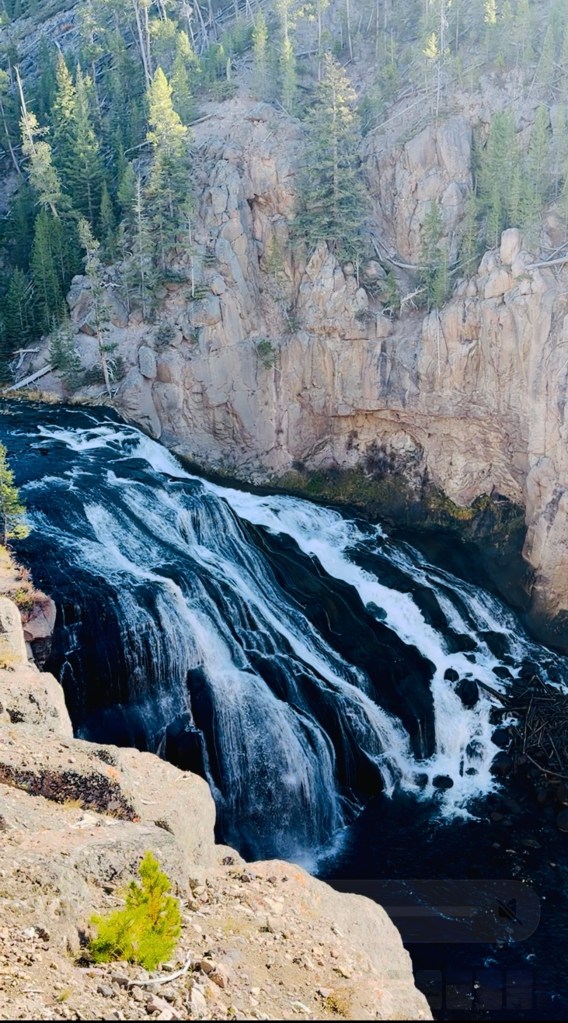
As I headed north on the loop, I arrived at Gibbons Falls. This is a dramatic waterfall on the Gibbons River. It might be the most dramatic view in the park because it drops 84 feet over black volcanic rock making for a stunning view with the fanned out white water against the onyx black background.
My next stop was Norris Geyser Basin which is the oldest (115,000 years) and hottest geysers in the park. They recorded temperatures here of 459 degrees at a depth of 1,087 feet. The largest geyser is here and is called Steamboat Geyser which is the world’s tallest as it launches 300 feet in the air. I was not there when it erupted.
At this point I hadn’t even completed half the grand loop and I had already walked 5 miles of boardwalk to experience all the various geysers. Continue on my visit to Yellowstone in part 2 next week.