Got Blamers? 6 Fixes. 🧐

Your co-worker is constantly blaming his boss for his 80 hour plus work weeks.  You are blamed by the project chair for the missed deadline although they were responsible for the delay.  Your partner blames you for the cold dinner, after arriving thirty minutes late.  You end up embarrassed.  Dumbfounded.  Sometimes seething.  These destructive feelings, when ongoing, cause irreparable damage to the relationship and your self-esteem.

Blamers are everywhere.  I see blamers as those who have external locus of control.  As defined by Psychology Today, “The belief that events in one’s life, whether good or bad, are caused by uncontrollable factors such as the environment, other people, or a higher power.”  If you feel as though everything is out of your control and out of your realm of responsibility, you’re going to have lost that responsibility elsewhere.  This is what blamers do.  “A person with an internal locus of control believes that he or she can influence events and their outcomes.” Odds are that if you are suffering from the blamers around you, you have an internal locus of control and are feeling responsible for the blame that is heaped on you.  Fear not!  There are ways to cope with this.

6 Ways to Cope with Blamers:

  1. Own your piece. Everyone has at least 2% of the truth. This is a tenet of CRR Global. So does the blamer.  If you get defensive and start arguing with the blamer, it is discounting the 2% of truth.  Maybe you were late with one little piece of the project, maybe you didn’t answer the email by the deadline, maybe your ideas weren’t well fleshed out.  I’m not suggesting you be a doormat, but acknowledge the 2% that is correct.  It’s not “I completely blew this, I’m sorry” but “I can see that responding faster to that email would have impacted the outcome.”  Everyone is right…partially.
  1. Find the brilliance. A lot of people rarely compliment the other folks in their lives. Whether at home or at work, we don’t try and catch people doing something right.  But everyone does something right every day.  Even if it’s brush their teeth or complete the monthly report on time.  Look for the positive.  Hunt for it.  I was working with a narcissist once.  She didn’t like any of my ideas for a project.  She showed me one of her ideas which I sincerely thought was innovative.  I said, “This is brilliant.”  She did a 180 degree change on the project.  Now she was onboard.  If I had held my tongue, we would have remained at logger heads.   Look for the brilliance.  Then broadcast it.
  1. Listen with empathy. When someone is blaming either someone else or you, be sure to actively listen with empathy. This can be difficult.  It can be painful to hear someone trash your best efforts.  It will help to focus on your breath so that you can stay out of going to your lizard brain and activating your limbic system (the fight or flight response). It may even take returning to the topic later after you’ve had a chance to cool off.  My friend was upset with me a few nights ago and asked that we talk about the topic on Sunday morning.  This was really effective.  I had time to reflect and he had time to reflect.  We were in a better space to listen and be empathetic. Make space to listen.
  1. Respond looking for solutionsAja Frost wrote a great article called 7 Perfect Replies to (Politely) Shut Down Negative People. My two favorite for coping with the chronic blamer is, “Is there anything I can do?” and “I’m sorry to hear that. Did anything good come out of the situation?” This can shut the blamer down because it is focused on forward positive motion.  Blamers typically want to dwell on how bad everything is. I have asked clients who are focusing on blame, “What 2% are you responsible for?”   This is a proactive approach.  It focuses on what can be versus what was
  1. Come from a place of love. As Kelly Smith wrote for Tiny Buddha, “Remember, all actions are based in either fear or love. Base yours in love. Realize their actions are based in fear. Often, these fears are ones that no one can reach because they are too deep-seated for the person to acknowledge. Accept that, and continue to operate from your own base of love.” I personally have been meditating on loving kindness for months.  My mantra has been to be the “Love and light” in my life.  Having an open heart and compassion for others helps me see the good in all people regardless of the facade they may be exhibiting.  We all want to be loved, happy and at peace.
  1. Let go. As Kelly Smith wrote, “It’s not worth your constant wondering and worrying. It isn’t good for you to hold onto it and over-analyze it. Let it go; visualize yourself blowing it all into a balloon, tying it off, and letting it drift away. Feel lighter because of it!” I love the balloon metaphor.  Another practice is to clench your hand in a fist with your anger towards the blamer, and then release.  Let the blame dissolve into the ether.

Sometimes your best efforts can’t change or pacify other people’s behavior.  There may be a difficult decision in front of you.  Chronic blamers can be toxic for an organization or family unit.  If you’ve tried these coping mechanisms and you still feel like your self-esteem is being affected, you might need to move on.

👍Empathy makes the difference

Your co-worker cuts you off before you’ve entirely explained your idea.  Your boss prescribes you how to fix the production issue, but never even asks what your ideas might be.  Your spouse doesn’t bother to hold the door open when you are carrying in the groceries.  The 18 wheeler won’t let you merge in order to get past the accident.  All of these are signs of a lack of empathy and its persistence is eroding the relationships around you.  As DeLores Pressley wrote, “Empathy is the ability to experience and relate to the thoughts, emotions or experience of others. Empathy is more than simple sympathy, which is being able to understand and support others with compassion or sensitivity.”

So why do we need more empathy?  It is what makes us human. Most of the animal kingdom is working off of “me-first” instincts.  Kill or be killed.  You’re never going to see a crocodile share its prey with another adversary.  Empathy connects us and through that connection, we are able to compound on those connections to much greater success and well being.

Here are the 5 reasons why empathy is the difference maker:

  1. Understanding others helps develop relationships. Think about that guy at work who always brags about his fabulous European vacation and his wonderful new motorcycle. The guy you can’t get a word in edgewise with.  You know who I’m talking about.  Do you feel any warmth or connection with him?   Not likely.  Do you want to go above and beyond for him?  Not likely either.  Trust gets built when there is shared understanding.  Relationships are the foundation of organizations.  Unless there is trust and understanding, it’s difficult to have success.  Empathy is the re-bar in that foundation.
  2. Empathy ensures openness. In any relationship, whether it’s a marriage, partnership or corporation, openness is critical. Openness is the antithesis of secrecy. This is why everyone gets paranoid when the CEO’s office door is shut.  “Here come the layoffs.”  It also ensures that leaders aren’t prescribing the answers.  So, what happens is the co-worker brings an issue and their counterpart says, “What are your ideas?” instead of “This is the way you should do it.”  An openness to all possibilities creates innovation and breaking out of the status quo.  This is critical for organizations as well as personal relationships.
  3. Putting other’s interest first brings mutual respect. As written by Toby Norton, “Serotonin is the molecular manifestation of the feeling of pride—we get it when we perceive others like or respect us. On a deep level, we need to feel that we and our work are valued by others, particularly those in our group.” This helps reinforce positive feelings from everyone. “Hey Joe made sure I knew the numbers were off before I presented to the Board.”  I’ve got Joe’s back going forward.  This mutual respect compounds on itself like a ripple effect across the organization or department or family.  It’s the way we do things around here.
  4. Empathy makes it safe for us to fail. I can hear you whining. “But, Cathy, we don’t want to encourage failure.”  This is a pipe dream.  Of course we are going to fail.  At work, at home and at school.  If we don’t encourage failure, everyone starts hiding the evidence.  I don’t want Suzie to know that we had an error in the report.  I don’t want my manager to know that the product isn’t priced right.  If we cannot be transparent and fall on the sword when we fail, then neither will anyone else around us.  This breeds secrecy and distrust.  Everyone goes around constantly looking to repair their image.  It’s exhausting and demoralizing.  Empathy creates a safe place to fail.
  5. Feeling valued by others compels the group forward. As written by Norton, “Homo sapiens developed a herd instinct; thanks to those cooperative chemicals (i.e. serotonin and oxytocin), we find comfort when we’re part of a group.” According to Sinek, “Our confidence that we can face the dangers around us literally depends on feeling safe in a group. Being on the periphery is dangerous. The loner on the edge of the group is far more susceptible to predators than someone who is safely surrounded and valued by others.” It is a simple as saying “Is everything OK?” It’s paying attention to simple gestures like holding the elevator door, letting the car merge in or helping reset the room after the training.  These small things help create value and connection for everyone.  It keeps paying it forward on an ongoing basis.

Try incorporating more empathy in your life.  Listen without judgment.  Clarify your partner’s needs.  Be open to what is there.

👍 Steps to the Positive No

I just finished William Ury’s The Power of a Positive No.  Ury is the coauthor of Getting to Yes and Getting Past No and is a negotiating expert as well as the cofounder of the Harvard Program on Negotiation.  He knows of what he writes. “No” is one of the most uncomfortable things to say as it puts a stake in the ground or sets up a boundary. And for most folks, including myself, this can be difficult.  To push back in scenarios where work is impeding your personal life or standing firm in a decision to go down one path instead of another (more popular, better supported) path can be anguishing. 

The first paradigm around No that I learned was from coach and author Christine Kane in what she originally referred to as the Proactive No and, has since changed it to, the Natural No.  I can see now that they have some of the same principles although Ury’s has a lot more detail. Kane’s structure is really more a combination of Ury’s Step 1 and Step 2 and leaves out Step 3 which I can see is very imporant.

Here are the 3 steps to the Positive No:

Express your Yes. As Ury writes, “Perhaps the single biggest mistake we make when we say No is to start from No. We derive our No from what we are against – the other’s demand or behavior.  A Positive No calls on us to do the exact opposite and base our No on what we are for.  Root your No in a deeper Yes – a Yes to your core interests and to what truly matters.” So, I have to think about what my core belief is or my why.  If my boss wants me to work this Saturday, my Yes is quality time with my family.  My Yes is spending dinners with my family.  My Yes is getting 8 hours of sleep.  My Yes is focusing on plant-based foods.  I have to figure out my underlying Yes before saying No which takes thought.  Leading with Yes is a much more positive, respectful approach.  Kane’s framework involves preset boundaries and expressing them like “Sunday nights are for family” or “I only work with 10 clients at a time.” Being very clear with your boundaries or what you say Yes to. It’s not about stopping someone in their tracks, it’s shedding light on another aspect of your work or life that perhaps the other person is not aware of. It takes preparation and thought but start with your Yes. And it gives the other person a chance to understand you better.

Assert your No. Ury posits, “Saying No is essential to life.  Every living cell has a membrane that allows certain needed nutrients to pass through and repels others.  Every living organism needs such boundaries to protect itself.  To survive and thrive, every human being and every organization needs to be able to say No to anything that threatens their safety, dignity and integrity.” He says that No is quiet, deep and firm. He also suggests having a Plan B which is a backup plan but is not dependent on the other person. He also recommends answering three questions before saying No, “Do I have the interest in saying No? Do I have the power?  Do I have the right?” It’s important to focus on yourself and not to sweeten it up to be more receptive by the receiver. I’ve waffled many times in the past on my No.  No is not a negotiation, it’s a statement.  Controlling the other’s person’s reaction is not up to you.  You can always empathize with how they feel like “I can see this caught your off guard” or “I understand you are upset with this”.   Just don’t sympathize or feel their pain, just understand their pain. In Kane’s Proactive No, the No is the main focus although the Yes is embedded in it by saying “I spend dinners with my family so I can’t attend this meeting.” It gives the why Yes and the No all in the same statement. It leaves off the next step which I think is the most important. 

Propose a Yes. Ury states, “Delivering a Positive No is the cure of the process, requiring skill and tact.  It begins with an affirmation (Yes!), proceeds to establish a limit (No) and ends with a proposal (Yes?). This gives the opportunity for a positive outcome. You’re closing one door and asking the other to walk through another door.”  Making a proposal shows respect and anticipates their needs. “Quality family time is important to me (Yes), I can’t work on the project this weekend (No), I propose I work late Monday and Tuesday to get it done (Yes?).”  It also gives the other person a chance to say yes.  Sometimes, the other person is angry or triggered. Sometimes, you can be upset or triggered.  Giving space to cool off and coming back to a proposal may be in order.  Sometimes, there’s not enough information and you can suggest a later time or to gather more information. You can also you If…Then proposals, “If I get project C done by noon, I can sit in on the interview.” I think the proposal aspect is the most freeing of the process because it’s not the cold hard No.  It’s a No with a possibility of a different Yes. It’s a great opportunity to test assumptions. 

I really think this framework is empowering because I typically would get caught up in being nice and not wanting to ruffle feathers so I would avoid saying no.  It’s also important to know that someone could get angry or defensive or sad but none of that is in your control.  What is important is making space to live your values and being able to set up boundaries.  How do you say No?

No One Outside of You Has Your Answer

No one outside of you has your answer.

This was the prompt for Day 114 of the Project 137 by Patti Digh. This idea really sets me adrift, like someone put me in a rowboat without oars and cut the towline. Go figure it out, Cathy. I feel like I have measured myself my entire life by living up to other people’s expectations; other’s dreams and wants. This comes down to me and what I want. My expectations of myself. Gulp.

I run into folks who are either followers or are curious about this blog. This is my sanctuary to work things out. My colander to strain out the unnecessary to find the good parts. I gave my card to someone at a conference last week and she asked about the blog. I said, “It helps me work out my stuff.” The hope is that the byproduct of me working out my stuff is that someone else gains some wisdom or thought-provoking question that propels them forward. But really, at the heart of it all, is me working out my stuff.

So here are some insights of looking inward:

  • Shoes. No one else really walks in your shoes. And I don’t really walk in anyone else’s shoes. I can make assumptions about a loved one’s journey or what my colleague aspires to or if that mystery man is unattached. While I can identify with someone else, I really can’t live in their shoes and they really don’t know what it’s like in my shoes. They probably don’t even know my shoe size! So, the answer is taking care of your shoes and throwing out the ones that don’t serve you anymore. I recently decided to go to Barcelona this summer. I will need sandals to walk extensively and will have to break them in. That answer is in me.
  • Advice.  I have spent the last month grilling friends and family about the fate of a huge financial decision. I sought advice from almost every trusted resource I have. It’s fine to get advice. To be informed. To find a devil’s advocate. To weigh out all your options. I feel really good that I have heard all the pros and cons of my next move. I’m glad I have trusted friends and family to confide in. In the end though, it really comes down to me. I need to make the decision. The answer is in me.
  • Faith.  I realize now that serendipity is always conspiring to help me. The Universe is in my corner and some pieces have fallen into my lap to help me forward; actually leaps forward. As they say, “Let go and let God.” So while I was gnashing my teeth in worry and fear, I learned to embrace the idea that there is a greater plan and I am at the center of that plan. It is freeing to release the pain of fear and uncertainty and know that, if I have faith in myself, the Universe will conspire to help me. The answer is in me.
  • Willingness. As Benjamin Foley writes for Medium, “Wisdom, in my opinion, is the willingness to live the questions of life with an acceptance of no immediate answer. In a world of immediacy, this is a difficult accomplishment, but one that is enormously important if you are to create anything of value.” As my trusted friend Janine says, “You don’t need to make a decision until you need to make a decision.” This means I need to be willing to be patient. Not my strongest suit, but knowing that the decision will appear before me, when it is needed, is powerful. The answer is in me.

I have said over the past year that “you can’t push a rope.” What will be, will be. Trust your intuition, listen to your gut and find the answer in you.

My daughter. My Hero.

This is for my daughter on her twenty-ninth birthday!

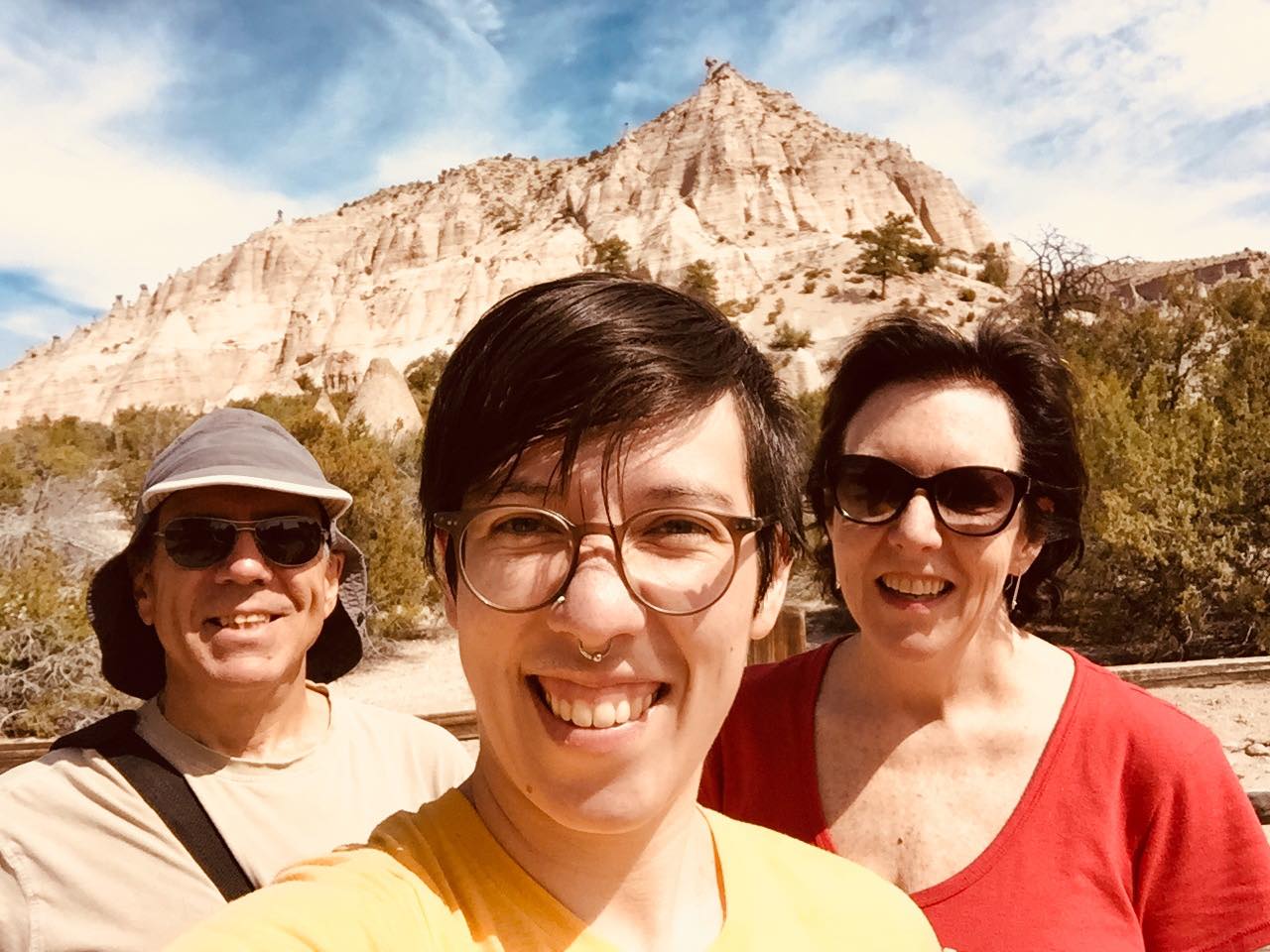
My daughter, Natalie, is my stable rock. My ballast. My hero. She has recently turned twenty-five and moved to Seattle about a year ago.  I had the great fortune to spend a recent weekend with her in New Mexico where she was born.  It was great fun to return to a state that has many natural marvels and be able to give context to how her life began.  Some twenty-six years earlier, my first husband and I moved to Albuquerque to run a restaurant and try our luck as entrepreneurs.  The restaurant eventually failed and put immense pressure on our marriage.  The wonderful shining glory that came out of that ill fated move to Albuquerque was a delightful, precious blue-eyed baby girl with an infectious smile and laugh.

Outside of a return trip to New Mexico when Natalie was eight, she has not returned.  She has faint memories of that trip and certainly does not remember her first four months of life in the Land of Enchantment. We had a lot of fun returning to where it all began. It also brought up some of the reasons I have depended on her for so much in her quarter century on the Earth.

32105357_10156289247988688_8586567131481505792_o
My brother, Rick, my daughter, Natalie and I hiking in New Mexico in 2018

Here are the ways Natalie is my hero:

Open. Natalie is open to any and all adventures. We did not have much of an agenda once we landed at Albuquerque’s Sunport except for a restaurant reservation or two.  Whether it was strolling the plaza in Santa Fe or taking a hike around a reservoir, Natalie was open.  She had no deadlines, no agenda, no must-see spots.  I feel like so many people in life have hidden agendas or hidden intentions.  Not Natalie. Anything goes. Wanna hike?  Sure.  Shop? You bet. Sleep in? OK. It makes me rethink how open I am to what is next. Be open.

Decisive.  Natalie may be open to all the options but once she has made up her mind, or the group has made up their mind, she goes after it. We had decided to hike Tent Rocks located outside of Santa Fe with my brother, Rick.  Once the decision was made, there was no going back.  I’m pretty sure that even if it was raining or 110 degrees, Natalie would have made it to the top of that slot canyon. She was committed. Even a random crossing of a rattlesnake on our path could not deter her from her destiny. Once you have weighed out all your options, be decisive.

Empathy. I have always had an issue with balance. I pause at the top of steps and escalators to get my barring. There were several times along the hike that Natalie grabbed my hand. I didn’t ask. She knew. When navigating very narrow footings, she said, “just one foot in front of the other.” I didn’t ask. She knew. As we hiked she would insist on a water break.  Not for her. For me. She pays attention. She senses the discomfort. She anticipates the need. It’s such a gift that I don’t know she is even aware she has it. Be in tune to those around you.

Navigator. Natalie and I had explored a trail near Santa Fe around a reservoir.  The trail was not well marked.  Towards the end of the hike we lost the trail. Pretty soon we were hiking through low uncharted brush and no fellow hikers were to be seen.  We had no GPS.  No cell coverage. I felt a bit of concern. There was no need. Natalie had a feel for where we were and led us back to the trail head and parking lot. There have been many hiccups and storms in my life over the last year and Natalie has been the calm navigator seeing me through. Make sure you have a sound navigator to help you through the storms.

Ballast. Every boat has a ballast to weight the boat upright. Natalie is my ballast. She is rarely rattled by events and keeps an even demeanor.  I can be easily flustered and fly into worst case scenarios. Natalie keeps me balanced by listening and asking questions to help me understand my own thinking. I may be ready to unload all the cargo on the boat or drop anchor but Natalie is the voice of reason.  Who is your ballast.  Maybe you are a ballast for someone else.  It’s important to have a ballast to even things out.

Joy. Natalie has infectious energy. She also happens to be a great selfie taker.  There she is in the center of the photo flashing her enchanting smile.  I cannot look at a photo of her without smiling. She is joy. She is possibility. She is magic. There are very few people that I know who exude that joyful energy. It sparks action. Everything seems possible when there is joy in the room.  I am so fortunate to have her in my life. Find joy.

I am so proud to be Natalie’s mother and, most importantly, that she is in my life. She makes everything brighter and more amazing. Who is your hero?

My Hero. My Daughter.

I originally posted this four years ago. She is still my hero.

My daughter, Natalie, is my stable rock. My ballast. My hero. She has recently turned twenty-five and moved to Seattle about a year ago.  I had the great fortune to spend a recent weekend with her in New Mexico where she was born.  It was great fun to return to a state that has many natural marvels and be able to give context to how her life began.  Some twenty-six years earlier, my first husband and I moved to Albuquerque to run a restaurant and try our luck as entrepreneurs.  The restaurant eventually failed and put immense pressure on our marriage.  The wonderful shining glory that came out of that ill fated move to Albuquerque was a delightful, precious blue-eyed baby girl with an infectious smile and laugh.

Outside of a return trip to New Mexico when Natalie was eight, she has not returned.  She has faint memories of that trip and certainly does not remember her first four months of life in the Land of Enchantment. We had a lot of fun returning to where it all began. It also brought up some of the reasons I have depended on her for so much in her quarter century on the Earth.

32105357_10156289247988688_8586567131481505792_o
My brother, Rick, my daughter, Natalie and I hiking in New Mexico

Here are the ways Natalie is my hero:

Open. Natalie is open to any and all adventures. We did not have much of an agenda once we landed at Albuquerque’s Sunport except for a restaurant reservation or two.  Whether it was strolling the plaza in Santa Fe or taking a hike around a reservoir, Natalie was open.  She had no deadlines, no agenda, no must-see spots.  I feel like so many people in life have hidden agendas or hidden intentions.  Not Natalie. Anything goes. Wanna hike?  Sure.  Shop? You bet. Sleep in? OK. It makes me rethink how open I am to what is next. Be open.

Decisive.  Natalie may be open to all the options but once she has made up her mind, or the group has made up their mind, she goes after it. We had decided to hike Tent Rocks located outside of Santa Fe with my brother, Rick.  Once the decision was made, there was no going back.  I’m pretty sure that even if it was raining or 110 degrees, Natalie would have made it to the top of that slot canyon. She was committed. Even a random crossing of a rattlesnake on our path could not deter her from her destiny. Once you have weighed out all your options, be decisive.

Empathy. I have always had an issue with balance. I pause at the top of steps and escalators to get my barring. There were several times along the hike that Natalie grabbed my hand. I didn’t ask. She knew. When navigating very narrow footings, she said, “just one foot in front of the other.” I didn’t ask. She knew. As we hiked she would insist on a water break.  Not for her. For me. She pays attention. She senses the discomfort. She anticipates the need. It’s such a gift that I don’t know she is even aware she has it. Be in tune to those around you.

Navigator. Natalie and I had explored a trail near Santa Fe around a reservoir.  The trail was not well marked.  Towards the end of the hike we lost the trail. Pretty soon we were hiking through low uncharted brush and no fellow hikers were to be seen.  We had no GPS.  No cell coverage. I felt a bit of concern. There was no need. Natalie had a feel for where we were and led us back to the trail head and parking lot. There have been many hiccups and storms in my life over the last year and Natalie has been the calm navigator seeing me through. Make sure you have a sound navigator to help you through the storms.

Ballast. Every boat has a ballast to weight the boat upright. Natalie is my ballast. She is rarely rattled by events and keeps an even demeanor.  I can be easily flustered and fly into worst case scenarios. Natalie keeps me balanced by listening and asking questions to help me understand my own thinking. I may be ready to unload all the cargo on the boat or drop anchor but Natalie is the voice of reason.  Who is your ballast.  Maybe you are a ballast for someone else.  It’s important to have a ballast to even things out.

Joy. Natalie has infectious energy. She also happens to be a great selfie taker.  There she is in the center of the photo flashing her enchanting smile.  I cannot look at a photo of her without smiling. She is joy. She is possibility. She is magic. There are very few people that I know who exude that joyful energy. It sparks action. Everything seems possible when there is joy in the room.  I am so fortunate to have her in my life. Find joy.

I am so proud to be Natalie’s mother and, most importantly, that she is in my life. She makes everything brighter and more amazing. Who is your hero?

My daughter. My hero.

My daughter, Natalie, is my stable rock. My ballast. My hero. She has recently turned twenty-five and moved to Seattle about a year ago.  I had the great fortune to spend a recent weekend with her in New Mexico where she was born.  It was great fun to return to a state that has many natural marvels and be able to give context to how her life began.  Some twenty-six years earlier, my first husband and I moved to Albuquerque to run a restaurant and try our luck as entrepreneurs.  The restaurant eventually failed and put immense pressure on our marriage.  The wonderful shining glory that came out of that ill fated move to Albuquerque was a delightful, precious blue-eyed baby girl with an infectious smile and laugh.

Outside of a return trip to New Mexico when Natalie was eight, she has not returned.  She has faint memories of that trip and certainly does not remember her first four months of life in the Land of Enchantment. We had a lot of fun returning to where it all began. It also brought up some of the reasons I have depended on her for so much in her quarter century on the Earth.

32105357_10156289247988688_8586567131481505792_o

Here are the ways Natalie is my hero:

Open. Natalie is open to any and all adventures. We did not have much of an agenda once we landed at Albuquerque’s Sunport except for a restaurant reservation or two.  Whether it was strolling the plaza in Santa Fe or taking a hike around a reservoir, Natalie was open.  She had no deadlines, no agenda, no must-see spots.  I feel like so many people in life have hidden agendas or hidden intentions.  Not Natalie. Anything goes. Wanna hike?  Sure.  Shop? You bet. Sleep in? OK. It makes me rethink how open I am to what is next. Be open.

Decisive.  Natalie may be open to all the options but once she has made up her mind, or the group has made up their mind, she goes after it. We had decided to hike Tent Rocks located outside of Santa Fe with my brother, Rick.  Once the decision was made, there was no going back.  I’m pretty sure that even if it was raining or 110 degrees, Natalie would have made it to the top of that slot canyon. She was committed. Even a random crossing of a rattlesnake on our path could not deter her from her destiny. Once you have weighed out all your options, be decisive.

Empathy. I have always had an issue with balance. I pause at the top of steps and escalators to get my barring. There were several times along the hike that Natalie grabbed my hand. I didn’t ask. She knew. When navigating very narrow footings, she said, “just one foot in front of the other.” I didn’t ask. She knew. As we hiked she would insist on a water break.  Not for her. For me. She pays attention. She senses the discomfort. She anticipates the need. It’s such a gift that I don’t know she is even aware she has it. Be in tune to those around you.

Navigator. Natalie and I had explored a trail near Santa Fe around a reservoir.  The trail was not well marked.  Towards the end of the hike we lost the trail. Pretty soon we were hiking through low uncharted brush and no fellow hikers were to be seen.  We had no GPS.  No cell coverage. I felt a bit of concern. There was no need. Natalie had a feel for where we were and led us back to the trail head and parking lot. There have been many hiccups and storms in my life over the last year and Natalie has been the calm navigator seeing me through. Make sure you have a sound navigator to help you through the storms.

Ballast. Every boat has a ballast to weight the boat upright. Natalie is my ballast. She is rarely rattled by events and keeps an even demeanor.  I can be easily flustered and fly into worst case scenarios. Natalie keeps me balanced by listening and asking questions to help me understand my own thinking. I may be ready to unload all the cargo on the boat or drop anchor but Natalie is the voice of reason.  Who is your ballast.  Maybe you are a ballast for someone else.  It’s important to have a ballast to even things out.

Joy. Natalie has infectious energy. She also happens to be a great selfie taker.  There she is in the center of the photo flashing her enchanting smile.  I cannot look at a photo of her without smiling. She is joy. She is possibility. She is magic. There are very few people that I know who exude that joyful energy. It sparks action. Everything seems possible when there is joy in the room.  I am so fortunate to have her in my life. Find joy.

I am so proud to be Natalie’s mother and, most importantly, that she is in my life. She makes everything brighter and more amazing. Who is your hero?

5 Reasons Why Empathy is the Difference Maker

Your co-worker cuts you off before you’ve entirely explained your idea.  Your boss prescribes you how to fix the production issue, but never even asks what your ideas might be.  Your spouse doesn’t bother to hold the door open when you are carrying in the groceries.  The 18 wheeler won’t let you merge in order to get past the accident.  All of these are signs of a lack of empathy and its persistence is eroding the relationships around you.  As DeLores Pressley wrote, “Empathy is the ability to experience and relate to the thoughts, emotions or experience of others. Empathy is more than simple sympathy, which is being able to understand and support others with compassion or sensitivity.”

empathy

So why do we need more empathy?  It is what makes us human. Most of the animal kingdom is working off of “me-first” instincts.  Kill or be killed.  You’re never going to see a crocodile share its prey with another adversary.  Empathy connects us and through that connection, we are able to compound on those connections to much greater success and well being.

Here are the 5 reasons why empathy is the difference maker:

  1. Understanding others helps develop relationships. Think about that guy at work who always brags about his fabulous European vacation and his wonderful new motorcycle. The guy you can’t get a word in edgewise with.  You know who I’m talking about.  Do you feel any warmth or connection with him?   Not likely.  Do you want to go above and beyond for him?  Not likely either.  Trust gets built when there is shared understanding.  Relationships are the foundation of organizations.  Unless there is trust and understanding, it’s difficult to have success.  Empathy is the re-bar in that foundation.
  1. Empathy ensures openness. In any relationship, whether it’s a marriage, partnership or corporation, openness is critical. Openness is the antithesis of secrecy. This is why everyone gets paranoid when the CEO’s office door is shut.  “Here come the layoffs.”  It also ensures that leaders aren’t prescribing the answers.  So, what happens is the co-worker brings an issue and their counterpart says, “What are your ideas?” instead of “This is the way you should do it.”  An openness to all possibilities creates innovation and breaking out of the status quo.  This is critical for organizations as well as personal relationships.
  1. Putting other’s interest first brings mutual respect. As written by Toby Norton, “Serotonin is the molecular manifestation of the feeling of pride—we get it when we perceive others like or respect us. On a deep level, we need to feel that we and our work are valued by others, particularly those in our group.” This helps reinforce positive feelings from everyone. “Hey Joe made sure I knew the numbers were off before I presented to the Board.”  I’ve got Joe’s back going forward.  This mutual respect compounds on itself like a ripple effect across the organization or department or family.  It’s the way we do things around here.
  1. Empathy makes it safe for us to fail. I can hear you whining. “But, Cathy, we don’t want to encourage failure.”  This is a pipe dream.  Of course we are going to fail.  At work, at home and at school.  If we don’t encourage failure, everyone starts hiding the evidence.  I don’t want Suzie to know that we had an error in the report.  I don’t want my manager to know that the product isn’t priced right.  If we cannot be transparent and fall on the sword when we fail, then neither will anyone else around us.  This breeds secrecy and distrust.  Everyone goes around constantly looking to repair their image.  It’s exhausting and demoralizing.  Empathy creates a safe place to fail.
  1. Feeling valued by others compels the group forward. As written by Norton, “Homo sapiens developed a herd instinct; thanks to those cooperative chemicals (i.e. serotonin and oxytocin), we find comfort when we’re part of a group.” According to Sinek, “Our confidence that we can face the dangers around us literally depends on feeling safe in a group. Being on the periphery is dangerous. The loner on the edge of the group is far more susceptible to predators than someone who is safely surrounded and valued by others.” It is a simple as saying “Is everything OK?” It’s paying attention to simple gestures like holding the elevator door, letting the car merge in or helping reset the room after the training.  These small things help create value and connection for everyone.  It keeps paying it forward on an ongoing basis.

Try incorporating more empathy in your life.  Listen without judgment.  Clarify your partner’s needs.  Be open to what is there.

How to Harness the Power of Connection.

You walk into a store and the cashier is more robotic than friendly. No eye contact; and repeating the same “Have a nice day” with no expression of sincerity. Your coworker is demanding a document that you are sure they already have and this might be the fourth time you’ve sent it to them. It’s easy to get sucked into a malaise of disconnectedness. You start putting up walls and keep everyone at arm’s length. It’s easy to fall into being out for yourself and out of touch with others. And you begin to shut others out.

photo-1432757221830-ad504a69f685

I was fortunate to facilitate a team of 65 in the construction business. The theme was Team Dynamics but what it really was about was connecting. Truly and literally standing in another department’s shoes to understand their perspectives and their challenges is an amazingly transformative act. The outcome was magical. I’d say the group was at least 75% men. Men in the rough and tumble world of construction where swearing is encouraged and feelings need to be checked at the door. I have to say I was nervous. Would these guys really buy in? Would they really be able to open their hearts and minds to their teammates? Well, I’m happy to say they did and the end result was powerful.

Here is how to harness the power of connection:

1. It always starts with the team alliance. This is a tenet of CRR Global. It’s basically an agreement of how we want to “be” with each other. As long as there’s clarity and agreement some remarkable things can happen. I worked with a technology team that wanted to make sure that “swearing” was encouraged. As long as everyone is on board, then swearing can be encouraged. It could just as easily have been respect or openness or confidentiality. You just need to be clear about how you want the team to be together and starting off a meeting or project or team dynamic session should always have an alliance. I have to say that during the facilitation with the construction company, I had to remind them a few times that “respect” was on the alliance. When ground rules are set, people are more likely to participate.

2. First seek to understand. This is habit 5 from Stephen Covey’s 7 Habits of Highly Effective People. In a nutshell, this is all about active listening. It’s not listening until I can get a word in edgewise. It’s not biting my tongue until I can impress you with my retort. It’s seeking to understand. It’s about being open and non judgmental. In a room full to the brim with 65 people, they all listened attentively to each other. The knowing head nods. The smile of acknowledgment. How often can you say that?

3. Everyone has a voice. What’s powerful about the “lands work” from CRR Global is that each “land” (department) gets to speak up without any interruption. Each person gets to represent what it’s like in their “land” and there can be no disagreement, no denial. If a project coordinator says “I have to juggle the demands of four superintendents.” There is no denying that. It is that project coordinator’s truth. Their unadulterated voice. It’s powerful to here a co-worker state a truth that you didn’t even realize. Connecting involves everyone having a voice.

4. Stepping into someone else’s shoes. This is the magical part of “lands work.” All the superintendents took a seat while everyone else in the company stood in their “land.” They then spoke on behalf of the superintendents. There was one woman from administration who when she stood in each of the other lands said “I don’t like this land.” She acknowledged how difficult the other positions in the company were. The superintendents were constantly on the road, the business development folks were constantly handling rejection, the project coordinators had to deal with uncooperative sub contractors. And on and on and on. I could see the impact of having the other people who didn’t have your job speak on behalf of your job and suddenly connection was created. They get it. They were able to move on with a new understanding of each other that would not have ever existed without this effort.

5. Making sure there is a take away. In the end, there must be an understanding. What will this group take away from this experience? How can we take this forward? In a nutshell someone said “Empathy.” There is a new understanding that for each of them to be clear what the priority is. An understanding of what the effect they have on others. Some folks wanted an email with a clear subject line, some folks want a voicemail and still others wanted to get a text. The point was they had a new understanding of flexing and adapting to each other because now they understood each other’s perspective.

So I challenge you to be more connected at work. When was the last time you asked the Project Manager what their challenges are and what do they need from other departments to be more effective? Give it a try and sit back and listen. Really listen.

Originally published on Change Your Thoughts on January 8, 2016

Dismantling the Judge in Your Head.

I’ve been reading Shirzad Chamine‘s Positive Intelligence. This has shone a huge light on what I’ve previously written about as the inner critic. As Shirzad posits, everyone has a group of saboteurs and the one everyone has is in common is The Judge. Basically, we are all running around with a Judge in our head who is constantly pointing out where we are falling short. So my pants are too tight because I am lazy and fat. I didn’t get that spectacular job because I’m not good enough. Suzy just walked by my office without saying hello because of something I did. Hmmm. I wonder what I did. She thinks I’m inadequate, she thinks I’m too bossy, she thinks I’m ugly. If this sounds like the ticker tape in your head then you have a Judge as well.dismantling the judge in your head

I find it remarkable that Shirzad stepped out on a limb and pointed out to a group of grad students that he felt inadequate and that they all concurred. How vulnerable. Well, I have to say I’ve been listening to my Judge for far too long. It’s useless and debilitating. It can and has brought me to a standstill. This particular saboteur is constantly holding me back and all the while, I am actually free to choose if I want to listen to it or not. I find that not only am I judging myself, but I am judging circumstances and others as well. So it’s raining in beautiful San Antonio because it’s just my luck. The water dispenser is out in the fitness room because this hotel sucks. The train going by at 3 AM is so happening to be annoying. That woman who cut in front of me in line at the lunch buffet because she is arrogant. All of these judgments. All day. Everyday. It’s exhausting. Time to dismantle the Judge.

So I’ve been working on this and this what I have found so far:

1. Name it. Shirzad recommends giving it a name. So whether it’s Executioner, The Critic, Tormenter, or as I have recently tried Sister Mary Catharine (and she has a ruler in her hand). Giving it a name gives some separation. So much of my inner dialogue is about beating myself up. Identifying “who” is saying all this takes it out of the shadows. Shirzad recommends that if you can’t think of a name you can clearly identify with, just call it The Judge. If you are like me, you spend weeks trying on different names and then give up. So use The Judge unless something else resonates. Just make sure you name it.

2. Voice. Give your Judge their voice. As instructed by Shirzad, I have been reframing my judgments by giving The Judge a voice. So instead of thinking “I think I look fat in this dress”, think “the Judge thinks I look fat in this dress”. Or “I didn’t get that job because I’m not good enough”, think “the Judge thinks I didn’t get that job because I’m not good enough”. Now the Judge is out in the open and, most importantly, you realize it’s not you. Give your Judge a voice.

3. Creator. Instead of being the victim, be the Creator. David Emerald‘s book, The Power of TED, presents the idea that the victim is living in a negative space that is constantly reacting. From my vantage point, that means the victim is constantly listening and buying into the Judge. Emerald writes. “for Victims, the focus is always on what they don’t want: the problems that seem constantly to multiply in their lives. They don’t want the person, condition, or circumstance they consider to be their Persecutor, and they don’t want the fear that leads to flight, flee, or freeze reactions either. Creators, on the other hand, place their focus on what they do want. Doing this, Creators still face and solve problems in the course of creating the outcomes they want, but their focus remains fixed on their ultimate vision.” Be a Creator.

4. PQ Reps. The biggest take away from Positive Intelligence is trying to do PQ reps 100 times a day. I rolled my eyes when I thought of doing anything 100 times a day. BUT a PQ rep is really just 10 seconds or 3 breathes of being present. This has been fascinating to try for the last week. When I walked my dog this morning I was constantly doing PQ Reps. So I smelled some honeysuckle, I spent three breathes smelling the honeysuckle. Then I listened to birds for 3 breathes, then felt the breeze on my face, then listened to my dog panting, then watched a cardinal, then stopped and smelled some roses (yes, seriously). The point of this is to bring you back to your prefrontal cortex where you do your best thinking. When you are listening to the Judge you are in your limbic system and, outside of fleeing from danger like a Saber-toothed Tiger, it’s really not that healthy for you. Try getting in some PQ Reps.

5. Empathy. One of the superpowers that Positive Intelligence brings is empathy. I think I’m pretty empathetic but Chamine promotes being empathetic towards yourself. Have some self-compassion. He suggests finding a photo of yourself when you were a child and full of possibilities, passion and wonder. I found a picture of myself and set it up as wallpaper on my phone. I see that picture of myself every time I swipe the phone (which is turns out is a lot). I see this brave little girl in the middle of Rocky Gorge, one of my favorite places from my childhood in New Hampshire. There is her bright shiny face looking at the camera braving the chilly torrent of a rocky river. That girl? She’s amazing. I want to protect her from the Judge. Find empathy for yourself.

6. Curiosity. Chamine recommends another super power of curiosity. It’s funny because Emerald suggests the same thing. I have written before that curiosity is the antidote for fear. It’s also the antidote for your Judge. The Judge wants you to be choked by your fear; to standstill and resist. Curiosity opens the curtains. It shows all the possibilities. It’s liberating. Reframing any conflict or issue or assumption into curiosity makes it possible. You’re just an anthropologist studying the “Culture of You”. Hmmm. I wonder what would happen if I just called that new client. Hmmm. I wonder what would happen if I went to that meeting alone. Hmmm. I wonder what would happen if I just apologized. Find your curiosity.

I have to suggest you go to Chamine’s website PositiveIntelligence.com and try out some of his assessments. Find out your PQ score (mine was 71) and see if you can move the needle (you want to be above 75). He also has some guided audio sessions to help you connect to your prefrontal cortex (did I mention they are free?). So in the meantime, I continue to dismantle my Judge. How do you shut down your judgmental voices in your head?