Change in 4 Parts 🫣

Behavioral change is one of the most difficult things to accomplish.  In Marshall Goldsmith’s book, Triggers, he uses a device called the Wheel of Change to address behavioral changes both on a personal and collaborative level.  The main point is to actually reflect on how we want to improve as individuals, as well as a team. How often do we talk about that as a department, a family or as an individual?  Unless you are being coached, it’s not likely it’s being discussed.

This is a great tool to use to coach yourself on a regular basis.  It’s divided into four areas: Creating, Eliminating, Preserving, and Accepting.  It’s relatively easy to look at what you want to do going forward when it’s broken up in this way.  I like the fact that it’s a form of forward-thinking, instead of the traditional approach of dredging up blame and scapegoats.  This is a much more positive experience.  It’s similar to when I’m working with a client and they haven’t done the exercise they’d set out to do.  Questions to consider:  “No sweat. Is it still important to you?  Should it be phrased a different way so that you’ll feel forward motion?”  I have a client who walks at work but not on his treadmill at home.  So he won’t count that as exercise.  I’ve asked him, “Is your heart rate elevated?  Would those steps count on a Fitbit?”  “Yes. Hmmm.  Maybe it is exercise and you’re not giving yourself credit.”  It’s amazing how we won’t give ourselves credit for what we actually accomplish.  Being forward-focused instead of berating the client for not achieving what they said they wanted to achieve can make a huge difference in accomplishing goals.

Here are the four parts of the wheel of change:

  • Creating.  This is the innovation or creation portion of the wheel.  What do you add or invent?  When I work with teams, I ask what do we want to do differently?  Sometimes it might mean adding a team member who can bring a different perspective.  Sometimes you decide that you want to use a different software to track progress going forward.  I recently decided that I wanted to perfect my team facilitation skills and committed to reading more about the topic for 30 minutes a day.  So I added it to my schedule.  I created a new habit to help me increase my knowledge and skills in a certain area.  What about you?  What do you want to add to your life that will make you a better contributor, husband, partner or accountant?  What can your team add to make it work more effectively, serve the customer better or improve quality?
  • Eliminating.  This is eradicating or reducing things that are outdated and ineffective. What do we need to eliminate?  When I work with teams, I ask, “What should we do less of?”  It may be eliminating a step in the process that doesn’t make sense now that we are paperless.  It may be reducing the meeting time from one hour to 15 minutes to keep everyone more efficient and on-task.  It might be reducing your commute by moving closer to the office. Organizations frequently get wrapped up in the status quo and never think that maybe if they eliminated a particular technology that has been around since the company was founded, they would have forward motion instead of being dragged down by old technology.  What do you need to eliminate?
  • Preserving.  What do we need to improve or maintain?  When I work with teams, I ask, “What do we need to keep?”  The answer might be “a sense of humor” or “meeting times”.  It’s likely the heart of the organization likes family values.  I also love when I work with teams and one of their values is fun.  Isn’t that something you want to preserve and enhance?  Don’t you want to be on a team that values fun? Sometimes we want to throw out the baby with the bathwater.  Taking time to reflect on what you want to keep in your life is important.  What do you need to preserve?
  • Accepting.  What do we need to delay or make peace with?  This is an important piece of the wheel.  We can spend a lot of energy getting angry or resenting something when what we really need to do is just make peace with it.  I was in a job where there were one or two sacred cows in the organization.   I spent a lot of time getting angry about the sacred cow.  “They never show up.  They never do the job.  What are we doing with these folks?”  Problem was that the powers that be had no issue with the performance and had no intention of eliminating them.  When my energy around it turned into one of acceptance, I became much happier.  I didn’t have to spend my time focusing on their failures.  Let it be.   It might be that you don’t have the capital right now to spend on improvements.  Maybe it needs to be delayed until 2017.  What do you need to accept?

The important thing about the Wheel of Change is that all four areas need to be addressed.  This makes sense.  An example that Goldsmith uses in his book is of his client who wants to preserve his family, eliminate his commute, create a new commute and accept that he wasn’t good at golf.  He decided that he would move from the suburbs of New Jersey to Manhattan, reducing his 3-hour daily commute to a 10-minute walk.  So he gave up golf and is spending more time with his family.  They are all interconnected.  What do you want to work on?
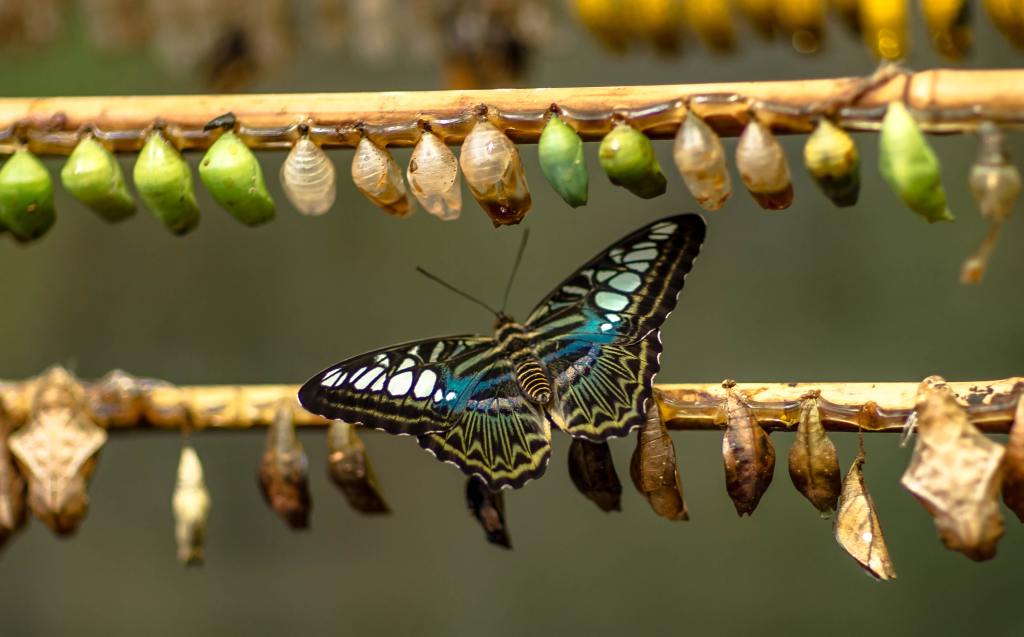
🔼 Being Responsive to Change

I’ve been writing this blog for over ten years and I never know where I will find inspiration. It might be a trip to Paris with college friends, a statue of a dog in Wilmington, North Carolina, or a client mentioning a new idea like “wabi sabi”. This past week, I opened an Honest Tea bottle and inside the cap, there was this quote from Darwin: “It is not the strongest of the species that survives, nor the most intelligent, but the most responsive to change.” Well isn’t that thought-provoking?

I look back at the last five years since Hurricane Matthew, and I have been through radical change: from transforming my flooded home, surviving divorce, sobering up, and adopting a plant-based eating lifestyle. That is a lot of change. That is also a lot of responding to change. And I feel like the species of “Cathy” is on a completely different trajectory than I ever would have imagined three years ago.

Here are my takeaways on being responsive to change:

Appearances are deceiving.

I think of the fable of the frog being boiled alive because it didn’t detect the water temperature slowly changing. The water looked the same but the temperature was rising. It’s that way in relationships. The slow changes in a relationship can be imperceptible. The rules of the relationship have slowly morphed overtime and suddenly you don’t recognize yourself or your partner anymore. Right after the water receded from the flood, we stayed in the house for about three weeks. There was no HVAC, but because the weather was beautiful outside (low humidity and mid-70’s – beautiful for Eastern North Carolina), I had deceived myself into believing that we would not have to move out. The house looks fine, the relationship seems “normal”, and the water doesn’t seem that warm. Take a look below the surface and see what’s really going on. Things may have radically changed and you forgot to notice. Can you really live in a house without HVAC? Can you be in a relationship where you are no longer valued? Can you stay in the water when it’s starting to heat up? Don’t be deceived by appearances.

Patience is the key.

As Abigail Brenner wrote for Psychology Today, “Don’t be impulsive or try to rush the results. Patience will help you arrive at the best possible place you need to be.” There was the lost cabinet that was the linchpin to moving back into the house. It was at least a month to two months longer than expected. There were the slippery slopes of the mountains of bureaucracy associated with the insurance company, mortgage company, FEMA, and contractors. Patience, not my strong suit, was critical. It’s the same with the legal process of divorce. I wanted to just get it all wrapped up neatly in a package and move on. Nope. There is bureaucracy associated with that. I remember thinking over and over and over again, You can’t push a rope. This too shall pass. It’s difficult for someone as impulsive as myself, but the old Alcoholics Anonymous saying of “one day at a time” has incredible value. Relax when you are blindsided by change; lean into it.

Feel the feels.

Pain is difficult. It’s easy to take shortcuts to get around the pain. Eating a pint of Ben & Jerry’s ice cream, an Amazon Prime shopping binge or polishing off a bottle of Chardonnay. Numbing out of the experience. As the old Children’s song “Going on a Bear Hunt” says, “Can’t go over it, Can’t go under it, Can’t go around it, Got to go through it!” The way to go through is to feel the pain. Feel the feelings. Grief feels like this: tight stomach and clenched teeth. Anger feels like this: tight shoulders and fists. Then sit and feel the feels. Label it and feel it. Stuffing, numbing and ignoring aren’t helping you. It makes the change that much harder because you are trying to go around and not through. I know it can seem daunting. I remember thinking I would never get over the end of my marriage. I thought I would grieve every day. And I did for a while. But I think allowing grieving every day really helped me move on. Feel the pain of letting go of the past. Be with it.

One small step.

In my booklet 102 Itzy Bitzy Habits, I espouse the wisdom in making one or two small adjustments. I think we have all tried to take on the exercise regime, often over do it the first time out, and give up. Or we try the low carb diet and dump all the pasta, cookies and bread out of the pantry only to head to the drive thru the next day. Change is much more palatable with small steps. When I started to remove dairy from my diet, I started with breakfast. What could I eat for breakfast that didn’t have eggs or dairy? Oatmeal with blueberries. OK. One meal that is more plant based. Done. I still had cheese at lunch and dinner. I just removed it from breakfast. I avoid alcohol with one club soda and lime at a time. It’s just as easy to walk up to the bar at the reception and order a club soda with lime.

Give up on perfection with all this. Change isn’t easy. I facilitated a workshop this week and the food choices weren’t very plant based. I had some cheese. It’s OK. It’s good enough. It’s not all or nothing. There is 95%. It’s most important to focus on responding rather than reacting. Change will come. How will you respond?

Being Responsive to Change

I’ve been writing this blog for over seven years and I never know where I will find inspiration. It might be a trip to Paris with college friends, a statue of a dog in Wilmington, North Carolina, or a client mentioning a new idea like “wabi sabi”. This past week, I opened an Honest Tea bottle and inside the cap, there was this quote from Darwin: “It is not the strongest of the species that survives, nor the most intelligent, but the most responsive to change.” Well isn’t that thought-provoking?

martino-pietropoli-691998-unsplash

I look back at the last two years since Hurricane Matthew, and I have been through radical change: from transforming my flooded home, surviving divorce, sobering up, and adopting a plant-based eating lifestyle. That is a lot of change. That is also a lot of responding to change. And I feel like the species of “Cathy” is on a completely different trajectory than I ever would have imagined three years ago.

Here are my takeaways on being responsive to change:

Appearances are deceiving.

I think of the fable of the frog being boiled alive because it didn’t detect the water temperature slowly changing. The water looked the same but the temperature was rising. It’s that way in relationships. The slow changes in a relationship can be imperceptible. The rules of the relationship have slowly morphed overtime and suddenly you don’t recognize yourself or your partner anymore. Right after the water receded from the flood, we stayed in the house for about three weeks. There was no HVAC, but because the weather was beautiful outside (low humidity and mid-70’s – beautiful for Eastern North Carolina), I had deceived myself into believing that we would not have to move out. The house looks fine, the relationship seems “normal”, and the water doesn’t seem that warm. Take a look below the surface and see what’s really going on. Things may have radically changed and you forgot to notice. Can you really live in a house without HVAC? Can you be in a relationship where you are no longer valued? Can you stay in the water when it’s starting to heat up? Don’t be deceived by appearances.

Patience is the key.

As Abigail Brenner wrote for Psychology Today, “Don’t be impulsive or try to rush the results. Patience will help you arrive at the best possible place you need to be.” There was the lost cabinet that was the linchpin to moving back into the house. It was at least a month to two months longer than expected. There were the slippery slopes of the mountains of bureaucracy associated with the insurance company, mortgage company, FEMA, and contractors. Patience, not my strong suit, was critical. It’s the same with the legal process of divorce. I wanted to just get it all wrapped up neatly in a package and move on. Nope. There is bureaucracy associated with that. I remember thinking over and over and over again, You can’t push a rope. This too shall pass. It’s difficult for someone as impulsive as myself, but the old Alcoholics Anonymous saying of “one day at a time” has incredible value. Relax when you are blindsided by change; lean into it.

Feel the feels.

Pain is difficult. It’s easy to take shortcuts to get around the pain. Eating a pint of Ben & Jerry’s ice cream, an Amazon Prime shopping binge or polishing off a bottle of Chardonnay. Numbing out of the experience. As the old Children’s song “Going on a Bear Hunt” says, “Can’t go over it, Can’t go under it, Can’t go around it, Got to go through it!” The way to go through is to feel the pain. Feel the feelings. Grief feels like this: tight stomach and clenched teeth. Anger feels like this: tight shoulders and fists. Then sit and feel the feels. Label it and feel it. Stuffing, numbing and ignoring aren’t helping you. It makes the change that much harder because you are trying to go around and not through. I know it can seem daunting. I remember thinking I would never get over the end of my marriage. I thought I would grieve every day. And I did for a while. But I think allowing grieving every day really helped me move on. Feel the pain of letting go of the past. Be with it.

One small step.

In my booklet 102 Itzy Bitzy Habits, I espouse the wisdom in making one or two small adjustments. I think we have all tried to take on the exercise regime, often over do it the first time out, and give up. Or we try the low carb diet and dump all the pasta, cookies and bread out of the pantry only to head to the drive thru the next day. Change is much more palatable with small steps. When I started to remove dairy from my diet, I started with breakfast. What could I eat for breakfast that didn’t have eggs or dairy? Oatmeal with blueberries. OK. One meal that is more plant based. Done. I still had cheese at lunch and dinner. I just removed it from breakfast. I avoid alcohol with one club soda and lime at a time. It’s just as easy to walk up to the bar at the reception and order a club soda with lime.

Give up on perfection with all this. Change isn’t easy. I facilitated a workshop this week and the food choices weren’t very plant based. I had some cheese. It’s OK. It’s good enough. It’s not all or nothing. There is 95%. It’s most important to focus on responding rather than reacting. Change will come. How will you respond?

Coping with Change

You just lost your job and you are reeling with a thousand questions. You just lost your best friend to cancer and you don’t know how you are going to go on. You are told you are getting a new boss and the word is they are a jerk. These are all massive changes. Life altering. It’s frequently unforeseen. It comes out of nowhere like a sudden car crash. Suddenly you are on a different path.

leo-roomets-224629

There are lots of ways to deal with sudden change. A lot of them are unhealthy. Stuffing your feelings with food. Escaping with alcohol or drugs. Going on a shopping spree. There are healthy ways to cope with change and here are a few ideas.


  • Accept and label your emotions.  I lost a pregnancy about 25 years ago. I never dealt with the grief until about a year ago. I was talking to an outstanding coach friend, Sandy Lewis, about pregnancy and the topic came up. She asked if I had grieved for the baby. I hadn’t. So, for several weeks, I lit a candle and named the lost baby “Angel”. I cried. I wept. I wailed. I felt it in my stomach mostly and I labeled it. This is what loss feels like. This is what disappointment feels like. I felt it through my whole body and accepted it. Most of us usually stuff our feelings and never get them out. But they sit there waiting to be experienced. After a weekly ceremony of honoring my feelings and grieving for that lost child, I finally got past it.


  • What is the gift?  There is a silver lining to practically anything. The pregnancy I was talking about was an accident. But the gift was that I realized I wanted to have children. When I divorced my first husband and father of my children, I realized that I was worthy and deserving of love. And I found that love. When I was laid off from my first “professional” job, I learned that corporate cafeterias were not where my joy was. I laid off a guy last year and he realized it was time to move and retire. He hated his job. If your relationship ends, you may be thrown onto a path of adventure that you’ve only ever dreamed of. If your current job ends, you may meet a whole new group of people that you thoroughly identify with and who actually become your friends. The important thing is to find the gift and accept it.


  • Don’t fight it.  As Amanda Abella wrote in Lifehack, “Life changes are usually out of our control. Rather than trying to manipulate the situation and wishing things were different, try flowing with it instead.” Resistance is completely natural but be conscious when it’s time to move on. The resistance is making you suffer. As a client of mine once said, “Sit back like you are in a recliner and let the current flow. Putting your feet down in the white water is dangerous. Kick back and go with the flow.”


  • Find healthy habits.  I remember that when I left my first husband, I started smoking again; it was a way for me to take my independence back. It took me five years to quit again. There are lots of healthy options like meditation, yoga, journaling or taking the dog for a walk. It’s easy to get caught up in not being present. You can go over and over and over the sins of the past and get caught up in how you are going to pay the rent without a job. When you feel that start to take over, go for walk and listen to the birds. Get present.


  • Reframe it.  I reframe things for my coaching clients all the time. I remember a client was suffering from a mean ex-husband. I asked her what was good about the situation. She replied, “I learned I can take care of myself.” It was easy to get caught up in being the victim and not being able to find your power. If you don’t have a coach, phone a trusted friend. Let them help you reframe it. It frequently takes an outside perspective. It’s difficult to do the work by ourselves. Phone a friend.


Change is difficult and we are all wired to resist it. Acknowledging and accepting is the way forward. What change are you coping with?