How to be a Kick Butt Team Coach. Lessons on Scrum.

You’ve just been promoted. Or you have just been put in charge of a project team to make a better widget. You are nervous. You are sweating. You don’t know the first thing about widgets. What if they figure out you are a fraud? You might be found out. Like the emperor with no clothes. Embarrassed and Mortified.scrum-1024x682
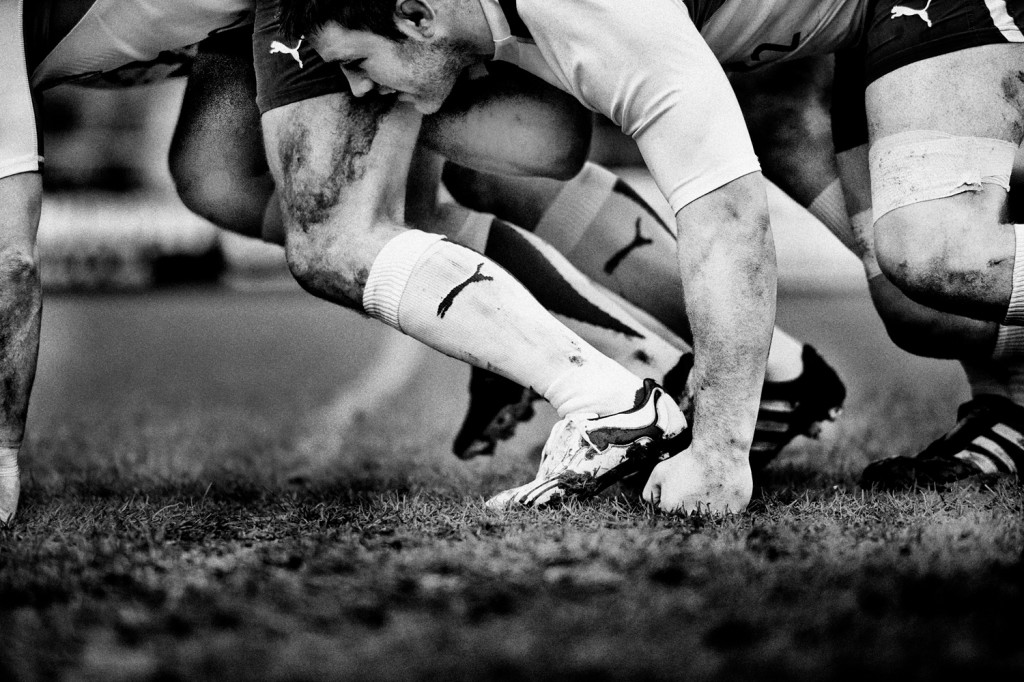
Guess what? All you need to do is follow the Agile Manifesto and you too can be a kick butt team coach, otherwise known as a ScrumMaster® (Scrum refers to the rugby maneuver where everyone on the team is focused on getting the ball).  I recently was trained by Michael Kelley Harris with a group of very intelligent skilled developers and marketing experts in Palo Alto, California. We spent two days taking a deep dive into Agile. So what is Agile? As seen on Agile in a Nutshell, “Agile is a time boxed, iterative approach to software delivery that builds software incrementally from the start of the project, instead of trying to deliver it all at once near the end.” The advantage is that the product development process is much more reactive, more agile. Scrum is a framework within Agile. The ScrumMaster is the facilitator of the group. The coach. And this is what I’ve learned:

Don’t be attached to the outcome. The ScrumMaster® is moving the team forward; nudging and clarifying but they are not attached to a particular endpoint. I have been lucky enough to try Scrum out with a Policy Issuance Development team at an insurance company. I have to say I was pretty nervous because I can barely figure out my iPhone and need my kid to fix my browser for me. I have never coded or tested software in my life. But it turns out that ignorance is bliss. I’m not attached to using a particular architecture. I’m not attached to testing a particular customer. All I want is forward motion and the end result is up to the team.

Expect delays and don’t let it derail the team. At one point in the ScrumMaster class, we all had to guess how long it would take to prepare, eat and clean up after a particular piece of fruit. On our team we would guess how long it would take to eat a banana, handful of grapes, watermelon and an apple. We would all give our estimates and then compromise to say a banana is faster to eat than a watermelon. Then the instructor gave each team either a banana or an apple. We all figured a banana could be eaten in a minute and an apple in about 3 minutes. Wow, were we wrong. All of us have eaten both fruits but let me tell you, an apple took more like 10 minutes to eat. So even though we were all familiar with the fruit and have all eaten them before, the teams that ate the apple took a lot longer. Ten times as long. So you might think that rolling out a new product to three more states might take one day…it could end up being more like a week and a half. Expect delays and don’t let the team get frustrated.

Finished product rather than massive documentation. Forward motion is more important that detailed documentation. How many times have you been caught up in the details and can’t see through the trees. The scrum team I facilitate finds a lot of “nice to haves” but it’s not critical to shipping the product. Figure out what you “have to have” and move forward on it.

• It’s all about customer collaboration. Shipping a product is all about figuring out what the customer wants. The team has one master and that is the customer (ok, and compliance as well) but the product has to satisfy the end user. It’s an ongoing collaboration. If you aren’t listening to your end user then you will be building a Ferrari instead of a VW bus. It might be more fun to build the Ferrari but who is going to use it?

Responding to change over following a plan. This is one of the key tenets from the Agile Manifesto. Technology will change. The customer will change. Resources will change. Accept it. Don’t get tied to a deadline and not adapt. Don’t abandon ship either. Swerve, course correct and move on. Keep a positive attitude and keep nudging the team on through adversity and setbacks. Be open to change.

Don’t let one team member control the team. Frequently the loudest person wins the argument. As the team coach, make sure everyone is heard from. If someone interrupts, make sure the team member who was speaking is still heard from. If someone’s body language is saying they don’t agree with the course we are on, make sure you call it out. “I see you shaking your head Joe. What’s up?” Make sure everyone has a voice.

So there you go. How to be a ScrumMaster® in less than a 1,000 words. The next time you are tapped to lead a team or project you can stand there with confidence. I have to say it’s been really rewarding work. The magic that happens when folks move a project forward is so gratifying. Get out there and kick some butt!

Being there. 6 ways to pay attention.

Ugh. It happened AGAIN! You have no idea what everyone is laughing at because you are busy checking your smart phone for notifications.
You can’t go back. All you can do is smile and nod.
You missed yet another moment. You could have connected. You could have been included in that moment of fellowship. You could belong.
But no. Your phone is the center of your world. One little ding or lit up mailbox and you zone out of the real world.
This has got to stop. You’ve got to find your focus and start connecting with those around you. Now.

This topic came up for me as I read the book, Small Move, Big Change by Caroline Arnold. The book itself is about micro resolutions but one of the subjects in her book was a recently divorced father who had his kids every other weekend. They went away to a country house every other weekend and instead of spending time together, they ended up spending the weekend with their technology instead of with each other. Have you experienced this? I have. So the father started the resolution that they could only spend an hour a day on technology and then, all the phones and tablets went into a basket. The three kids baulked at first (who wouldn’t) but after two weekends, they started looking forward to the time they spent together “being there” together. Board games, hikes, charades, conversations….sounds like heaven.
pay attention
So here is how to get your attention back:

Focus your attention on every little action like you are in love. Arnold quotes acting guru Stella Adler. She writes that in an acting class Adler said, “How can you tell when someone is in love? How can you tell? You can tell because they pay attention. They pay attention to their lover’s every action, gesture and expression. So if you are playing someone in love, give the love object your complete attention in a scene. Even if you aren’t looking at your object directly.” As I write this, I am watching my dog. Is she by my foot or in another room? Is she wagging her tail or is she on the hunt. Take note of every action.

Take a technology sabbatical. I’m not sure when my children will be home next but I’m really thinking about taking a cue from the father in Arnold’s book and taking a technology sabbatical. I know I personally leave my phone in the kitchen to charge at night. At least my sleep is getting my full and undivided attention. But creating space to be devoid of any distractions from the world outside can obviously be very powerful. Perhaps it’s a “no phones during meals” rule or “no technology after 7 PM” rule. Create space to be technology free.

Create something worthwhile and positive. Rick Hanson says in his book Buddha’s Brain: The Practical Neuroscience of Happiness, Love and Wisdom, “Attention shapes the brain.” Your brain cells are growing based on what you focus on. So what are you creating in your brain? Are you creating negativity by focusing on the latest news story or dwelling on the job opportunity you didn’t get? Or on the latest decision by your boss that you don’t agree with? Hmmm. I’d rather create something more positive in all that grey matter. Be careful about what you are creating.

Attention is not critical. Judgment is. Attention is neutral. In Alison Shapiro’s Psychology Today article Paying Attention, “Attention is not critical. Judgment is. Attention is neutral. We begin to pay attention to something and then we start to judge it, evaluate it, categorize it and, yes, generally ‘criticize’ it. But judging, while certainly useful, is not attention. Judging involves an underlying assumption that our purpose is ultimately to categorize and take action.” This neutrality is complete acceptance. Funny, I’m really good at this when coaching a client but not as good when this comes to my children’s individual decisions. Quit judging and stay neutral.

Welcome Everything; Push Away Nothing. Shapiro quotes her teacher, Frank Ostaseski, “Welcome Everything; Push Away Nothing.” This lines up with the “Yes…and” philosophy of CRR Global. This is total unadulterated acceptance. Arms open wide to take in everything with no qualifications. No trying to tinker and change something. No resistance. No squinting and squirming. It’s similar to Byron Katie’s “Love what is.” Notice, accept, withhold judgment and welcome what is.

Be completely and utterly present. The whole problem with technology and the constant bombardment of information is that it takes us out of the moment. Out of the present. Listen for the farthest sound. Feel your big toe come in contact with the floor. Feel the rush of hot, humid air against your cheek. Listen for the sigh from your sleeping dog. Watch the squirrel leap from the branch to the roof. Now. Right now. Be there.

So now when you’re at that meeting. You are going to be jubilant.
Connected.
Aware.
Present.
You’re not tied to that phone and it’s deceiving notifications.
You’re leading the story and the laughs are around your nuanced spin.
You’ve got the world by the tail. Feels pretty good doesn’t it?

Originally published on Change Your Thoughts on September 11, 2015

14 Must-Have Translations from a Damn Yankee in Eastern Carolina.

I’ve lived in Eastern North Carolina for more than 13 years. In case you don’t; the difference between a Yankee and a Damn Yankee is a Damn Yankee never leaves. So I think after 13 years, it’s a safe bet I’m a Damn Yankee.

I no longer feel like a foreigner; just merely tolerated. The difference between being tolerated and being a foreigner is understanding the language. So if you are a newly transplanted non-southerner, I’m giving away the keys to the kingdom on understanding the southern vernacular east of I-95 in North Carolina. I don’t pretend to know how they say things in Louisiana or Alabama, I just know how they say things here. So if you want to get by and, maybe…blend in, I’m giving you the secrets after 13 years of intense study (OK, not intense, more like hit over the head with it).damn yankee

Here you go:

1. Mash the button. Translation: “Press the elevator button.” But here we “mash” the button. We mash potatoes as well. Technically, to mash means to crush something into a uniform paste but that is not what you do with the elevator button. So if someone asks you to “mash the button” don’t bring a hammer.

2. Looking you. Translation: “John is looking for you.” It can also be used as in “You looking me?” which means “Are you looking for me?” I have to admit I actually have used this and when I do, I feel like someone is going to call me out and say, “Hey, you’re a damn Yankee, you can’t say that.”

3. Fixing to. Translation: “I’m intending to…” I can remember when a friend of mine who grew up on Long Island moved to Nashville and we were talking on the phone (before I transplanted to the South). He said, “I’m fixing to mow the lawn.” I said “Fixing?!? What has happened to you Dave?” Another Yankee lost.

4. Carry to the store. Translation: “I’m driving Suzie to store.” The first time I heard a co-worker say, “I had to carry Johnnie to the doctor,” I thought they physically had to pick up and carry their child to the doctor. Piggy back style. Say what?

5. Cut the lights. Translation: “Turn off the lights.” So don’t go run and get scissors to cut the light bulbs. I’m so used to this that I forgot that it didn’t make sense.

6. Ma’am. Translation: “Miss, I didn’t understand what you said, can you please repeat the question?” This confounded me for months! I was not but a little put off by being called “Ma’am” instead of the age reducing “Miss” which I was quite fond of in Northern California. I would say something like, “Do you have any arugula?” to the produce clerk and they would blankly look at me and say “Ma’am?” I’d think “Ma’am, what?” This happened to me countless times on the phone after I would ask a question. I agree that it is a judicious use of words but I was lost. If you are a man, just replace “Sir” for “Ma’am” and it works the same way.

7. Miss Cathy. Translation: “You could probably be a grandmother so, therefore, must be respected.” I don’t know anyone over 65 that is not referred to as “Mr. John” or “Miss Ann.” It’s a sign of respect. I think it’s ironic that you finally get called “Miss” when you are older. I remember my son at age 8 calling our neighbor “Fred” instead of “Mr. Fred.” Mr. Fred set him straight.

8. High dollar. Translation: “Expensive.” This gets used like “We all can’t live in your high dollar neighborhood.” It’s sometimes called “Tall dollar.” It’s a backhanded compliment on where you live.

9. Mee Maw. Translation: “Grandmother”. I’m not sure what it’s derived from but it rhymes with “Hee Haw”.

10. Hey big man. Let me hold a dollar. Translation: “Let me have a dollar.” This comes from a radio show called “John boy and Billy.” This threw me off repeatedly. I’m thinking, “Why do you just want to hold the dollar?”

11. Awl. Translation: “Oil.” I can imagine this would be a greater problem for me if I worked in an auto shop or fast food restaurant. It will absolutely snag you as a Yankee if you ask for “oil and vinegar” on your salad.

12. Pocketbook Translation: “purse.” While most Southern terms seem to be judicious with syllables if not word (see item #6 and #7) , this is the opposite. My purse does not reside in my pocket nor is it a book.

13. Might could. Translation: “Maybe we could.” This is politely leaving your options open. So if someone says, “Let’s go into shark infested waters,” you can respond with “might could.” It leaves your options open which is a good idea with the current state of shark attacks in North Carolina.

14. Bless his heart. Translation: “someone is about to roll a bus over the person whose heart they are blessing.” Like, “He thinks everyone likes him, bless his heart,” or “She’s tried to lose weight for years, bless her heart.” I will admit if someone is hospitalized or just lost their grandmother “bless his heart” will be used but 95% of the time, they are rolling the bus over whoever they are blessing.

So there you have it. You now can survive a trip to Emerald Isle, North Carolina for your summer vacation. I can assure you that if you are vacationing in Emerald Isle, you are surrounded by folks from Eastern Carolina. Y’all fixin’ to carry your mee-maw and her pocket book down east? Might could.

How to Keep Your Inbox from Dragging You Down.

You know the feeling.
You’ve been on vacation.
Maybe a four day weekend.
The reckoning is coming.
You open your inbox to some 200 plus emails.
Some unopened.
Time to sloth through for 2 plus hours to reorg the whole mess.
Ugh.
Nothing but a time drain.
Lucky for you, I just taught an awesome class developed by Franklin Covey called the 5 Choices of Extraordinary Productivity and I have the master moves to save your inbox.

Get Control of your Inbox

Here they are:

1. Have folders that make sense. It’s really simple to add folders but frequently they don’t make sense or your folders need to be updated. This happened to me recently. I had a folder in my personal inbox named “Duke” while my daughter was attending the university and I kept track of various school and financial aid information. She graduated two years ago. I am working for Duke as an instructor starting in September. Now the “Duke” folder is housing different information. As Andrew Mellen espouses in his book, Unstuff Your LIfe, you need to have categories that work for you. I used to have folders for each blog I subscribe to. Now I have a main folder called “Blogs” and subfolders with each author’s name. I also update my folders periodically so that now the “Duke” folder is not a subfolder under “Kids” but is now a subfolder under “Current Clients”. Make sure you organize it in a way that makes sense for you and update it as appropriate.

2. Set up rules so you don’t have to open unnecessary emails. Frankin Covey calls this “Win without Fighting”, so essentially you never even see an email and, therefore, never have to fight it. Low hanging fruit here is to have junk mail automatically go to the junk mail or delete folder. I’ve read in several places that it’s not wise to unsubscribe to emails because they frequently create more emails by confirming your email address (obviously these are disreputable spammers). So if you have them go automatically to the delete folder you don’t need to bother to unsubscribe. Shopping receipts can go to the “Purchases” folder automatically if you set up rules from your most frequented online shopping sites like Amazon, Staples, Southwest and the like. What I really like about doing this is that my cell phone inbox doesn’t blow up with emails I want a record of but don’t necessarily want to look at on my phone. It cuts back on the alerts.

3. Turn it into what it is. During the class, as we all sat at our laptops connected to our Outlook inbox, we could turn all those incoming emails into what they actually were. So when I get an invite for a meeting or conference, I can drag the email down to the “Calendar” and create an appointment to decide whether to attend on the last day of early registration. I can drag an email requesting data on turnover to the “Task” list and set up a due date on the first day of the next month. I can drag a new contact email to my “People” icon and set up the contact information. When you do this, you can practically empty your inbox to a handful of emails. Before I started using this method, I invariably had email that sat in my inbox until it was taken care of. So if I couldn’t decide on a conference some six months out, that email would sit there gathering dust and cluttering my head until I could actually sign up for it. Start dragging your incoming email and creating what it really is.

4. Link to Locate. This is the last “Master Move” in the 5 Choices class. Basically, in any calendar entry, you can “insert” an email, a contact, a task or a note. So if you have a meeting with a new client on Friday at 10 AM, you can have the client’s contact information, the proposal you sent them and the notes from the phone call you had with them. They are all sitting there in your calendar entry. In addition, if you copy your associate on the appointment request, they will have access to all the information as well. It’s a nice neat little package. No need to set up an email folder and hope you have all the information in there. Or printing off tons of paper for the meeting. It’s all there in Outlook waiting patiently for the appointed time.

I have to say that even the technology folks in the class didn’t realize all the capabilities of Outlook. Once you start fully utilizing it, it’s remarkable how efficient you can be. Out of 13 participants, every single person had their “mind blown” by how easy it was to organize their technology. My husband brought his laptop home and, after a brief lesson on the 4 items above, he went from over 10,000 emails (all of which were flagged) to ZERO in about two hours.  So there you have it. A nice neat efficient inbox. Whew.

7 Ways to Kick Decision Fatigue to the Curb

You’re standing at your local grocery store and all you want is a box of Ritz crackers.
Problem is that there are 17 varieties of Ritz in front of you on the shelf.
Dang it! All you want is a box of Ritz crackers.
You don’t want football shaped.
You don’t want whole wheat.
You don’t want low fat.
You don’t want hint of salt.
You don’t want bacon flavored (OK maybe you do but not right now).
You don’t want Fresh Packs.
And you don’t want Ritz Bits.
You want to throw your hands up in disgust or pick up the first box that your hand reaches for. Heck, you can work bacon into a dessert recipe, right?
So after reading through countless labels and searching 6 shelves of red boxes,you find the box of Original Ritz on the bottom shelf.
How much brain matter did you exhaust on that little foray into Ritz hell?
Time to eliminate all those decision perhaps?

Kick Decision Fatigue to the Curb

Here are the 7 ways to kick your decision fatigue to the curb:

1. Wake up earlier. You make better decisions in the morning AND you fair better if you get the earliest appointment whether it’s a court hearing (Judges are more lenient in the morning) or a job interview (earlier candidates are selected more often). Everyone has a clearer head in the morning and, apparently, are more charitable.

2. Exercise early in the day. I know it doesn’t seem like it when you are just getting on the treadmill at 5 AM but you will be more energized throughout the day if you exercise early. Research shows that exercise increases mental acuity for up to 10 hours. Why hand over that acuity to the late night news or your pillow?

3. Pick out your clothes the night before. Why make decisions first thing in the morning or, worse yet, while you are trying to sleep? Hmmm. Should I wear the new sweater or the old blouse? If I wear red will it be too overpowering or perfectly enticing? These are not things you want to be thinking about while you toss and turn. Decide the night before and rest easy.

4. Curb your choices. Have the same breakfast every day of the week. Have only one pair of running shoes and one style of socks. Have the same well-oiled routine every morning to get out the door. The more times you have to stop and decide, the more you get depleted. Eliminate as many choices as possible.

5. Simplify your choices. Take that shopping list of yours and go to some place that has like 4,000 different products versus 50,000 different products. Where is that? Trader Joes. They simplify your choices. I can guarantee you they don’t have 17 varieties of Ritz crackers. In-N-Out Burger has burgers and fries. DVR some select TV shows and quit your channel surfing. That’s it. Less decisions means better cognition. Simplify.

6. Know when enough is enough. You know when you are depleted. Long day at work? Just spent 3 hours in a car? The meeting ran long and you still need to buy dinner are the store? These are bad times to make decisions. You have to acknowledge it to do anything about it. My daughter is famous for saying “Mommy you’re getting hangry (re: hungry and angry) aren’t you?”. Perhaps we should go out for dinner. Maybe a frozen pizza will work. Eggs for dinner might be perfect. You need to know so you can head that bad decision off at the pass.

7. Start with one thing. Don’t take this whole list and start working out at 4:30 AM, purchase 7 pairs of black pants and buy a Ninja to make fruit smoothies every morning. Pick one. Maybe two but NO MORE. As Caroline Arnold writes in her book “Small Move, Big Change”, making one or two small changes is much easier to take on and be successful. But start.

I have made a grocery list every Saturday for years. I know what we are having for dinner and plan it all out Saturday morning. So only the weather will impact what we have for dinner, so if there is lightning, I won’t be standing outside by the grill.

Keep that decision fatigue out of the picture so that you can optimize the more important decisions in your life and let the other ones slide into auto pilot.

9 of the Best Books from My Reading List

You’re thinking. I’m not sure what book is worthwhile. After all it’s an investment of your precious time.
At least 4 hours if not much more.
If you’re going to invest 4 to 8 hours of your precious, over committed time to reading a book, you want to make sure it’s worth your investment.
Guess what? I’ve got you covered.
I’ve already invested my time in several books over the last year and I’m going to point you in the right direction.
Easy peasy.9 Books

Most Impactful book. The Four Agreements by don Miguel Ruiz. This book is short and sweet and eye opening. The agreements are: Be impeccable with your word, Don’t take anything personally, Don’t make assumptions and Always do your best. From childhood we take on all sorts of agreements which skew our view of the world and of our thoughts. To drop all your prior agreements (re: your story) is incredibly challenging. If you listen to the audio book it’s read by Peter Coyote and he does an excellent job. If you want to change your thoughts, this is a must read.

Most Inspiring Book. Man’s Search for Meaning by Viktor Frankl. This is the incredible story of Viktor Frankl as a Holocaust survivor. It’s gripping but incredibly enlightening. Here is a trained psychiatrist recounting his days as he watched many people perish as well as those who overcame the unrelenting torture that was Auschwitz. “Everything can be taken from a man but one thing: the last of the human freedoms—to choose one’s attitude in any given set of circumstances, to choose one’s own way.” Need inspiration, this is your book.

Most Useful Book. The Relationship Cure by John Gottman. The basics of connecting and/or not connecting with the people in your life. I am vigilant now about the way I connect with people. Am I turning away, turning against or turning towards connection. We’ve all done it. Deliberately ignored someone, been defiant or reciprocated an outgoing gesture. It’s all here. And if you listen to it on audible, Dr. Gottman is the narrator. His voice is so calm and so accessible. You absolutely feel like you can start using the information right now. Really.

Interesting but Not as Useful. Spy the Lie by Philip Houston, Michael Floyd and Susan Carnicero. This book was written by ex CIA operatives. Fascinating stories and tips for picking up on liars. The only problem is that I’m not a detective or a Russian spy. I guess I might be able to figure out if my son stole a cookie from a cookie jar by reading his body language but I guess I don’t think I have that many liars in my life, which is a good thing. This is a must read for anyone in the detective field or maybe Human Resources.

Most Accessible Book. Positive Intelligence by Shirzad Chamine. Chamine gives you things you can start doing right this minute to get out of listening to the saboteurs that are talking in your head. He also has a ton of free assessments and audio meditations on his website: positiveintelligence.com. His main suggestions is to do PQ reps or I would call them mindful techniques to get really present. You can’t be worrying or suffering from anxiety if you are in the moment. Another bonus is that he is the narrator of the audio book.

Most Encompassing Book. 10% Happier by Dan Harris. Dan is a reporter for ABC news. He takes you on an auto biographical journey on his way to being happier and under less anxiety. He chases down every genre of self-help gurus. So if want the Reader’s Digest on Deepack Chopra, Dalia Lama, Eckhart Tolle and countless others, this is your book. It’s fun, at times light hearted and other times cynical but always real.

Least Likely to be Utilized. Unstuff Your Life by Andrew Mellen. This guy has excellent ideas to completely reorganize your life. I would love to hire him to organize mine. But his ideas seem way too OCD. His mantra is everything has a home and everything is in its place. He also obviously does not have a dog or children or a wayward husband. I’d love to take a week off and reorganize, label and back up all my photos but I think I’ll just rely on Facebook.

Cracks Me Up. You are a Badass by Jen Sincero. Jen narrates this self-help book. She is incredibly funny and doesn’t pull any punches. I don’t think I implemented anything from this book but I was incredibly inspired when I finished it. “I can pretty much guarantee that every time you tearfully ask yourself the question, “WTF is my problem?!” the answer lies in some lame, limiting, and false subconscious belief that you’ve been dragging around without even realizing” It’s a fun read and even better listen on audible.

And Out of Left Field. Genghis Khan and the Making of the Modern World by Jonathan Davis. This book is some 20 hours long so I only suggest this if you like reading about historic figures and if you have a lot of time. I don’t actually have a lot of time but I listen to books when I travel so I got through this in a few weeks. Interesting story and it’s amazing how large the Mongol empire became. Barbaric to be sure, but an amazing story.

A few other honorable mentions are Small Move, Big Change, Better than Before, How to Fail at Almost Anything and Still Win Big, and The Obstacle is the Way. I have also been listening to the Great Courses which is a lecture by a professor who is interesting but they are all about 12 hours long so it is a commitment. But if you want to learn how to be a Non-Fiction Writer or Settle Disputes, there are a bunch of titles to enjoy.
So get out there and pick up that book and invest your time. I didn’t include the many books I thought were duds. Happy reading.


amzn_assoc_ad_type = “contextual”;
amzn_assoc_tracking_id = “workplnaviga-20”;
amzn_assoc_marketplace = “amazon”;
amzn_assoc_region = “US”;
amzn_assoc_placement = “6QK6CPJYRXEPYSLF”;
amzn_assoc_linkid = “6QK6CPJYRXEPYSLF”;

amzn_assoc_emphasize_categories = “1000, 301668“;
amzn_assoc_fallback_products = “”;
amzn_assoc_width = “728“;
amzn_assoc_height = “90“;

How to Instantly Connect. The Basics of Emotional Bidding.

When I think of bidding, I think of poker. So I didn’t immediately connect when I heard Marita Fridjhon, CRR Global, introduce the idea of a “repair bid” in terms of making a movement to try and repair a relationship. So if you are in conflict with a co-worker, you redirect the conversation by making a positive connection by saying something like, “I can see you put a lot of effort into this report” or “I so glad you’ve taken this project on.” It’s like stopping and offering a gift of grapes; sometimes known as a peace offering. The silent message is, “I know we disagree but I still value and respect you.” But there are more than just repair bids.Repair Bids

The idea of emotional bidding was developed by John Gottman and is outlined in his book, The Relationship Cure. “Introducing the fundamental unit of emotional connection he calls the “emotional bid,” Dr. Gottman shows that all good relationships are built through a process of making and receiving successful bids. These bids range from such subtle gestures as a quick question, a look, or a comment, to the most probing and intimate ways we communicate.” So the act of bidding is something we all need to understand and develop in order to connect with others. It’s the nuanced give and take between two people that lets the other know that you care while it strengthens your relationship.

So here are the ways we bid and instantly connect with others:

1. Question. As Gottman espouses, a question can be simple. “Did you see the World Cup game last night?” or “Can I get you some coffee?” or “What time are you leaving?” A question is easy and almost demands connection. This brings up a memory from traveling across the country with my family in a 22 foot trailer when I was eight years old. My father probably met a thousand folks on that trip, largely because he would ask questions whether standing on line at a gas station, restaurant, national monument, ice cream stand or rest area. “Where are you from?” “How long have you been on the road?” “What do you do?” Invariably my dad would be delayed and we would all roll our eyes in unison and say, “He’s probably talking to someone.” But he would always come back with some interesting story about the guy from Minnesota who is a trout fisherman with twelve kids. The point is he knew how to connect. Ask questions.

2. Gesture. Perhaps the easiest gesture is a wave. But any positive gesture is a way to connect. I remember when we first moved to Goldsboro which is a small town in Eastern North Carolina some 14 years ago. My husband and I would be driving to our rental house and a guy sitting on his riding mower would wave at us. We would look at each other perplexed like how does he know us? Turns out that’s what you do in a small southern town. You wave at people if you know them or not. I have to say I have felt more connected since I moved here and now I wave whether walking or driving. Connect through a gesture.

3. Look. So much can be communicated in just one look. A wink. A grin. As Gottman cites in his book, when someone is gauging your communication 7% is based on the actual spoken word, 38% is on tone and pace of voice and 55% is based on facial expressions and body language. One look speaks volumes over what you are actually saying. It’s engaging. And it’s so simple. Communicate and connect by simply looking.

4. Touch. In my opinion, this is the fastest way to connect to someone although in the business setting this can be risky. It’s not like this has to be an embrace. A dear friend of mine, and the editor of this blog, used to be a cocktail waitress at the San Francisco airport (MANY years ago). I can remember her advice as we were waiting on patrons in the Sunset Bar: “Touch the customer on the back of the shoulder.” My tips went up. Literally connecting with the customer had a huge impact. Such a small bid with terrific results. Try it in an argument if you can pull it off without it being obvious.

5. Express. Express your feelings. I know I have recommended this when I facilitate the DDI training “Essentials of Leadership” which recommends, “Share thoughts, feelings and rationale.” My Baby Boomer managers cringe at sharing their feelings. Like we need to sing Kumbaya or something. Feelings are not necessarily those of love (although in bidding with a love interest, it certainly could be). Feelings can be apprehension, fatigue, uncertainty, anger or excitement. “I’m nervous about giving you this project” or “I’m tired and I’m not thinking clearly.” For me it shows authenticity. Express yourself. Contrary to what you might think, it shows confidence and trust.

Connection can be fleeting if the other party does not reciprocate. Perhaps they are on their smart phone and ignore your attempts at a gesture. Gottman refers to this as a bid buster called being mindless. So make sure you are receiving as well as giving bids. Pay attention and acknowledge the connect. How do you bid?

5 Surprising Reasons You Need To Delete “Sorry” From Your Vocabulary

I’ve been focused for the last week or so on how often I say sorry. It turns out I’m not as bad as I expected and I realized I’ve done a good job of taking it out of my vocabulary. Originally, I became aware of my apologetic behavior after reading My Life in France by Alex Prud’homme and Julia Child.  If a dish goes horribly wrong, like a ”vile” eggs Florentine she once made for a friend, Julia instructed, ”Never apologize.” Sometimes I forget to season the food, one time I forgot to put the chicken base into a soup and it was basically water with some vegetables floating in it. I bit my tongue. To apologize as Julia espouses only makes it worse. ”The cook must simply grin and bear it,” Julia said firmly. And act as if you intended it that way.5 surprising reasons you need to delete This apologetic behavior came up in another book by Caroline Arnold called Small Move, Big Change. Arnold’s book is about micro resolutions but one of the resolutions she took on was to stop apologizing. She found that every time she apologized to her husband it put him on the defensive. I never thought about that. I always looked at an apology as taking responsibility but really you end up making the other person (the receiver of the apology) feel diminished. That seems counter intuitive but think about it. If I apologize for forgetting to pick up the dry cleaning, my husband will feel like he was putting me out to begin with. Like he was demanding the dry cleaning and I must fall on the sword to take responsibility. It’s just dry cleaning. As Arnold recommends, just give the information and let it go. “I forgot to pick up the dry cleaning.” Done. So here are the surprising reasons you need to delete “sorry” from your vocabulary: 1. Inauthentic. It makes you come across as inauthentic. Especially when you are apologizing for the weather or for your in-laws being late. Are you really responsible for the weather? Are you clairvoyant? Because if you aren’t then why are you apologizing. “I’m so sorry it’s so hot and humid.” Think about that statement in the middle of July in Eastern North Carolina. Ridiculous and inauthentic. 2. Manipulative. I think every mother is guilty of trying to manipulate their children by apologizing. “I’m sorry I didn’t get a chance to clean your room while I slaved away on a three course meal after a full day of juggling away at work while suffering from a wretched cold.” Right. Perhaps you are just trying to make your child feel guilty. Apologizing is manipulative. 3. Filler. It’s a filler word that we think is polite like please or thank you. But it’s really not polite. I was putting some things away the other day and brought a tool to my husband and asked where he wanted me to store it. He told me that he would take care of it and my reflexive answer was “sorry.” I caught the word in my mouth and said “No, I’m not sorry.” He looked relieved. Why in the world would I apologize? There is nothing wrong with getting things back to where they need to be stored and there is no reason to apologize. 4. Excuse. Julia considered it unseemly for a cook to twist herself into knots of excuses and explanations. Such admissions ”only make a bad situation worse,” she said, by drawing attention to one’s shortcomings (or self-perceived shortcomings) and prompting your guest to think: Yes, you’re right, this really is an awful meal. In a sense, it brings everyone down. It focuses on the negative instead of the positive; try instead to comment perhaps on the crisp Sauvignon Blanc or the fragrant flowers or the lovely view. Quit making excuses. 5. Disingenuous. How often are you apologizing for something you really aren’t sorry for? Like your opinion. “I’m sorry but I disagree” or “I’m sorry but you don’t have all the facts.” If you disagree or your boss does not have all the facts why in the world would you apologize for it? And what does your boss think of you if you apologize for the facts she didn’t have? It’s empty and insincere. Sometimes we just need to pay attention to the language we are using. There is power in being succinct and just relaying information instead of dressing it up (or dressing it down) with “sorry.” Focus on the information you want to relay without any apologizing qualifiers. Or perhaps just be OK with the silence. Do you apologize too often?

30 Itsy Bitsy Habits You Can Kick-start Today

It turns out it’s a lot easier to start an itsy bitsy habit instead of a gargantuan habit. So instead of embarking on a marathon, start with a tiny step like keeping your running shoes by the bed. The point is that it’s a lot easier to train your brain to go into auto pilot in the morning to walk the dog than it is to go out on a 10 mile training run for a marathon. The first time you try a new habit you barely leave a mark in your brain like footprints across freshly mowed grass. By the time you’ve been practicing a habit like brushing your teeth, you have a full on coast to coast railroad track laid down in your brain and there is no stopping it.30 itzy bitzy habits you can kick start today

I’ve actually been walking two miles every morning that I am home. I roll around in bed and think, “ugh, I don’t want to go out in the heat and humidity. It’s my birthday, take the day off, just go have some coffee and watch TV.” But somehow my brain is hard wired now, get up, brush and floss my teeth, put on my shorts and t-shirt, put on my sneakers and head out the door. I am on auto pilot. Nothing, even my sloth brain can convince me to stop. Small habits turn you into an unstoppable robot that is on autopilot. This is my morning routine and there is no stopping it. Ever.

So the secret as espoused by Small Move, Big Change by Caroline Arnold, is micro resolutions. Make one tiny change that you can easily handle and over 30 to 60 days, it will become a habit. The secret is to only take on one or two at a time (no MORE!). Once it is a habit, it’s like driving to work, you won’t even think about it. It will be unbreakable.

So here are some itsy bitsy habits you can start right now:

1. Drink a glass of water before every meal.
2. Put your sneakers by your bed.
3. Floss your teeth every morning.
4. Write in a journal every evening.
5. Meditate for 5 minutes once a day.
6. Walk first thing every morning.
7. Make a fruit smoothie for breakfast every weekday
8. Put your clothes out the night before work/school.
9. Park your car in the farthest parking spot.
10. Make a weekly phone date with your brother, sister, mother, grandfather etc.
11. Put your car keys on a plate in your kitchen.
12. Put your clothes away immediately upon changing.
13. Clear the table once you have finished a meal.
14. Put your shoes in the same spot every time.
15. Take three slow deep breaths before eating.
16. Stop saying “sorry”.
17. Smile when you enter a room.
18. Make your bed.
19. Make a grocery list.
20. Plan your weekly meals on Sunday.
21. Schedule time to work on projects once a week.
22. Plug your cell phone in to charge when you get home.
23. No technology after 7 PM.
24. Go to bed a half hour earlier than usual.
25. Set your alarm clock 10 minutes earlier.
26. Water your plants every Saturday.
27. Read for 15 minutes before bed.
28. Wish your friends “Happy Birthday” on Facebook.
29. Use Luminosity every morning for 5 minutes.
30. Pay your bills every other Wednesday night.

If you can accomplish one or two of these itsy bitsy habits for a month or two, you will be on auto pilot. You won’t have to think about it anymore. You know how difficult it is to break a bad habit, so once it is engrained in your brain, you will never have to remember to floss again. Trust me, I have done everything on this list (not all at once) but over the last 5 years. Now I don’t even think about it. Where do you want to start?

Being in the Moment. What my Dog Taught me About Presence.

Love this one!

Cathy Noice's avatarWorkplace Navigator

If you listen to the book, The Obstacle Is the Way, on Audible there is an interview between the author, Ryan Holiday and Tim Ferriss, author of 4-hour Workweek at the end of the recording. It is a fascinating interview and at one point Tim asks Ryan what he is grateful for. Ryan responds, his dog because he helps keep him present. I immediately connected. My dog, Baci, is the most joyful, present being I know and I absolutely learn from her every day. What My Dog Taught Me About Presence.

Baci is a 6 year old Brittany who we have owned since she was 2 months old. Outside of being a pain to get house broken (I think it took almost 2 years), she is the best dog I have ever owned. I think she’s had an influence on our entire family, as she shares her joy and love unabashedly. So if one dog…

View original post 733 more words