4 Reasons We Succumb to the Sunk Cost Fallacy

Individuals commit the sunk cost fallacy when they continue a behavior or endeavor as a result of previously invested resources (time, money or effort) (Arkes & Blumer, 1985). My boyfriend Roy and I went to the Outer Banks of North Carolina over Thanksgiving weekend. In our traveling around, we decided to check out the Currituck Lighthouse in Corolla. The Currituck Lighthouse is a brick lighthouse that is not painted, unlike the other famous lighthouses of North Carolina like Cape Hatteras and Cape Lookout. We parked, took pictures and one of the employees asked if we were going to climb to the top of the lighthouse. Well, since it was open and it was the last weekend it was open for the year, we decided to check it out. We climbed the five steps up to the entry way and heard the liability speech of climbing the 220 steps to the top. The entrance employee said, “Well there are 220 steps to the top and you have already gone up 5 of them.” Sounds simple enough but in my head, I thought, “Well you’ve already gone up 5 so you might as well go all the way to the top.”

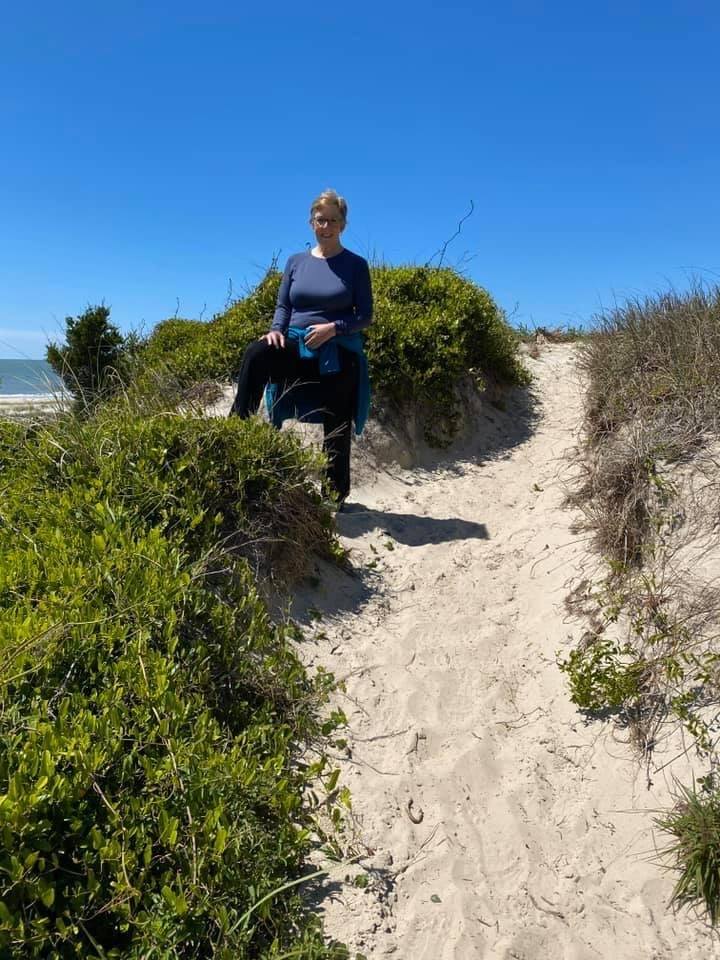
77130915_10157729381628688_5511489835967184896_n
The Currituck Lighthouse in Corolla, NC

This is an example of the sunk cost fallacy. It’s obviously non-sensible in retrospect. Why in the world would 5 steps out of 220 steps with 215 steps remaining make me feel: “Well, we’ve come this far, might as well climb the thing”? Have I mentioned that I have a bit of acrophobia and claustrophobia? But the entrance employee’s statement of my sunk cost of the five steps that I just came up? I was hooked. I had to complete it now. I had already done part of the work. Let me finish this. The sunk cost fallacy is constantly showing up in life and there are some good reasons why we succumb to it.

Here are four reasons we succumb to the sunk cost fallacy:

  1. We fall prey to the stick more than the carrot

Punishment is driving you more than pleasure. We all have loss aversion. I had already “suffered” going up 5 steps. I rather suffer 215 more steps than going back down the 5 I already went up. There are apps for this (StickK, Beeminder, etc.). Where you make a pact to give up smoking, alcohol or chocolate, and if you fail ,you pay money to some organization that you despise, like a political group you are opposed to. The stick is mightier than the carrot. It is why you stay in a relationship where you aren’t happy. You’ve already invested 5 months, 5 years or 5 decades with someone and the loss of hurting the person’s feelings through a breakup is too great. So, think about if you are just being loss averse or if there really is a good reason to go up the 215 steps. In my case, there was a view at the top and the unique experience of climbing a lighthouse. Try and focus on the carrot and whether it’s worth it.

  1. We don’t want to be wasteful

It might be my upbringing, but I always remember being a part of the clean plate club. My parents would tell me to think about the starving Albanians while I pushed Brussel sprouts around my dinner plate as a child. It’s also why I hold onto clothes and shoes and random electronic cords that serve no purpose. I don’t want to be wasteful. I can’t stand giving away a jacket that I bought three years ago that still has its price tag or the pair of shoes I spent more than $100 for that do not fit and have never felt comfortable. I have to say that I love the Netflix series Tidying Up with Marie Kondo. Marie goes to people’s homes and helps them go through their things. She asks the person to hold the item and see if it sparks joy. That jacket that is hanging in my closet with the price tag on it? It does not spark joy. I need to thank it and donate it to someone who can use it. The random cords that go to something I no longer own or use? They need to get thrown out. I’m working on letting go of things even though it might feel wasteful.

  1. We want to look back instead of forward

In an article by Mark Reipe for Charles Schwab, “In the case of the sunk cost fallacy, the fear of acknowledging a ‘loss’ can keep us looking backward at events that we can’t change, when our self-interest lies in thinking about what comes next.” When my marriage fell apart two years ago, I kept focusing on what went wrong. I kept looking back and not looking forward. I was examining the sunk cost of 17 years of marriage in hindsight, instead of looking forward to what was possible now. I sort of imagine now, what would happen if I spilled some milk and kept thinking about that spilled milk over and over and over again. It’s pointless. The milk is cleaned up and gone now. What’s possible if I don’t focus on past history and see what’s possible now?

  1. We can’t recover what we’ve already invested

I love the analogy that Reipe wrote: “A rational approach to sunk costs is to say that money you can’t get back should have no influence on decisions about what you do next. Only additional future costs should matter. Say you throw $100 into a wishing well and your wish isn’t granted. Would you throw another $100 after it?” This says to me that we need to start where we are and move forward. Quit tallying up the cost of the car repairs or the dead-beat client that refuses to pay. Move on. What will it cost to keep the car running right now? Who cares if the shoes were over $100, if you won’t be comfortable in them, donate them to someone who will wear them? I cannot recover what I have already spent. Move on.

I survived the 220 steps, along with my acrophobia and claustrophobia, all the way to the top of the lighthouse. And the 220 steps back down. I’m glad I did it. The sunk cost fallacy might have spurred me to the top, but the experience of climbing a lighthouse and testing my fears is what sustained me. It makes me think about what else I might be forging forward on that I really need to let go of. What are you holding onto because of sunk cost?

Find Happiness Now

I have struggled over the last two years with finding happiness. I have strained, pushed, and worked on finally arriving at the railroad station, boarding the rail car called Happiness. Having taken this very circuitous route, I’ve come to realize: it’s not a destination; it’s not arriving or departing. It’s not being on standby. The thing is that it’s always been in me. It can be in me right now. It’s funny because as I write this, my dog Baci just relaxed into my lap as I wrote that sentence. She isn’t struggling any more; she is just deciding that laying next to me is perfect. And that is just perfect with me.

78966547_600018410768719_1853251029282324480_n


I recently read Michael Neill’s The Space Within. It’s a thought-provoking book about just letting things be. About giving up control and focusing on what is. To letting go of your thinking and worrying and just letting things be. I think this is about just deciding to be happy right now. Just let life work itself out and yet embrace happiness now. It doesn’t take a milestone like buying a house or the divorce to be final or for you to complete the marathon; be happy right now. The key is to decide. So go ahead and decide on happiness right now.

Here is how to decide on happiness:

Happiness is not the goal

This seems counterintuitive. If you view happiness as the goal, you never find it. There is always one more hurdle to jump over. One more thing to check off the list.  You never seem to arrive. I have the new car but I won’t be happy until it’s paid off. Once the car is paid off, then I’ll need to get new tires. Once I get new tires, then the brakes will need replacing. There is always one more thing before happiness is ours, right? The finish line keeps getting extended. We never achieve satisfaction. We never ever arrive. Quit focusing on happiness being the goal.

Happiness is not dependent on others

I can remember thinking as a kid that I would be happy when I found the love of my life or when I had children. Basing your happiness on someone outside of yourself will lead to disappointment. It all starts with you. When it’s dependent upon others, others disappoint. They let you down and then your happiness evaporates. When you can find it in yourself, there is no disappointment. There is only your mindset. If my dog wants to snuggle next to me or not. If my lover tells me they love me or not. If my child gets the job, or graduates from college or not. Happiness is within me and is self-created.

Happiness is not about getting what you want

As Neill writes, “The secret to happiness is simply this…your happiness does NOT depend on getting what you want.” This means that similar to The Wizard of Oz, Dorothy always had home in her heart. She just needed to tap into it. Happiness is within you right now. You don’t need to get the next thing: The new car, house, jacket or coffee maker. Happiness does not exist in the striving for what you want but rather in you right now. Let go of the wishlist and be happy right now.

Happiness is not in the doing

Neill writes, “If you are doing things in order to be happy…you’re doing them in the wrong order.” For me this means to be happy while doing. It starts with the mindset of being happy right now. Start with being happy. Start between the ears. Doing will follow. Just start with a smile on your face and bliss between the ears. Neill suggests looking for the space between words. It’s difficult to look for the space between words when you start looking for it. It’s in the space. That pause. That moment where the infinite is. For me that is being present. Not multitasking. Not looking at your phone. Just be.

Happiness is not a short cut

Neill espouses, “By taking the time to live life in the slow lane, we quickly experience a deeper, more profound experience of contentment.” I opted for a walking meeting with a coworker of mine. The meeting took at least 30 minutes longer than I had expected. The thing is, I connected with the coworker and found out about some recent health issues she was having. I only had thirty minutes on my schedule but the walk and the conversation led to places I didn’t expect or anticipate. It’s letting go of control and letting the path unfold as it needs to. No need to rush, take short cuts or push through. Take the long way, the slow lane and don’t miss a thing.

I wrote myself a note in the Silence Course I took over a year ago. The first item on the note was to smile more. Several people at the course had told me what a beautiful smile I had and how it lit up my face. We all have beautiful smiles. We all need to smile more often. Don’t wait to smile or be happy. Be happy right now. Smile right now. It’s infectious. Are you happy right now?

7 Strategies to Overcome Assumptions

You assume that your boss remembers that you will be out of town on Friday. You assume that your partner remembers that you have a late appointment this afternoon. You assume that your co-worker didn’t include you in the invite because your opinion isn’t needed…or wanted. You assume that the CEO knows that you’ve been burning the midnight oil for weeks to get the financials done. You do it. I do it. We all make assumptions. It’s a dangerous path.

andrew-neel-wwQaXLF6stk-unsplash

Left unchecked and unexamined, assumptions can destroy relationships, teams and organizations. Your boss is expecting you at the ad hoc meeting she set up on Friday and is disappointed that you didn’t show. Your partner is angry that she left work early to surprise you at home, only to find you missing in action. You resent your CEO for not acknowledging all the extra work you’ve been doing on the financials. Assuming is easy. It doesn’t take a lot of effort. Just a jump or two. Tying two dots together that really aren’t related. But looking down the assumption path a little further can reveal resentment, lack of trust and undermine your relationships.

Here is what you can do to fix it:

* Clarify. It seems simple to clarify. Obvious, really. But it takes effort. Your brain is hard wired for negativity. You have survived extinction because of this negativity bias, but there are no more saber-toothed tigers chasing you. It is easy to assume that not having been included in the meeting is an intentional slight rather than an oversight. But if you clarify with the meeting organizer that you would like to attend the meeting, if at all possible; or if you proactively tell your CEO that you’ve been working hard on the financials, you change up your personal dynamic. This is clarification and not boasting.

* Listen. Part of the Assuming Process is not actually listening. We ask a question we assume we know the answer to, and then don’t listen. I am so guilty of this. I think I know the answer and as a “show of concern”, I ask the question but never listen to the response. Just a short cut to save time, but so disrespectful. I get distracted by my grocery list or trying to remember if I need to go to the bank, and never hear the response. It could be the time of the meeting that you assume is at 10, but has been pushed to 10:30. You are smiling and nodding but never connect to the answer. Listen.

* Be open to conflict. Yeah. I know. Most of us are conflict averse. We’d rather hold onto our assumptions than actually step into a conflict. Keep everything copacetic. Keep everyone happy. Don’t rock the boat. As a consequence, the safety issue is never brought up, or the budget short fall isn’t discussed, or the poor performance issue is never addressed. Just this week, I addressed a performance issue (i.e. stepped into conflict) with an employee and tested my assumption that they wanted a job modification. Once addressed, I found out that she did not need a modification. Unchecked, it could have lead us down a completely different path. Step into conflict–you can resolve it.

* Slow down. Part of what fuels an assumption is taking a short cut. If you slow down the pace, you will stay in your prefrontal cortex, where you do your best thinking. When you are in a reactive mode, you’re in the back of your head, where your flight or fight response is. Where you don’t do your best thinking. This is why it’s called jumping to conclusions. Your anxiety is up, your cortisol is pumping and your body is ready to run from the saber tooth tiger. My coach starts off every session with a breath-in for the count of 6 a total of 3 times. Slow down and breath to quit jumping to conclusions.

* Forgive. This can be for yourself, as well as others. As Nelson Mandela said, “Resentment is like drinking poison and then hoping it will kill your enemies.” I’ve grappled with this myself. It’s hard to forgive someone for an assumption you created and may have carried for decades. It can be the frenemy who didn’t invite you to the graduation party back in 1979, or the family member who never thanked you for the gift, or even when you continued to meddle in your child’s life. The resentment is hurting you more than them. Take out a piece of paper or journal, and forgive them one and all–even yourself. Forgive early and often.

* Use technology. When I travel out of town now, I send my partner a meeting request with the airline information. I will frequently forget to tell him that I’m going out of town, and this keeps him proactively informed. Give your assistant access to your calendar. It’s still a good idea to inform people but a sure-fire safe guard is to use your technology to keep them informed.

* Be positive. Envision the upside. I recently saw Rick Hanson and his great Ted Talk on the topic “Hardwiring Happiness.” It’s so easy to just decide that we are going to be worry warts for the rest of our lives. The thing is, you can develop a positive brain that lets the worry go. It takes work and practice, but we ALL have the capacity to have more positive reactions. This can help keep harmful assumptions at bay. Build positive pathways in your brain.

This is not accomplished overnight. We are all works in-progress. Even if you just spend 5 minutes a day meditating on what is positive in your life, you can start breaking down the pathways to assumptions. One assumption at a time.

My Dog and Limiting Beliefs

This past winter, I had quite the scare. My beloved, happy-go-lucky dog Baci was suddenly missing. Out of the blue, I was sitting at home on Saturday morning and thought: Where’s Baci? Well, she must be outside. I checked the “usual spots” (dog house, garage, under the deck, tree #1, tree #2, tree #3….you get the picture) but to no avail. Then I was outside looking down the road and into “presumably” the uncharted territories of the neighbor’s yards and the road. By happenstance, a neighbor was down the road about 100 yards away walking her dog and I heard a familiar bark. Aha!

There she was, two doors down, barking her head off at another dog being walked, defending her new found territory. What in the world? How did that happen? I carried her home. I have a wireless containment system that involves a dog collar and base unit. When Baci gets about 100 feet from the base unit, she receives a warning beep and then a slight shock. I’ve had the system almost as long as Baci (about 12 years) and she definitely knows her territory. The base unit was broken. For how long? Who knows? At some point, she started testing her outer limits and limiting beliefs.

21034382_10155581144208688_979882371996757783_n

This is what she taught me:

  1. Routine.  Baci always has the same routine. The “usual spots” in the yard that she investigates every time she is outside. Heck, she has the same routines inside the house. The same windows she sidles up to peer out. The same tap, tap, tap, tap across the wooden floor. We’ve all got the same routines. Brush your upper right teeth before the left. Wash your hair before your face. Check your phone and then pour coffee. At some point, Baci changed her routine to head into the outer limits. If you want to change things up, you are going to need to change up your routine.
  2. Environment.  The day that I found Baci AWOL, there was a blanket of snow on the ground. This is a drastic change in environment when you live in Eastern North Carolina. This was not the usual fare. So with a blanket of white snow, her perspective and my perspective were different. The snow was covering the usual “barriers”. Perhaps the root (her imagined border) or fallen brach she would normally never cross. A change in environment can change the way you see the world. Change your office, re-organize your books, or change the wallpaper on your PC. The barriers will disappear.
  3. Test.  At some point, she tested the limit. Probably by accident at first, but she went a little farther than she had before. And then a little farther. And then a little more. She inched her way to new territory and was no worse for wear. Test your limits. Write an intro to a book. Sign up for that art course you’ve always wanted to take. Open a new PowerPoint template and make a few slides. Test your outer limits. And then go a little farther. And then a little more.
  4. Explore.  When I look back, I am wondering how long the invisible fence system was down. When I reflect back, I can remember seeing Baci in places that had previously been off-limits. Or I would look everywhere for her, give up and go inside, and suddenly she would be at the back door trying to get in. It.Could.Have.Been.Months. Wow. She was out there exploring. Finding new cats, tennis balls and squirrels (probably the same squirrels she’d always chased, but found them at a new tree). She always came home. She knew where home base was. Go explore. What’s on your bucket list? Check a few off. Patagonia, Victoria Falls and Alaska are on mine. Go explore some new trees.

I’m not suggesting we all let our pets run wild. But I do feel conflicted about restoring Baci to her home territory. How exciting for her to test her limiting beliefs and break beyond her usual outer limits. Don’t wait for the next snow, retirement or the lottery…test your limiting beliefs. See how exciting and rejuvenating it can be.

5 Ways to Use Improv and Play at Work

Improvisation at work seems incongruent. We certainly don’t want the payroll clerk or the crane operator to start improvising while they work. We want them to be methodical and regimented. We don’t want the payroll clerk adding a comma to someone’s pay or the crane operator to dump 10 tons of steel in the middle of a busy street. There are many ways that improvisation can be quite helpful at work; it can enhance output and the experience.

jen-loong-recmiSXOk9w-unsplash

When I went to the ICF (International Coaching Federation) Converge conference, there were several speakers on improvisation and play and how to incorporate these ideas into training, coaching and meetings. I initially felt reluctant at the idea of using improv at work. Yet, when reframed by Jennifer Garvey Berger and Michelle Clark, I became a convert. The two different sessions I attended were the most engaging and, as I have learned, during engagement ,the most transformation happens.

Here are 5 ways to use improv and play at work:

Your body is an instrument

Sitting at a desk or around a boardroom table can be stifling, both for the body and mind. In both of the sessions that I went to on play and improv, we immediately stood up and gathered into teams of 4, 6 or 10. Standing and moving is liberating. I think back to my ORSC (Organization and Relationship Systems Coaching) training with CRR Global and at least 50 percent of the training took place while standing and interacting. Moving your body creates possibility. During Berger’s session, we stood in groups the entire 90 minutes. It was energizing and created new connections amongst the 70 or more participants. There was constant flow and movement. I met at least twenty new people during the session and I believe it happened because there were no boundaries like tables and chairs to keep us from engaging in conversation, movement and laughter. So, if it’s possible, have a stand-up meeting without barriers or have everyone meet in an open space; see what magic happens when you aren’t standing behind a barrier.

There are no mistakes

In Clark’s session, we broke into groups of 6 and came up with a clapping game. It was really interesting that when a group of 6 strangers got together with no rules but to come up with any clapping game we wanted, that we didn’t have preconceived notions about what was right or wrong. There were no limitations. I did not hear one other person say, “Oh no, that’s wrong” or “Let’s try it again the ‘right’ way.” The game we created was zany and crazy with 6 people from 6 different countries, but we had fun and there was never a preconceived mistake. We kept building on prior movements without concern about it being perfect. Letting go of making a mistake is liberating. Think about that in your next meeting. What ideas would come up if there were no mistakes? Nothing to try and hide from?

Yes and …

This is the key to improv. As written in Ladders, “The number one rule that we have is to strike the word ‘no’ and replace it with the two magic words ‘yes, and . . .’ It’s a philosophy, not a statement. It means that you don’t judge an idea. You agree with it by saying “yes,” and then you add your two cents so that it becomes a collective idea and both people have buy in to its success.” This lets new ideas grow and gets more buy in as it grows. We can find this difficult because of our negativity bias. It’s a muscle that needs to get worked. There are other ways to say it like, “Well, I wonder” or “You know what I like about that?” Use words and questions that make things grow, instead of dampening thoughts down. Selecting your words carefully and keeping a “yes and” philosophy can create all kinds of possibilities.

Use active listening

I believe that executive and life coaching has exploded in the last ten years because in our disconnected and distracted lifestyles, we are all looking for connection and to be heard. In my decade of coaching others, the act of actively listening to my clients is the most important thing that I do. The same can be said for improv at work. As written for Ladder, “As business leaders and entrepreneurs, we’ve learned that being a better listener actually makes you a better communicator. You’ve heard everyone out so you’re able to make decisions without overlooking things. You’re not thinking of the thing you were going to say next; you’re paying attention to what’s happening now.”

To be an active listener is to be present and in the moment. It’s also a sign of respect and authenticity. Think about being an active listener at your next meeting.

Embrace all ideas

When I think back to the conference, regardless of the group that I was “playing” with, we didn’t judge any ideas. We accepted all the ideas that bubbled up in the group. Short, tall, old, young, European, Asian or Middle Eastern, there were no bad ideas. It was really quite remarkable to see such a cultural mix and how I had no idea where someone was from. But if someone wanted to clap hands or slither on the floor, we all followed right along. Berger started us off by saying that: “We love each other.” These were our marching orders no matter what we did. I’m not sure of how to bring this into the modern office, but I think my part is to safeguard those who are on the margins and to bring them into the discussion. Diversity of thought is the antidote to status quo and to move new ideas forward.

I’ve never viewed the workplace as a safe space for play. These facilitators and coaches have shown me that there is a way to bring improv and play into the work place. What do you do to create an improvisational workplace?

Teaching Secrets from the Best

My father passed away on July 12th. He had been retired from teaching for over thirty years and yet his students remembered him when I posted his obituary. I was so touched by the comments I received from them. I felt like aspiring teachers out there could learn something from a man who was obviously memorable and one of the best. Being in front of a classroom is a difficult job; being an 9th grade history teacher is one of the most intimidating jobs there is. Middle school students are a tough crowd and it can be hard to gain and keep their attention. At that age, students have a tendency to find history hum drum and truly not very engaging; you have to be unique to succeed. My father captured his audience as any great actor does and inspired many.

77276020_563520527553179_4522821830813155328_n
Benson Noice, my father, the best teacher.

Here are my father’s teaching secrets:

Prepared

My father had his lesson plans laid out for the whole semester. He knew what he was teaching on what day to what group. I have joked all these years later that my dad had a lecture for every topic conceivable from Lexington and Concord, to the Iron Curtain, to more mundane topics like spending money or doing KP (Kitchen Police). My father always had a terrific memory and he could pull out lecture number 356 on the Battle of Bull Run, recall Napoleon’s birthday, or remember the time I dragged-raced one of his students on the Governor Prince Boulevard. One student wrote, “I looked forward to his class because we never knew what or how he would present this day’s class. Every class was an adventure. I especially remember his mimicking the various British and American Generals. He was an effective, prepared teacher providing an enjoyable class.” I can remember teaching for the first time at the University of Mount Olive and I had tools like PowerPoint, Blackboard and YouTube as aids. My father taught from lesson plans and textbooks with no technology aids and still was prepared for lecturing in front of six classes a day. Be prepared when you teach.

Animated

Many of my father’s students talked about how he brought history alive. As one student wrote, “My favorite memory is of him marching around the room with a long pointer held upwards as if it was a rifle. He was demonstrating how the British were marching back to Boston after Lexington and Concord. As he talked about how more and more of the Colonial Militia fired upon them from behind rocks and trees, he marched around the room faster and faster, until breaking into a full run. To this day, any time I hear or read about Lexington and Concord, I think of Mr. Noice.” Did I mention he taught during the 1960’s and 1970’s? I don’t remember a single teacher of mine marching around the classroom, let alone running. It’s amazing how he brought what could be a dull, date-driven topic alive by physically demonstrating a crucial point in our history.

Independent Thinking

In the late sixties, my family drove to Minnesota on a trailer camping trip around the Great Lakes. One of the things we did on the trip was investigate the Kensington Stone, the main focus of which is whether the Vikings came to the United States before Columbus. I can remember taking photos of the Kensington Stone itself and my father driving us to the hinterland and lakes of Minnesota taking pictures of us pointing to mooring holes in rocks. These photos became a slideshow for students to decide whether or not the Kensington Stone was real or a hoax. Each student had to take the evidence provided by my father and make a decision on what they thought. I think this is such a terrific project that either answer was right, so long as the student produced the justification for their point of view. Create work that makes the student think and defend their solution.

Patient

My father has always been my greatest example and inspiration of patience. I cannot remember him losing his cool, except for a time when my brother Rick (at the age of 7) stuck a paper clip in an electrical socket and it blew out the power to the house. And there were always spirited debates around the kitchen table at dinner, but for the most part, my father was unflappable. He always had the “three strikes: you’re out” rule in the classroom. Once a student misbehaved three times, he sent them to detention. He wasn’t one to raise his voice. I can remember plenty of teachers in middle school who were inconsistent with their discipline and quick to anger. As another of his students wrote, “He was a very kind and patient teacher, I have only fond memories of being his student.” When a teacher is patient, students are more likely to engage and learn.

Engaged

My memories of my father are of him sitting in his favorite chair in his green Mount Pleasant Junior High jacket in the living room, reading and grading papers every night. Or, after everyone turned in their Kensington Stone assignment, the dining room table stacked with papers. He worked many late evenings and weekends being a great teacher. And, yes, he was more than just a teacher — he ran the chess club and oversaw study halls. Summers, he was a camp counselor; he was continually involved in helping to develop children. As another student wrote, “Hands down, Mr. Noice was my favorite teacher. The way he acted out history lessons was riveting and kept the attention of middle school students. I also enjoyed his Chess club. Watching your dad play 8 to 10 students at once was amazing. He would go around the circle ‘what was your move’ and on and on until there might have been one or two students left. He was absolutely brilliant. Thanks, Mr. Noice, for all you did.” And another student wrote, “Mr. Noice taught a few of us dance moves in study hall. He always had a warm genuine smile.” If you take up the calling to teach, be all in, dance moves and all.

I have to say that I didn’t know most of these stories until after my father passed away. I’m so proud of the legacy he has left with the hundreds if not thousands of students he taught in his lifetime. Several of his students were so inspired by him that they either studied history in college or became teachers themselves. It’s amazing that he had such an impact that his students remember him so fondly decades after he left the classroom. Have you thought of ways to be memorable?

5 Mental Shortcuts to Identify and Mitigate

Life is so much easier when we use shortcuts. Just like shortcuts on your smart phone or keyboard, they make things faster. I had the pleasure of hearing Jennifer Garvey Berger speak on the topic of “Escaping Mindtraps to Thrive in Complexity” at the Global International Coaching Federation Conference recently. The mindtraps or mental shortcuts that she outlined in her presentation were compelling and shed some light on my own behavior.

papaioannou-kostas-tysecUm5HJA-unsplash

As a coach, it’s important to understand my own behavior and how I react to certain traps. If I get triggered or have an emotional reaction to a client, it can be difficult to remain present and engaged with that client. These traps, or as Berger referred to them “mindtraps”, were universal to me and I can imagine we all fall prey to them at times.


Here are the 5 mental mindtraps and how to identify and mitigate them:


  1. We believe we are right. It is incredibly uncomfortable to admit I am wrong. My heart rate escalates, my stomach is in a knot and I want to hide in the nearest hole. I owed some documents to someone last week and I was positive I had sent them. When I realized I was wrong, I was embarrassed and angry at myself. Berger’s solution is to listen to learn and NOT listen to win or to fix. There was a manager not that many years ago who was told to apologize to me. I spent thirty minutes listening him explain how I was wrong. He could not give up on winning or fixing. I know I have done this myself but it is much easier to see it when someone else is guilty of it. I love CRR Global’s tenet that I use with every team alliance I facilitate, “Everyone is right…partially.” Having a ground rule that we are all partially right leaves room for everyone being partially wrong.
  2. We tell simple stories. I keep a thumbnail sketch of friends, coworkers, family and enemies. Suzy is sloppy, Jane is lazy, Jerry is a braggart, Bud is always late and Gramma is a stick in the mud. Once I form a story, I rarely if ever revise it. My son is frequently late. I don’t wait anymore. He might have a valid reason but as far as I’m concerned, he’s always late so I don’t wait. I can’t imagine ever changing my story. He’d have to be early twenty times for me to rewrite that story. Berger pointed out: “What is the simple story that others are telling about me?” What simple story am I stuck in and can’t get out of no matter how hard I try to change it? Berger’s antidote is to envision how that person is a hero. So, while I may see my son as always being late, I can see that he is a hero because he doesn’t rush a process like cooking. He carefully considers the recipe and takes all the time he needs. Disrupt the simple stories you have by seeing the hero in it.
  3. We enjoy it when we agree. I am completely a victim of this. The path of least resistance is to just go along with the crowd. I’d rather have everyone nod their head to a decision than be the sole person holding out and shaking my head “no”. Being contrary to the group think is awkward and uncomfortable. Might as well go with the flow. This happens so subtly sometimes, I will decide that I don’t like a new policy someone has proposed and by the end of the meeting, I am moved over to agreeing to it; not because it’s a great policy but because I get caught up in the group agreeing with it. Like being swept along in a river, it’s not worth the fight and so much nicer to float along with the rest. The antidote according to Berger is to disagree to expand the possibilities. I have to say that there are times that I try and question the course of a group decision but I will also try and support someone else that brings up a different solution or possibility. Just because we all enjoy agreeing with each other doesn’t mean we are coming up with the best or most thought out solution. Remain open to alternate solutions, disagree or support someone else who does to make sure the best solutions are brought to light.
  4. We like to be in control.  I have so many ways in which I try and control my world. The temperature of the room, the television channel, the time and date to schedule a meeting, the speed at which I drive my car (and the speed I want my companion to drive a car), the spiciness of a dish that I am preparing, the spot I sit in a conference (usually the back row so that I can make a quick escape, if I want), the restaurant I want to go to near the airport, the list goes on and on. I have to acknowledge that everyone in the room wants control as well. Berger espouses that to escape our drive to control, we need to think about simply trying to enable conditions for success rather than a particular outcome. A simple example is that you may be cold at this moment but instead of increasing the thermostat, go get a sweater, or a jacket, or a blanket or a parka. Perhaps success is measured by being comfortable rather than increasing the temperature of the whole building. Focus on enabling conditions for success rather than being in control.
  5. We protect our identities. I have a difficult time separating feedback from a personal affront. Any sort of feedback can feel like one more pinprick to my ego. This is probably why I end up agreeing (see number 3) so that I can protect my ego. If I go with the flow and agree with where the project is headed, I’ll protect my ego by not challenging the status quo. Imagine how vanilla every project would come out if we are all sitting around the table protecting our egos. It’s probably why a lot of projects don’t go anywhere because challenging the status quo can be scary. Berger’s antidote is to ask, “Who would I like to be next?” This is so much more transformative. Why be stuck with where and who you are? Think about who you want to be next. If we view ourselves as in a transformative process, we are less likely to hold onto our egos.

Berger ended her talk by asking which of the five traps was the trappy-est for you. I like this approach. Don’t try to take on all five at once. Don’t bite off more than you can chew. For me, there was a time when I received feedback from a team I was on. They appreciated my challenging the status quo. I have slipped away from that as I settled into the ease and “joy” of agreement. I’d like to make sure the teams I am on are optimizing the team solutions and if I challenge the status quo by not sagging into agreement, it would be one small step toward mitigating my mental shortcuts. Which of the five do you want to work on?

Traveling in Prague

Traveling abroad is a terrific way to expand your horizons, test your assumptions and develop a new appreciation for diversity. I recently went to Prague for the first time and had some discoveries. I have been to Europe before, but this was the first time I had been to a country that had been part of the Soviet Union. Prague is rich with history and strewn with ancient cathedrals, towers and spires. It’s amazing to walk the cobblestone streets and see buildings built in 880, including a university founded in 1347. To think that it was under communist rule for a mere 41 years and occupied by Germany for 6 years, seems so fleeting compared to being the capital of the Holy Roman Empire. It’s always humbling to be an American traveling in such historic sites.

74299282_404175633834900_9105421841085759488_n.jpg

Traveling with an open mind and curiosity is helpful. There are always quirky and unusual things that seem to crop up and, on this trip, I found several.

Some of my discoveries in Prague:

1.     Money

My pet peeve while traveling abroad is money exchange. I dislike paying a fee to exchange money and there’s always the strange loose change clanging in my purse for years after. In the Czech Republic, I assumed I could use my leftover Euros from a trip to Paris three years earlier. Unfortunately, everything is priced in Czech Crown (CZ), even though they are part of the EU. In addition, prices appear to be astronomical to my American brain so a cup of coffee and croissant is 200 CZ and a dinner of salad, a plate of pasta and sparkling water sans ice is 880 CZ. Divide those prices by 20 and you get the actual cost in dollars, but there’s still that initial shock. Fortunately, I always asked if a place took credit cards so I didn’t have to keep exchanging money and I was able to use up my Euros as tip money. I am hoping to fly back without any Czech Crowns in my pocket.

2.     Coffee

I drink coffee every day; mugs of hot fresh brewed coffee filled to the rim. My first surprise for my insatiable coffee habit was waking from my red eye flight an hour out from arriving in Prague and requesting a cup of black coffee from the flight attendant. I received what amounted to a half-filled Dixie cup of coffee. Perhaps two gulps of coffee. In several restaurants, I received small cups (certainly not a mug) half to three quarters filled with coffee. In my hotel room, I found tiny packs of instant coffee and an electric pot to boil water. Interesting and sufficient, but I am so looking forward to a full hot mug of fresh brewed coffee.

3.     Music
When I took a taxi from the airport, the driver turned the radio to an English music channel. Cher singing “Gypsies, Tramps and Thieves” and Kansas playing “Dust in the Wind” are a few of the selections that sort of struck me. What an unusual music selection. Familiar music in unfamiliar surroundings. On a boat cruise on the Vltava, an accordion player (yes, a one-man band consisting of an accordion) played Elvis’ “Can’t Help Falling in Love”, which received a round of applause from the mostly German tourists on board followed by “New York, New York”, which received silence. What an eclectic mix of American music from 50 years ago in a foreign land. Interesting and odd.

4.     Ice and straws

I believe I remember this from France, but ice is a luxury. I usually order sparkling water at every restaurant and it was never served with ice. I never saw a straw or plastic utensil. Practically everything at the conference I attended was served on paper plates, with wooden or metal utensils and glassware. I have to say that outside of cigarette butts, I didn’t see a lot of trash on the street.

5.     Begging

The most remarkable thing I saw at least five times as I walked in Old Town Prague was the sight of people kneeling face down on the ground with a cup or hat in front of them. It was a profound sight the first time I saw it. There were both women and men begging in this fashion. My stomach dropped as I could not imagine kneeling for hours as people walked by without making eye contact. It was so human, yet so inhuman not to try and connect. As if to give up all to fate and the grace and generosity of others. Profound.

  1. Traveling while American

Every American I spoke to shared being embarrassed due to the current political situation in the States. But it was worth remembering that Prague had been occupied by Germany and was once under Communist rule. Our guide mentioned that even as recent as ten years ago, they found out that the Communist party was tracking people’s conversations and who they associated with. You can sense that subtle paranoia that keeps people in check and untrusting of truly sharing their opinions. I sensed that guardedness, especially with people over 40. There were interesting other encounters with waitstaff and service personnel that involved laughter and even once being yelled at when we couldn’t find the vegetarian option on the buffet line at the Conference. I was very cognizant of the difference between traveling in an ex-Communist country compared to my travels elsewhere in Europe.

“Travel is fatal to prejudice, bigotry, and narrow mindedness, and many of our people need it sorely on these accounts,” said Mark Twain. As with any travel abroad as an American, I am always humbled by how open and accepting Europeans are to different languages and customs. Travel to experience new perspectives and to change yours.

5 Steps Towards Compassion

I can get caught up in my own “stuff”. My own little corner of the world with my own little myopic view. Why isn’t everyone vegan, sober or trying to avoid sugar? I become that three-year-old stomping my feet wanting to get my way. If it’s raining, I want it to be sunny or if it’s hot I want it to be cold. The antidote I have found is to be compassionate.

marco-albuquerque-EyItxWgbefc-unsplash

I recently read Zen Habits: Handbook for Life by Leo Babauta. The book has a terrific list of habits to take on to make life less complicated. Somewhat similar to my own “102 Itzy Bitzy Habits”, it’s a simple approach to take on one or two small changes that can make a significant difference in one’s daily life. Embracing compassion is a mindset to let go of that three-year-old in your head who is having a tantrum. As Babauta espoused, compassion can be learned, it can be developed and cultivated.

The Commonalities Practice, as outlined in Leo’s book, attempts to get us to recognize what we have in common with others, instead of our differences.

Here are the five steps to Compassion:

  1. Support others in their happiness

I can get fixated on seeking my own happiness without regard for others. It goes along with the expression, “Every man for themselves” or “Whoever gets there first wins!” Everyone wants happiness. The waiter, the flight attendant, the construction worker, my child, my mother, my boss, my ex. It’s freeing to accept that we all want it and there is no limit to the amount of happiness available. My slice of the happiness pie doesn’t diminish the amount left for someone (read: Anyone) else.

  1. Everyone experiences suffering

Suffering is universal. We are all trying to avoid it. We have many ways to try to numb out or stuff it or ‘walk’ around it and ignore it. Acknowledging that there is pain in everyone’s experience is humbling. It is the core of compassion. Everyone suffers just like me. Someone is losing their job, their pet, their home or loved one right now. We all want to avoid it but it helps to be surrounded by understanding others.

  1. Complete unseen altruism

Everyone has known heartbreak, been embarrassed, been dumped or cheated on. We all walk around with wounds on the inside unseen by most. The Tibetan practice of Tonglen is to take and receive someone’s pain. To figuratively breath it in. I believe what is so special about this practice is that it is not seen. It is a spiritual practice of empathy and compassion that is carried by the practitioner in their heart. Complete unseen altruism.

  1. Wish-list of desires

Accept that everyone has needs. We all have needs that are more than simply material; perhaps it’s recognition, acknowledgement, acceptance, peace, rest, presence, time, knowledge, friendship, or love. We all have a Wish-list of Desires that contribute to our happiness and well-being.

  1. Life’s learning curve

We all make mistakes and are on different learning curves. Your ex may be on a different learning curve which may have even precipitated your split or at least at a different spot on their journey. The thing is that we all have to live and learn at our own pace. We are all on our own path. I don’t want to see anyone fail, especially those I love; but fail they must. It’s the only way we learn. And it’s incumbent on me to understand and support those I care about.

Remember, you can use these phrases as a prescription for compassion.

Silently repeat these 5 phrases to yourself:

  1.  Just like me, this person is seeking happiness in his/her life
  2.  Just like me, this person is trying to avoid suffering in his/her life.
  3.  Just like me, this person has known sadness, loneliness and despair.
  4.  Just like me, this person is seeking to fill his/her needs.
  5.  Just like me, this person is learning about life.

We have a lot in common. Sure, there are things that divide us but at the base of it all is the need for compassion as a way to love ourselves and others. So, the next time you are angry and need to get centered, think of the words “just like me” and see if it opens your heart.

Lessons in Tenacity

I have been called tenacious as long as I can remember. I can remember driving in a blinding snow storm to get back to Ithaca, New York after Thanksgiving break. I was alone in my Honda Civic and regardless of the twists and turns down route 79, I was bound and determined to make it back to school. I did. When it came time to reopen my restaurant in Santa Rosa, California after the health department decided I needed a new tile floor at the cost of $20,000 that was not in the budget, I did. When my children wanted to go to Medellín, Colombia for Christmas and my home was ravaged by Hurricane Matthew, I still made it happen. If life throws down a gauntlet, I will pick it up and run with it.

37914040_10156481307583688_7209037541876432896_n
Vicki and the author kayaking on Lake Titicaca.

A few months back, my resolve and tenacity were tested. My friend Vicki and I sat in a two-person kayak a thousand miles from shore (well, that’s what it felt and looked like) on Lake Titicaca! The wind was pushing waves higher, the water was 40 degrees and there was no one in sight. At the time, I wondered if I had bit off more than I could chew; that maybe this wouldn’t be a happy ending. Obviously, I am able to write about this now, but it was an experience I won’t soon forget.


This is what I learned about tenacity on Lake Titicaca:


Discern. As we headed to the launch site on a peninsula on Lake Titicaca, we were on a large, comfortable boat. I was observing the water. In retrospect, I was actually assessing the landscape. Vicki and I had initially decided we would be in single kayaks for the 3.5 mile paddle. As I watched the water out the window and saw the waves starting to rise, I asked Vicki if she would be OK in a two-person kayak. I felt like a larger boat would be more stable on the waves. It was a decision I did not regret. Only one brave soul in our group, Debra, did a single kayak and she was sorely tested. When handed a big task, make sure you use your discernment before jumping it.


Gear. As we suited up in our rain jackets, life preservers and paddles, I thought back to kayaking on the Newport River about a month earlier with my boyfriend, Roy. I had gotten blisters from the 45-minute paddle. I quickly got the attention of one of the guides and asked for a pair of gloves in Spanish. Luckily, we were the last group to depart from the beach, and he made it back in time with two right handed gloves. I made due with putting the extra right-handed glove on my left hand. The water was cold and I knew that it would be a lot more than 45 minutes for the 3.5 mile trek. Tenacity is important but making sure you’ve got the right gear is important as well.


Learn. This was not my first time in a kayak. It was the first time I’d ever been in a two-person kayak. It was also the first time I would be steering the kayak with a rudder and pedals to direct the boat. We watched as two kayaks departed and how the rudder was deployed. Our rudder was not deploying via a pulley as expected. Once in the boat, I checked the pedals to make sure they were operational and asked one of the guys on shore to make sure he physically put the rudder into place. I also made sure my kayak spray skirt was tight so that water (did I mention the water was cold?) did not spray into the boat. I watched as others who had just deployed went in circles in the small bay from our departure point. As you gather information, make sure you use it to your advantage. I had used a kayak spray skirt some three days earlier and knew it would be important to be snug. I knew that operating the pedals for the rudder would be important. When you have a big project, make sure you learn as much as possible with the time allotted to gather it, and more importantly, use the information.


Team. The biggest advantage of a two-person kayak over a one-person is teamwork. Vicki and I paddled two strokes on the right side and then two on the left. We started off by saying right, right, left, left. Then we started counting 1 right, 1 right, 1 left, 1 left. This morphed into to 1, 1, 1, 1, 2, 2, 2, 2, etc. We would decide initially on 10 strokes, then 15, then 20, then 25 and took brief rests in between each set. We took turns calling out the numbers and then finally decided to just count the first set and the rest were in our heads. We had the ability to adapt. If 25 strokes were too much, we cut it back to 20. If calling it out loud was too taxing (it was), then we would count to ourselves. If I started to get off course from the waves, Vicki would point it out. I’m not sure I would have made it across without Vicki. As Vicki said, “I really am glad that we did the 2-person kayak. It was only my third time in a kayak ever and my first in a 2-person kayak. I would have been miserable by myself and not sure if I physically would have been able to make it.It was a tough paddle that took about two hours. When you want to achieve something, use teamwork and devise a system, if possible.


Strategy. When we initially set off to go to Taquile Island on Lake Titicaca, we had no idea where on the island we were headed. We were in front of all the other kayaks and I just focused on the far-right end of the island, hoping that someone would point the way later. Eventually, a motor boat came along and pointed to the opposite end (the far left-hand side) of the island. I then changed strategies and steered toward the left-hand side. I was open to change in strategy and Vicki confirmed our focal point. A multitude of waves kept taking us off course. A second motor boat came up dragging another two-person kayak behind it. The man on board was shouting to me in Spanish: “Wait. There are dangerous rocks.” I hesitated. I told Vicki what I understood. We seemed to be about halfway to our destination and the lake seemed way too deep for rocks. We decided to muster on. We made the decision to move on but I was cautiously scanning the water for rocks. Once you decide on a strategy, be open to more information and adapt.


Calm. I was pretty nervous for most of the trip to Taquile Island. The waves were even higher than I anticipated. When one wave came across the kayak between Vicki (in front) and myself (in back), I was really nervous. What happens if we tip over? I don’t see a rescue boat close by. I don’t think I can swim that far. I had a thousand concerns running through my head. I shut up the voice of doubt. On a rest break, I looked up at the blue sky, I counted two beats longer and just appreciated the fact that I was on the highest navigable lake in the world (at 12,500 feet) and just tried to take it all in. I kept my worried thoughts to myself and tried to remain as positive as possible. Panicking Vicki or any other kayakers was not going to help anyone. Keep calm and carry on.


We made it. A total of 4 kayakers were towed to Taquile Island. Three kayaks made it in one piece, although it was a lot more arduous than we expected. The current was against us rather than with us. It ended up being life-affirming and I am proud that we made the journey. I believe that tenacity won out in the end and it made all the difference.