4 Keys to Amor fati

This is a repost from last year:

Definition of amor fati : love of fate : the welcoming of all life’s experiences as good

German philosopher Friedrich Nietzsche describes Amor fati: “That one wants nothing to be different, not forward, not backwards, not in all eternity. Not merely bear what is necessary, still less conceal it…. but love it.” Appalachian Trail thru-hikers (an epic, several-month-long trek over 2,000 miles) would express this as “Embrace the Suck.” Bryon Katie wrote a whole book on the topic called Loving What Is. I’ve spent decades trying to recreate history and control the path of my future, my kid’s future and my family’s future. I imagine I have a giant eraser to take back a failed marriage and wallow in regret, or project forward that my father will miraculously cheat death as he slowly succumbs to congestive heart failure. I have learned over the last few years that I am powerless to rewrite history and to meaningfully alter the future. Amor fati.

davi-moreira-l2Gw4bSieGE-unsplash

Here are the 4 keys to Amor fati:

Quit Complaining

As Will Bowen says, “Complaining is like bad breath – you notice it when it comes out of someone else’s mouth, but not when it comes out of your own.” Bowen is the creator of A Complaint Free World and challenges folks to go complaint free for 21 days. I remember taking this challenge some 7 years ago and I have to say, it’s pretty tough. I mean there is the weather, the traffic, my son still hasn’t responded to my text, the soup is cold, the package is late, my assistant hasn’t responded…but I digress into complaining. It’s so easy to deny what is. It’s like the negativity bias that saved your ancestors from saber-toothed tigers. It is constantly scanning the environment to track everything that is wrong. Try it for today. Just today. Be focused on what’s right with the world. With your world. I have a roof, a loving dog, a warm house and potable water. Welcome the rain, the red light, the screaming infant. Amor fati.

Jump Forward

When I was going through my Brain Based Coaching training some eight years ago, I remember a tool we used called 10:10:10. This is a concept developed by Suzy Welch for decision making. “Here’s how it works. Every time I find myself in a situation where there appears to be no solution that will make everyone happy, I ask myself three questions: What are the consequences of my decision in 10 minutes? In 10 months? And in 10 years?” So, if staying late to complete a project for your boss means missing your child’s play at school using the 10:10:10 process there may be a happy boss and perhaps a more resilient child. As Ryan Holiday wrote, “The loss of a loved one, a breakup, some public embarrassment… In five years, are you still going to be mortified, or are you still going to be wracked with grief? Probably not. That’s not saying that you won’t feel bad, but you’re not going to feel as terrible as you do now. So, why are you punishing yourself?” I’ve been thinking about selling my house for the last year or so. I remember selling my house some 18 years ago in California. I thought, at the time, I will never live like this again. It was true, not because my current situation is worse, it’s just different and I never would have imagined how terrific things are right now. Maybe the future is so much better than you think. Amor fati.

Embrace the Challenge

When my ex-husband left me hanging after my home was flooded by Hurricane Matthew, I was devastated. And then? I decided that this was a challenge. I was going to get the home repaired, fix my devastated finances and create a space of tranquility and comfort. I had an endless punch list and day-by-day, week-by-week, month-by-month, I took it on and conquered it all. I would not succumb regardless of my lack of knowledge of plumbing, HVAC or foreclosure. In retrospect, the challenge of overcoming all the obstacles was the best part. I didn’t want to go through it, but now that I have, I am so glad I did. As Holiday wrote, “It’s like in a game, right? Let’s say I throw you into a football game. If you stop and spend all your time arguing over the rules, you’re never going play. Maybe it doesn’t make sense that the overtime rules are this way or that quarterbacks get special protection, or this or that, right? There are all these different rules that make no sense that are arbitrarily how the game has developed since its inception. The Stoics are asking you in some ways to accept the arbitrary rules. Then they’re saying you play the game with everything you’ve got.” Play the game and embrace the challenge. Amor fati.

Grateful

Amor means love. It’s not just about accepting the suffering or fate; it’s about loving it. I think about this a lot as I sort through the aftermath of my divorce. I am grateful for the process, for each and every decision, good or bad, for the pain and the release, for the deception and the triumph. I would not be where I am now without the journey, without the emotional bruises, without the struggle. I am so grateful to be the woman I have become. Sober, independent, present and courageous. I do a loving kindness meditation every morning. I wish happiness, peace, health and living with ease to everyone in my family, my boyfriend, my sick cousin, my enemies and, lastly, my ex-husband. I imagine embracing each one. I love them all for what they have brought to my life and love the hand I have been dealt. I am most grateful for my ex-husband leaving me to live my life to the fullest. Amor fati.

It’s all about reframing the journey. Instead of dreading the court date, looking forward to and loving what fate has in store for me. I think a lot about, “Hmm, I wonder what exciting twist will occur?” or “What does the universe have planned for me now?” I’m not sure where I will be in 5 or 10 years but I know the journey will be exciting. Amor fati.

5 Ways to Fight Zoom Fatigue

When the pandemic started, Zoom felt like a miraculous solution to stay connected with customers, coworkers and vendors. There I was, propelled into everyone’s kitchen, home office or bedroom. As I think about it now, that is completely crazy. When have you ever walked into a colleague’s bedroom to discuss an urgent project or contract negotiation? I am assuming never. I wrote a post on the benefits of making your bed every day, it is even more apropos now if you are officing from your bedroom. It has become incredibly intimate. Sometimes it feels voyeuristic as I try and make out the titles on someone’s bookcase, or make note of whether their range is gas or electric. Frequently, it is way too much information on people I barely know, yet this is the new normal. 

All this Zooming, Teaming or Webex-ing is exhausting. I have several clients that are physically spent after endless back-to-back calls. As written in the Harvard Business Review by Fosslien and Duffy, “Zoom fatigue stems from how we process information over video. On a video call the only way to show we’re paying attention is to look at the camera. But, in real life, how often do you stand within three feet of a colleague and stare at their face? Probably never. This is because having to engage in a ‘constant gaze’ makes us uncomfortable — and tired. In person, we are able to use our peripheral vision to glance out the window or look at others in the room.” Now I realize why I position my laptop screen with a view outside over the top of the screen. I am trying to catch a quick break while trying to look engaged. 

Here are 5 ways to fight Zoom fatigue:

  1. Uni-task. Focus on the call. Close out browsers, tabs and apps and focus on the meeting in front of you. Put your phone on a desk five feet away. Task switching is not only obvious to others on the call but it is stressing you out.  As tempting as it is to clean out your emails or respond to your Slack channel, the end result will be depleting. As written in HBR, “It’s easy to think that you can use the opportunity to do more in less time, but research shows that trying to do multiple things at once cuts into performance. Because you have to turn certain parts of your brain off and on for different types of work, switching between tasks can cost you as much as 40 percent of your productive time.” Stop multitasking.
  2. Move.  Figure out how to incorporate movement into your day. It might be a treadmill desk or stationary bike during inclement weather or perhaps it’s taking a call by phone (sans video) while you take a walk around the block. I’ve had several clients commit to figuring out how to take at least one meeting a day while walking outside. Movement releases tension and increases your mood. If it’s impossible to incorporate movement into your workday, at least get outside at the end of your day, or on the weekend. This closes your stress loop which helps eliminate burnout. Move; preferably outside.
  3. Breaks. This can be done just visually for a few moments or turn off your video feed while you aren’t speaking. As I mentioned, I position my screen so that I can look out a window right above it to take a visual break. As written in HBR, “We’re all more used to being on video now (and to the stressors that come with nonstop facetime). Your colleagues probably understand more than you think — it is possible to listen without staring at the screen for a full thirty minutes. This is not an invitation to start doing something else, but to let your eyes rest for a moment.” Incorporate five-to-fifteen-minute breaks between meetings or suggesting a break at the midpoint of a multi-hour meeting. Take a break.
  4. Work Clothes.  I have kept a schedule of taking a shower and preparing for work as usual; as if I’m going into the office. I put on earrings and my Zoom top. From the waist down it’s yoga pants and socks but it’s all business, waist up. As Vanessa Van Edwards writes for The Science of People, “Studies show that clothes change both the way people feel and how they are perceived. It’ll also help you de-stress once you put on your ‘home’ outfit. Over time, your subconscious will associate your work clothes and home clothes differently, switching your brain into ‘go’ mode when you put on your work clothes and switching it to ‘off’ mode when you change the outfit.” Switching clothes helps punctuate the day the way your commute did last year. Put on work clothes.
  5. Phone. Just because you can Zoom a colleague any time of the day or night, doesn’t mean you should. I try to send a quick message asking if a colleague has time to Zoom but don’t just go barging in with Zoom if a phone call could be quicker or less intrusive. As written in HBR, “Check your calendar for the next few days to see if there are any conversations you could have over Slack or email instead. If 4PM rolls around and you’re Zoomed-out but have an upcoming one-on-one, ask the person to switch to a phone call or suggest picking up the conversation later so you can both recharge. Try something like, “I’d love a break from video calls. Do you mind if we do this over the phone?” Most likely the other person will be relieved by the switch, too.” It feels so old school to chat by phone but from my coaching practice, I have found that some folks open up more when it feels more anonymous, perhaps like a confessional. Rethink defaulting to video.

I never thought that I would still be working remotely in May of 2021, yet here I am pulling up to a standing meeting at 7:30 AM with my coffee cup in hand and my Zoom top on. I certainly feel more connected to those I see every day regardless of location. The secret is to incorporate ways to stay energized. What ways do you fight Zoom fatigue?

8 Things I Have Difficulty Parting With

I moved out of my 7-bedroom, 3-car garage lake house about 7 months ago. I parted with a lot of things. Over the last four years I have culled through my belongs, junk and memorabilia to get down to what I thought was a reasonable amount of stuff. I’ve been told my home was minimalist. I tried to focus on plants and artwork that I truly loved. There is relief in shedding things that are cluttering up my life. I feel lighter and somehow less distracted. It’s been a journey, and sometimes a struggle, but certainly worthwhile.

I recently read an article by Julianna Poplin at The Simplicity Habit called, “Statistics on Clutter that will Blow Your Mind.” It’s pretty mind-blowing to see the numbers and percentages of clutter and junk that fill our homes, apartments and storage units.The two statistics that jumped out at me were, “80% of the items people keep are never used. 54% of Americans are overwhelmed by the amount of clutter they have, but 78% have no idea what to do with it.” This emboldened me to eliminate even more items in my apartment and these are some of the items that, irrationally for the most part, I have difficulty parting with:

  1. Parts.  I have several attachments to kitchen equipment that I never use. I have an old beater for my stand mixer, blades for my food processor, spare parts for my pressure cooker, and a pasta attachment for my mixer. I don’t use them. Ever. And yet, when I sort through my kitchen, I think, “Well, no one else will be able to use it, so I guess I should keep it.” This is irrational. Just because the Salvation Army isn’t likely to have someone looking for a specific attachment for a particular brand of mixer, doesn’t mean I can’t throw it out. If someone else can’t use it, I feel like I must hold on to it.
  2. Cookbooks. There was a time in my life when I had upwards of over one hundred cookbooks. Fast forward some 25 years later and two house moves, now vegan and sober, and I have about 10. There is nothing more painful for me than to let a cookbook go. Somehow, it’s letting go of the potential and aspiration when I originally bought the book. So I will never be an expert sushi chef or bread baker; it’s like letting go a bit of my potential, which is, of course, irrational.
  3. Coursework. When I moved into my new office in my apartment, I had to blend three closets of materials into one. I spent a day, traipsing through all the course work I did over the last 25 years since my master’s degree. I let go of textbooks and tore out “the meat” of training materials. It was an undertaking, and painful, as I struggled with “what if I need this later” thoughts. It’s honed down to the essence now.
  4. Duplicates. I recently bought two Cumin spices accidentally. I use cumin on about a weekly basis. I won’t use the extra one for over a year. Ugh. I don’t want to throw it out, but I can’t stand it cluttering up the spice drawer. Now I am in search of a cumin lover that I can off load it to. The proper thing to do would be to return it to the store but I rarely hold onto receipts. So, it sits in the spice drawer reminding me of my memory slip.
  5. Suitcase. I had two very large suitcases that I dragged from my house to my apartment. Then there was a pandemic that eliminated all travel. In my effort to adopt minimalist ways over the last few years, I never take a large suitcase anywhere. I am loath to check a bag even if I am doing long-distance travel on a plane. But it’s giving up the potential of flying off to some exotic location for a month; the living out of a suitcase. It’s busting my paradigm that I need a large suitcase to go to exotic locations when it can be accomplished with a backpack and duffle bag.
  6. Experiments. I have recently bought something called Laundry Soap Nuts from Trader Joes. I have been trying to reduce my use of plastic and I thought this new product might be the answer. It wasn’t. I found some laundry sheets that are packages in cardboard that I really like. But my experiment in Soap Nuts is sitting in the top of my laundry closet. I hate to throw things out when it’s only been used once or twice. It feels so wasteful. So here I am trying to reduce my trash only to create more trash.
  7. Gifts. There is always a gift that is too big or too small or not your color or not your taste and yet I feel stuck with it.  I feel as if it will hurt the person who gave it to me if I let it go. Like my daughter or my friend or my coworker is going to come into my home to inventory all the gifts they ever gave me and ask me to account for it. It’s irrational but painful to let them go, none the less.
  8. Clothes. There are the pants that will fit if I lose ten pounds or the blouse that only looks good with the pants that are too long. Or the blouse I really didn’t like but didn’t return because it was too much of a hassle. I recently donated several dresses when I realized I would never be in an office on a regular basis ever again. So much money is spent on clothes. As written by Poplin, “Globally, the apparel industry is worth an amazing $2.4 trillion. Women have an average of $1,000 to $2,500 of clothing sitting in their wardrobe. 9% of women have more than $10,000 sitting in their closet.” I’m still holding onto a shirt from the restaurant I owned 25 years ago. Letting go of clothes is a struggle.

I haven’t addressed all the things I know I need to eliminate yet. When I remember Marie Kondo’s advice in her book “The Life Changing Magic of Tidying Up”, I need to thank the item for its service to me and let it go. I can let go of the unrealized potential of a bottle of never used cardamon, a tarnished mixing blade or a grilling cookbook. I accept that the unrealized potential would never be and that’s OK. Irksome, sometimes guilt-ridden, frequently painful, but in the end, freeing. What do you have difficulty parting with?

The World According to Baci

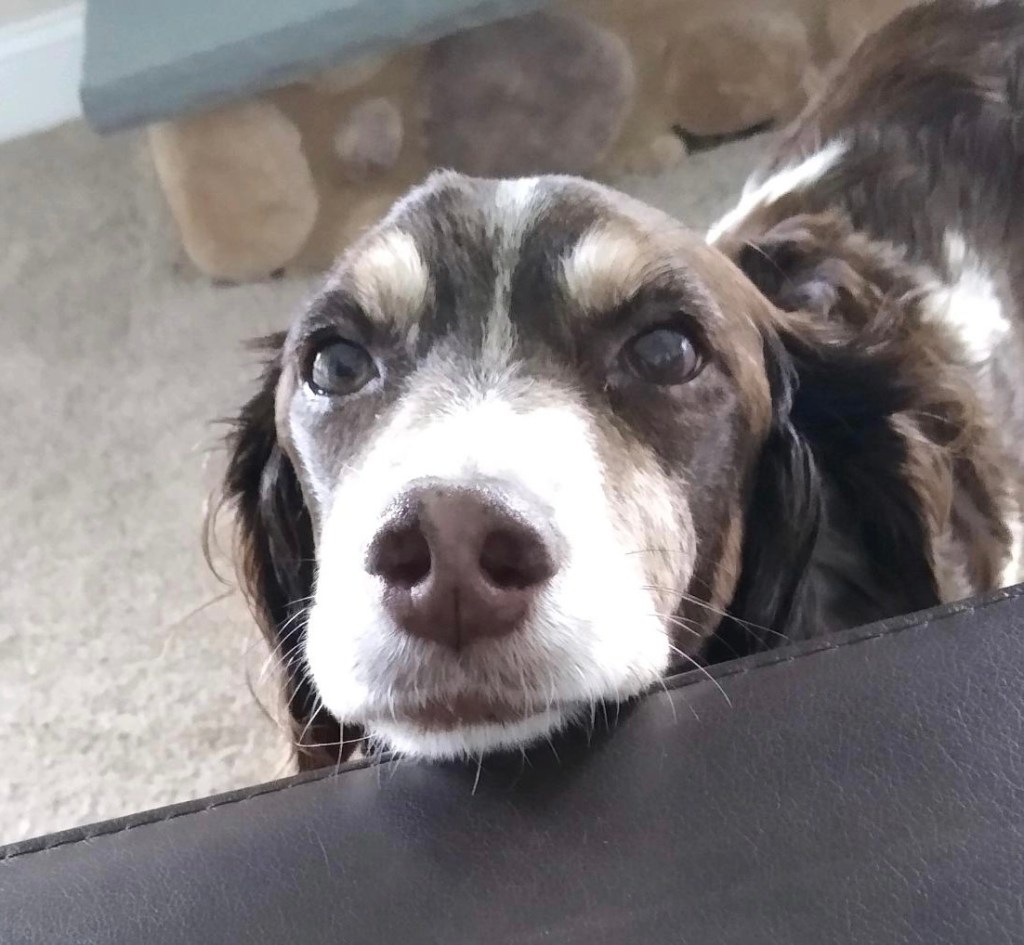
I have been living in a pandemic bubble with my thirteen-year-old Brittany, Baci, for over a year. We spend 95% of our waking hours together. Typically, she is within 3 feet of me as I work in my office, either at my desk or my writing chair. She is attached. I am attached. She observes me. I observe her. She is my priority. I am her priority. Outside of the first few months with my newborn children and an eight-week cross-country trailer trip with my family as an eight year old, I cannot remember being in such close proximity to another being on this earth for an extended period of time.

The Stare from Baci

I’ve observed a lot over the last year and this is the world according to Baci:

Time

Baci has the uncanny ability to know what time it is. She is outside my bedroom door at precisely 5 AM every morning. I am amazed by this. Of course, I have the uncanny ability to be up without an alarm at 5 AM every morning. Since the pandemic, our schedule has been so regular and rarely wavers. We both know the day begins at 5 AM and ends at 9 PM without fail. Breakfast is at precisely 6:45 AM and a change to a later time is quickly remedied by shaking her head back and forth as if she wants to twist off her head like a bottle cap. If I’m not keeping track of time; Baci will remind me.

Sleep

Baci sleeps for upwards of twenty hours a day. Granted, some of that is napping with one eye wearily keeping tabs on me. She sleeps in all manner of positions, sprawled next to me on the floor, curled up on the couch next me and, my boyfriend Roy’s favorite, upside down on her back with her legs strewn in the air. Most evenings she is fast asleep for the night by 6 PM. Waking her up before 9 PM to take her out for a bathroom break is something like waking a sleeping teenager from an all-nighter. We coax, cajole, demand and she ultimately, stubbornly, reluctantly, slowly rises from her bed and acquiesces. I’m jealous that she can sleep just about anywhere.

Anticipation

Baci and I are in a symbiotic relationship for most of the work week.

First thing she waits next to the leash closet to be walked, then into the kitchen while I make my coffee, off to the couch while I meditate, then back to the kitchen for another cup of coffee, back to the couch for Spanish. Not to be outdone – outside my bathroom while I shower, then on to the most important item of the day, breakfast, off to the office to sit next to me while I type. She walks ahead of me, glancing back, keeping tabs on my every move. I can see her hesitate sometimes as if thinking, “Hmmm, is she going to have another cup of coffee or will she head to her desk for a video call?” She’s like a butler waiting in anticipation of my wants and desires.

Outside

Baci’s greatest joy is getting outside. We go for walks almost every day. Perhaps it’s the memory of spending her whole day outside at my lake house and having the freedom to explore anything and everything she wanted. It’s the highlight of my day as well. Escaping to the fresh air, the birds, the insects, the trees, the elusive squirrel; we both enjoy getting outside. Baci’s focus is smelling everything, her head is down and there is nothing that escapes her nose. Like a beacon, she inhales all the information inclusive of previous visitors to the trails, other dogs, squirrels and discarded food. Baci loves to explore outside, true to her breed.

Stare

If I have learned anything from Baci since this pandemic started, it’s that her stare is a call for attention. Whether I am sitting on the couch, at my desk, or making dinner in the kitchen, she will stand in front of me squarely on all fours and stare at me intently when she needs to go outside. I was slow to learn this. There was plenty a conference call or Zoom chat where she tried desperately to get my attention, and I ignored her, petted her or threw a toy to distract her. Typically, this resulted in a puddle somewhere in the house once I was able to get off the call. Now? I drop everything. I tell folks I’ll call back. I cut the meeting short. I realize I am the one being trained but The Stare means NOW, not later.

I love being needed and the center of Baci’s world. She loves me unconditionally; it is reciprocal. I love her unconditionally. I struggle knowing that someday this will change whether I am no longer home all day or when she passes away. It’s all inevitable and I need to remember that I’m in Baci’s world right now and to be present for it.

5 Surprises at Moores Creek Battlefield

I am the daughter of a history buff. Ironic that for most of my life, I didn’t care much for American history, European history, and outside of knowing which decade a world war took place, I have been oblivious. My father, an eighth grade history teacher at Mount Pleasant Junior High for most of my 1960’s childhood, would periodically take me along on his class trips to Gettysburg and Washington DC. I seem to recall caring more about how long the bus ride would be and if we would be able to have fast food (a luxury at the time) for lunch. I am surprised that now, in my late fifties, I have discovered an interest in history and have spent quite a few weekends and side trips traveling to Bennett Place, Gettysburg, Harpers Ferry and Spotsylvania. Some well-known, some not, but all landmarks in U.S. history. 

Moores Creek Bridge

A few weeks ago, my boyfriend Roy and I traveled to Moores Creek National Battlefield well outside Wilmington, North Carolina. Here are some of the interesting surprises I found:

  1. Revolutionary War. I have had this crazy paradigm that the Revolutionary War was fought in New England and Pennsylvania. Until we arrived at Moores Creek Battlefield, I assumed that this was a Civil War location. Turns out this was a battle between the Loyalists (those loyal to the British crown) and Patriots in February of 1776. While most of the battle fields I have visited in North Carolina have been Civil War related, this battle took place before they had inked the Declaration of Independence.
  2. River Crossing. The Loyalists, led by General Donald MacDonald, were headed from Fayetteville to Wilmington where they were to join the British forces at the coast. All they needed to do was get across a river.  Seems rather benign by today’s standards. The Patriots under Colonel Richard Cashwell and Colonel James Moore had been able to stay ahead of the Loyalists forcing them to try to ultimately face off at Moores Creek Bridge in order to cross the bridge. It is amazing that so many waterways at the time were crossed by ferry or boat and that a bridge was so valuable.
  3. Highlanders.  Most of the Loyalists were Scot Highlanders. They came with bag pipes, drums and tartan plaid. I am surprised because in North Carolina, Highlanders are associated with the Piedmont and Appalachian Mountains, not the Coastal Plain. I’m also surprised that the displaced Scots would fight for the crown with their own acrimonious relationship with the British. It turns out there were Scots on the Patriot side as well. 
  4. Bridge.  The Patriots arrived at the bridge well in advance and had built earthworks on the east side of the bridge and armed them with cannons. A scout from the Loyalists had come to the camp the night before with a demand for surrender which the Patriots rejected. The scout had not crossed the bridge and did not see the encampment on the other side of the bridge. The Loyalists thought they had an easy fight to win. The Patriots retreated to the encampment, dismantled most of the bridge and left it covered in grease to impede the Loyalists. It almost sounds like a prank.
  5. Swords.  The Highlanders were known for their Broadswords. That’s what they brought to the fight as they managed to cross the swampy water full of Cypress Knees and a slippery dismantled bridge under the darkness of the morning hours of February 27th, 1776. Their field commander, Lieutenant Colonel McLeod, came across the bridge and declared, “King George and Broadswords.” He and his Loyalist troops didn’t realize that the Patriots were above them 50 yards away with muskets and cannons. They brought knives to a gun fight. It lasted 3 minutes. 30 Loyalists were killed instantly including McLeod. The remaining Loyalists retreated into the darkness.

North Carolina was fractured at the time and the British were trying to shore up their North Carolinian support in defeating the Patriots. This battle was a defining moment in the momentum for North Carolina to join the rebellion against the British. Patriots from North Carolina signed the Halifax Resolves on April 12, 1776, a document which gave the delegates of the colony sent to the Continental Congress the right to vote for Independence. North Carolina was the first colony to do so. This was fascinating from a woman born in Delaware, aka “the First State”, because the Delaware delegates were the first to arrive to sign the Declaration of Independence.

You Can’t Push a Rope

This has been my mantra for the last few years. My son insists on texting instead of calling. “Whelp, you can’t push a rope.” My coworker rarely makes a deadline. “Yep, you can’t push a rope.” You want your friend to sober up. “Hmmm. You can’t push a rope.” Pushing is frustrating. It’s trying to force reality. It’s trying to change someone or a reality that is not within your control. I do it all the time. I tell someone how great I feel since becoming sober. Or how my asthma and inflammation has receded since going sugar-free. I send reminders about the deadline to my team only to have the same culprit miss the deadline AGAIN. All this pushing is exhausting. I cannot force my will on anyone. I am only responsible for myself.

I read a post from Seth Godin this morning in which he wrote, “People don’t change (unless they want to). Humans are unique in their ability to willingly change. We can change our attitude, our appearance and our skillset. But only when we want to. The hard part, then, isn’t the changing it. It’s the wanting to.” And it’s not my personal wanting to change my child or coworker or ex that works. It’s their own personal decision. It’s their wanting. Not yours. Not mine. The only way to push is if they ask you to help them.

Here’s how to give up pushing the rope:

Relinquish control          

For the longest time, especially as a parent, I thought I had control. Like I was the puppet master. If I wanted my daughter to be a great volleyball player, or my son to attend my alma mater, I could make it happen. I could push and dictate and shove my wishes upon my children. I could impose my will. I can take the same stance with projects and deadlines I disagree with and lose sleep over not having the ability to reroute the course toward my way of thinking. I think that’s why I even started saying, “You can’t push a rope.” I was essentially acknowledging that I didn’t have control. I relinquish. I let go of the struggle of trying to rewrite the outcome. I think of the Carrie Underwood song, “Jesus, Take the Wheel.” Let what happens happen, let go of the rope and relinquish control.

Patience

I have always admired my father’s ability to be patient. I frankly try to channel his energy when I want something (out of my control) to change. I want an answer from the attorney, I want this fight behind me, I want the project to be done, I want everyone to turn in their work on time. I want. I want. I want. When I channel my father’s patience, I get calm. I slow down. I step out of the whirlwind of desire and wants. It’s uncomfortable but peaceful. Time will unfold and what is supposed to happen will happen. Perhaps someone else will pick up the rope when it’s time to pull instead.

Provide support

If I’ve learned anything from being sober, it’s to share my experience and let it lie. The teacher in me wanted to preach and dictate. “This is how you should do it.” I’ve learned that it’s better to start off by asking for permission: “Do you want some advice?” or “Do you want to know my experience?” If you just give out advice, neuroscience shows that it shuts your listener’s brain down. Think about that when you are trying to educate your child on the dangers of drugs or who they should be dating. By giving advice or dictating what they should or should not being doing, you are shutting down their brain. They won’t hear you. If your advice is asked for or permitted, start off with: “My experience with drugs, alcohol, dating, overdue projects, parenting, graduate school, cooking, marathons, dog ownership, divorce, home repairs, debt, finding a job, a difficult boss, waiting tables, owning a restaurant, riding a bike, driving a car, etc. is…” Provide support but ask for permission and tell your story. Try not and tell someone what will happen if they start drinking again or don’t pay off their credit cards or don’t take a job in plastics. We aren’t clairvoyant. Speak from your experience the last time you pushed a rope.

Actively listen

I have found in coaching that reflection on your own thoughts is one of the most powerful tools of coaching. Knowing that someone isn’t trying to sway, influence or manipulate you helps you feel safe and reflect on what you really want. This happens through active listening. If I’m trying to push a rope, I’m wrapped up in my own agenda. When I am actively listening, I am making a safe space for someone to reflect. I’m also not tied to the outcome or the agenda (see Relinquish Control). Perhaps your child, parent or coworker will ask you to pull the rope with them. It’s up to them. Listen to what they need and then decide what to do with the rope.

I think about the months and years that led up to my marriage falling apart. As I look back, I was pushing that rope so hard, I was tripping over it. I had no control over my husband and never did. What I realized in just a few weeks after the collapse was that I could control my own path, one step at a time. I let go of the rope and, after anguish, time and self-reflection, it’s never been better. Leave the rope behind.

5 Benefits from Going Vegan

I started dating my boyfriend Roy almost three years ago. On his dating profile, he said he had been a vegan for about 9 months and found it boring. Being that I am quite the foodie, I assumed I could convert him from the “dark side” of boring bland veganism back to being an omnivore. Well here I am, three years later, and I am practically a vegan although I have succumbed to cheese pizza and my beloved cambozola cheese. There is also the about once-every-two-months bite or two of seafood, but that has occurred less frequently over time.

Roy slowly indoctrinated me into going plant-based by first sharing a few documentaries, Forks Over Knives and What The Health. These are films not about animal cruelty, but focused on the health affects of eating meat and dairy. I come from a long background of seeking out and preparing culinary delights, regardless of if said culinary delight had a mother or not. Alligator, escargot, caribou, foie gras, yellow tail…I have tried it all and enjoyed it immensely. Vegetables and fruit were in my diet, but I was lucky to be having one or two servings a day. After the documentaries, Roy turned me on to NutritionFacts.org by Dr. Michael Greger. He sent me YouTube video after YouTube video on meat, chicken and pork. I asked him to not send me anything on dairy, as I was not ready to give up my beloved cheese. I finally acquiesced and he started sending me the YouTube videos on the evils of cheese. I am at this point of being 95% vegan, with only small amounts of dairy products in my diet (perhaps some cheese in a salad or a cheese pizza about once a week).

Here are the 5 benefits from going vegan:

Cheap

I have saved a ton of money going vegan. I thought it would be more difficult to find ingredients, but every grocery store has apples, blueberries, grapes, mixed greens and a whole plethora of dried and canned beans. I have had a more difficult time finding vegan cheese at my local, rural Walmart, but as long as I stock up when I am at a specialty grocery or natural foods store, the rest of those items are incredibly cheap. I think I used to spend $10 per meal on flank steak, chicken tenders and lamb chops. Focusing on having meat for one, two or three meals (bacon and eggs for breakfast) is a lot pricier than two cans of beans, a bag of greens and several types of fruit. Outside of specialty items like vegan cheese or substitutes like beyond or impossible meat items, the rest of the items are very inexpensive.

Cholesterol

Two years ago, after I had lost 50 pounds from eliminating alcohol. I had high cholesterol when I visited my doctor. I was on a low carb diet at the time. I had assumed with a dramatic weight loss that all of my “numbers” would have been terrific. Not so. My doctor threatened me with statin drugs if it didn’t improve in the next year. I assumed it would work itself out and that the cholesterol was just a fluke or age-related. I became a vegetarian about two months later and mostly vegan about five months later. When I returned to the doctor for my annual exam, all of my cholesterol numbers were in range. I have to say, I was shocked and assumed that when I returned to the doctor, I was going to walk out with a new prescription for statins.

Prescriptions

I have been on asthma and allergy medications for the last twenty years. I am allergic to dogs (yes, I own my beloved Brittany Spaniel, Baci), cats, dust mites, trees and grasses. I read Dr. Greger’s book, How Not to Die, about a year ago. He addresses how being plant-based can eliminate many drugs from one’s diet. Well, I decided to drop one medication for about four weeks, and then another, and then another. So that now, I don’t take any medication related to my allergy-induced asthma. I went from 5 drugs daily down to zero. I have no scientific reason for it except that meat and dairy cause a lot of inflammation (which is why it is tied to so many cancers). So here I am prescription-free, which is a huge cost saving and hassle-free.

Interesting

I love a challenge. I want to figure out how I can take an old tried and true recipe and make it vegan. It might mean finding a vegan cheese or meat substitute, or searching the internet for how to make cashew blue cheese. It’s all out there. I will say, the last gauntlet for me is trying to figure out how to use my sous vide for vegan recipes and I’m going to try it this week. I have some terrific cookbooks like Thug Kitchen and But I Could Never Go Vegan, which really helped in the first months I took this challenge on. There was a point where I just didn’t care about trying to replicate something I would have had as an omnivore. The impossible and beyond products are great but replicating meat isn’t my desire anymore. I prefer beans, tempeh and whole grains. It’s taught me to flex my culinary muscles and I can make a chili now that you would be hard pressed to even realize it’s vegan.

Easy

When I asked Roy about being a vegan, he said it was easier than he thought it would be. I think that initially I figured I’d be out there buying tofurkeys and chorizo substitutes. I did a little of that and bought crazy ingredients like EnerG Egg Replacer, Whole Wheat Pastry Flour, White Miso and Nutritional Yeast Flakes on the Internet. It’s now mostly buying seasonal items, like butternut squash, figs and Cosmic Crisp apples (they are awesome). Going to a restaurant has gotten easier as well. There are more vegetarian menu options (they will frequently have cheese…usually too much cheese) or even at chains like Cracker Barrel or BBQ restaurants, you can order three or four vegetables as an entrée. Almost everyone has a salad on the menu – you just need to make sure there isn’t any bacon or feta cheese in it. I do carry a vegan protein bar in my purse, but it’s rare that I have to resort to that. Peanut butter on an apple or banana is a perfectly healthy vegan meal…it’s just not that hard.

I never thought I would be a vegan at this point, but as I have been culling out my kitchen over the last few months, I decided I needed to donate my electric knife, whose sole purpose over the last twenty years was to slice up turkey on Thanksgiving. I can’t see going back to being an omnivore at this point. There is no upside and I’ve lost my desire for bacon and foie gras. If you had asked this foodie ten years ago if I would be a vegan today? I’d have said you were crazy. Seeing all the positive impacts it’s had on my life, I can’t imagine going back. What stops you from being a vegan?

Quantum Flirts (the Universe is Winking)

This is a repost from over 6 years ago: ORSC is still a terrific course and the Universe is still winking.

I have been training for the last year with CRR Global and a few weeks ago I went to the fourth installment of my Organization & Relationship Systems Coaching (ORSC) training. This stuff is magical. The topic on the last day was Quantum Flirts which is as described by CRR Global, “a short-lived, transient, perceptual signal which can be used to provide us with insight.” It is based on the work of Arnold Mindell and Quantum Mechanics. So the way I see it, it’s like the Universe is sending you a sign. As Arnold writes, “In everyday terms, Arny explained this idea of ‘many worlds’ by saying that when we begin to focus on something, we see its most probable state, the one that fits into our culture and consensus reality. Yet, in each and every experience there is a multitude of other experiences lying in wait, though in Arny’s interpretation, we choose one and marginalize the others. To say it very simply, the moment we call something ‘a’ or ‘b’ we have marginalized all of its other possible states (c, d, e, etc).” The Universe is flirting with you and you need to pay attention to catch it so that you can see the possibility of a different outcome. It may be a flicker of a bulb, the song of a bird or a flash of sunlight on a wave, but it’s the Universe winking at you laying out hints.

I was fortunate to be the volunteer coached by Grace Flannery in Quantum Flirts. She asked that I bring up a current issue or hot spot that had stressed me out with someone close to me. I talked about my son and his desire to find a place to live this summer instead of coming home and there are a multitude of options and growing for staying in Miami. I further explained how his mode of communication is texting which can leave one wanting (me) for more and frustrated. She then asked me to look around the room or outside and see if there was anything that caught my attention for just a second. I noticed how a classmate was flipping his reading glasses and the glint of light from it. This was my “flirt”. Grace ask me to animate the flirt and I flickered my fingers in an arc in front of me. Grace expounded on my gesture with a “Fa la la la la”. I copied her. She said, “So when your son texts, you can just say ‘fa la la la la.'” We did it in unison. The observing class then copied me. We were all there “fa la la-ing” and copying my gesture. I could not stop laughing. We all cracked up. The Universe flirted with me and it was hysterical. My aggravation with my son was a construct of reality but by paying attention to the spark or “flirt” I could imagine that there could be a different outcome. I could let go and see it in a different light. It’s not a hot spot, there is potential in my relationship with my son to any outcome that I chose. His constant texting and options are his way to engage. So be it.

So how do you tune into the signals and flirts around you? Here are some ideas.

1. Presence. If you aren’t living in the moment, it’s going to be pretty hard to pick up on any signals. If you have ever meditated (and if you are a faithful reader of my blog you should be by now 🙂 ) do you start to notice every sound or smell or the crazy shapes on the inside of your eyelids when shut? You are officially “present”. I always notice the sound of the clock in my office, the birds outside or the ventilation system. Get present; become present.

2. Notice. Take notice of what is going on around you. I started noticing every animal that crossed my path and not just my dog. Turtle out in the lake bobbing with its head at the surface. A glint of light off a wet leaf, the clock is at 11:11, the receipt fell on the floor to only show the word “thanks”. Start to take note of what is going on out there or in there. My dog is sleeping, my dog is sighing, my dog is running around at lightning speed because geese are in her space, my dog is out of the water. I try and remember something about the dream I just woke up from. Take notice.

3. Offer. So what does this sign have to offer? Why is the universe or a higher power or quantum physics sending a signal to you? I know that each time I see a turtle I feel like I need to slow down and be patient. When I see a robin I think of rebirth and Spring. Canadian geese are a nuisance and I’m wondering if I am pestering someone. Perhaps my children? My neighbor? My boss? My dog is out of the water. Maybe I need water and nourishment as well. The receipt that fell with “thanks” showing is offering me gratitude. What is the offer?

4. It’s right. Don’t get caught up in perfection about what the sign or the flirt means. It means what it means to you. I know sometimes I “cheat” and Google “tornado as a symbol in a dream”. Apparently, this could be a sign of stress. Makes sense. That resonates for me. If it doesn’t, maybe the tornado is a sign of escaping danger. Animals like Robins, Herons and Turtles almost always have a Shamanic reference. Those are easy to Google as well. I dreamt about a broken bottle the other day and the reference for that symbol was “potential”. What it felt like for me was avoiding the broken glass. There was a person I was walking on egg shells for and I feel like the broken glass was the symbol I could relate to.

I’m less about everything happens for a reason and more about taking in information. I do like to think that things show up at the right time and that the turtle that just stuck his head up through the surface of the lake is telling me to slow down. What signs do you see?

Reconnecting in Paris. No Regrets.

This is a repost from 5 years ago. Great trip, the best of friends and countless memories.

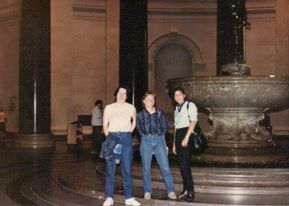
“Those Girls and The Blonde” sounds like a great name for an 80s girl band. It wasn’t. It’s the name of my two roommates and I from 1981 when our landlord (otherwise known as Dragon Lady) coined the phrase after “The Blonde” (Susannah) ripped up the carpeting in our basement, slummish apartment in Collegetown. Susannah is one of the few born and bred Manhattanites I know. She takes charge. She’s decisive. The carpet was horrible and “there’s hard wood floors under there.” So the other “Girl” Janine and I went along for the ride, ripping up the carpet.

We have remained friends for over 35 years. We all had our first born children in 1993. We’ve seen each other marry, sometimes divorce and move to various cities (Washington D.C., San Francisco, Boston, Croton-on-Hudson and Scottsdale). We’ve never lived in the same city at the same time since Ithaca. We’ve had a few reunions but since about 1983, TG&TB have not reunited at the same time sans kids and spouses. So when I had an opportunity to go to Paris, I contacted them both and suggested we reunite in the City of Light. Janine and I were both Paris Virgins and Susannah was fully versed in all things French. We had a plan and TG&TB always execute a plan. We spent 6 days reconnecting in a lovely apartment near the Eiffel Tower.

These are my lessons from reconnecting some 33 years later:

  1. Let someone lead. Several weeks before departing for Paris, I found some activities that we might want to try out. There were huge email trains between the three of us about costs, times, travel between arrondissements, etc. It wasn’t working. It would take several days to get confirmation. So I finally suggested that Susannah take over the planning going forward. Janine and I signed off on whatever Susannah wanted to cook up. We had faith that she knew what we would like and what would work. As they say, too many cooks spoil the broth. Pick a leader, have faith and stick with it.
  1. Be willing to get lost. Ever since my daughter turned me on to Google Maps for walking directions in Manhattan, I’ve been pretty obsessed with not being lost. I realize now I am a “Direction Control Freak.” I also hate to appear the tourist with the pocket map. I had to let my judgment go. For God’s sake Cathy, you are a tourist. Who cares if someone else knows it? They will the minute you try and say “Bon jour.” So what if we walked the wrong direction for half a mile in the Marais. It’s Paris. Every street is interesting and unique. I believe it was Janine who said, “It’s all as intended. We are where we need to be. No regrets.” When we were lost, we stumbled on an out of the way café full of locals and sans tourists. It was wonderful. Get lost.
  1. Quality versus quantity. When you go into one of the largest museums in the world, focus on quality over quantity. We took a guided tour through the Louvre with an American expat who had phenomenal art and history knowledge. We stood looking at a sculpture of Hercules for almost 20 minutes. We discovered how his face change from docile to contemplative depending on the angle. It was fascinating. I’ve never spent that kind of time on one piece of art…ever. I’m more of a fast food consumer of art. Trying to check off each piece as fast as possible, Degas…check, Renoir…check, Mona Lisa…check. This is not the way to appreciate art. This was a huge shift for me and I appreciate our guide’s contemplative example. Don’t consume, appreciate.
  1. Make space for connection. I’m not positive but I think we ducked into at least three cafes a day. So if we had walked for an hour, let’s grab a table and a drink. If we stumbled on an interesting café, let’s grab some café crème. It was around one of these tables that we reconnected about career choices, our kids and reminiscing about our youth. Those conversations may not have happened if we were too busy trying to make sure we went to every museum in Paris (which I’m not sure is possible but is certainly not practical). I found fantastic advice and stories from two women I respect immensely.
  1. Utilize your strengths. We all were paying for different things. I figured, it would all wash out by the end. I didn’t feel compelled to keep track. Thank goodness Janine is incredibly organized and meticulous. Between the exchange rate and dollars versus euros, she kept it all straight. Susannah was our motivation. She knew the best falafel place in Paris. It might be a mile and a half away but her enthusiasm was contagious. So what if we walk 8 miles in one day. I was the compass. Street crossing in Paris is pretty crazy. There are cars and motorcycles come ricocheting in from all angles and walking at the cross walk is critical. It became a chess match as to how to get to the street you wanted without losing life or limb. Fall back on your strengths.
  1. Be realistic. We made sure that we were rarely rushed. So if we wanted to check out a park on the way to Notre Dame, we make sure it was doable at a slow pace with time to spare. If it wasn’t? Move on. If the Uber driver hasn’t been able to find you for twenty minutes, take a cab. If the maître’d explains that the dish has raw duck in it, order something else. Be realistic.
  1. Be open to adventure. Janine and I went up the Eiffel Tower together. It’s a pretty trippy adventure. The funicular is at an angle and with all the structure supports going by, it is a bit disorienting. When we got to the top, I wanted to stay inside. I was as high as my acrophobia wanted to take me. Janine ran upstairs and ran back down. “Cath. You have to go to the top. It’s not bad.” I did and it was worth the flight of stairs up. Susannah wanted to see the Saint-Chappelle. From the outside, it’s not very impressive and we had just been through Notre Dame. When we entered what I later found out was the first floor, it was some chipping paint with a low ceiling and trinket stands. I thought, “What’s the big deal?” Then we walked up a stone circular staircase (did I mention I’m claustrophobic?). At the top was, and is, the most beautiful chapel I have ever stood in. My breath was taken away and tears were in my eyes. I know that if I hadn’t gone with TG&TB to Paris, I would never have stood in that awe-inspiring spot. Be an adventurer.

This was a trip of a lifetime with two of my favorite people in the world. So think about it. Who would you like to connect to again? Break out of your normal agenda and take off on a reunion adventure of your own. There will be no regrets.

Keep Your Eyes on Your Own Paper

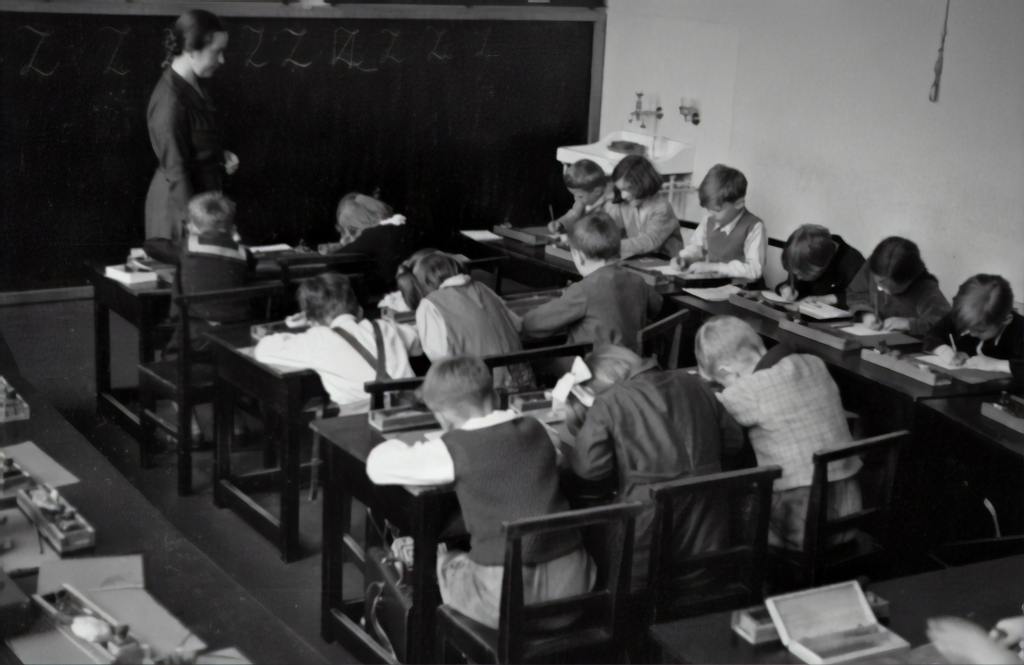
I recently read an article by James Clear where he referenced a statement often heard in grade school: “Keep your eyes on your own paper.” He referred to the admonishment of not cheating. Clear pointed out the deeper message: “It doesn’t make a difference what the person next to you writes down for his answer. This is your race to run. It’s your assignment to complete. It’s your answer to create. How your paper compares to someone else’s is not the point. The point is to fill the paper with your work.” It’s the same as Hike Your Own Hike or Sticking to Your Path–your work, art, trip, journey, life is your own masterpiece, project, destination and adventure.

Keep your eyes on your own paper

The rebels in the classroom (ahem, like myself) would, once admonished, give a side glance to the room to see who had their head up with their eyes off their paper, or squirmed in their seats or dozed off in the back. I was also gathering information on how confident everyone looked as they took the test or quiz. Scanning the room is nothing but a comparison, which is the thief of joy. Whether or not someone is succeeding on the test, or whether they do it quickly or confidently, has nothing to do with my work. My test. My art.

Here’s how to keep your eyes on your own paper:

Clean slate

As Clear wrote, “No matter what you spend your days doing, every morning you wake up and have a blank piece of paper to work with. You get to put your name at the top and fill it with your work.” The possibilities are endless. There is something magnificent about a clean slate. It’s like starting a new recipe and dicing the onions, sautéing them in the pan, moving forward with possibility. I can keep the onions raw, translucent or caramelized brown. It’s all up to me. I am the chef. I have the paint brush and I can make any stroke with any color I have. There is such power in possibility. And we get a new clean slate each morning and I have absolutely no idea what my neighbor is doing with their slate. It’s your clean slate. Use it for your art.

Don’t judge

As Clear wrote while he reflected on his own writing: “I thought this was a good article. Why don’t people seem to enjoy it? Or, I’ll feel like I wrote something average only to see it become the most popular post of the month. Regardless of the outcome, I’ve realized one thing: we are often terrible judges of our own work.” I can relate. I wrote a post on my father’s time in Korea a few weeks back. I thought it was a great post and yet it had barely 100 views. I wrote a post on Earnest Shackleton’s leadership style back in 2014 and it’s been viewed over 6,000 times. There is no telling who will like it or who won’t. We are terrible judges of our own work. I can remember leaving tests, finals or quizzes from elementary school through grad school and I was rarely good at determining how well I did on the test. Stay away from judging yourself – odds are you really don’t know anyway.

Ship it

In Seth Godin’s book Linchpin, he says: “The only purpose of starting is to finish, and while the projects we do are never really finished, they must ship.” I have to say that especially during test taking, I was without fail the first to leave the exam. If it was five students or two hundred, I was almost always the first to leave. I didn’t go back and double check or perhaps it’s my penchant for the $hitty first draft. I write, I create, I leave my art and ship. Put the pencil down and move on. Perfection is constricting. As Godin says, “Ship it.”

There is one you

Martha Graham was consoling Agnes de Mille about the randomness of success: “There is a vitality, a life force, an energy, a quickening that is translated through you into action, and because there is only one of you in all of time, this expression is unique. And if you block it, it will never exist through any other medium and it will be lost. The world will not have it. It is not your business to determine how good it is nor how valuable nor how it compares with other expressions. It is your business to keep it yours clearly and directly, to keep the channel open.” There is only one of you. Don’t let your art be lost. Keep going. Produce no matter what product, what art, what music. You are here for your unique ability to produce your unique product.

There is joy in being present with the process. Don’t focus on the end product. Or the end product of your neighbor or the runner next to you or the hiker in the next tent. It’s the journey, not the destination. Make your own art, whatever that may be, and be there in the process with your eyes on your own paper.